

The Real Reason Is Device Geometry

Why is nitinol used in medical devices? The simplest answer is that many modern devices need to move through small spaces, bend through difficult paths, and recover useful shape after deformation. Nitinol, a nickel-titanium shape memory alloy, gives engineers a combination of superelastic recovery, shape memory behavior, kink resistance, and compact mechanical performance that is hard to reproduce with conventional metals.
That does not mean nitinol is the best material for every medical component. It means nitinol becomes attractive when device geometry creates a problem. A guidewire may need to turn through tortuous anatomy. A stent-like frame may need to compress for delivery and expand afterward. A snare or basket may need to open inside a confined space. An orthodontic component may need to apply gentle force over time. In each case, the material helps solve a geometry and motion problem.
GEE SMA supplies nitinol materials and components including nitinol wire, actuator wire, springs, sheets, tubes, and custom forms. For medical device teams, that makes the company relevant at the material and component level rather than as a finished regulated device manufacturer.
Superelasticity Supports Smaller Access Paths
Superelasticity is one of the central reasons nitinol appears in medical devices. Under suitable conditions, a nitinol component can undergo large deformation and recover after the load is removed. This property is useful when a device must bend, compress, twist, or pass through a narrow delivery path without taking a permanent set.
Guidewire-related products show the value clearly. A wire core may need flexibility at the distal end, support along the shaft, torque response, and kink resistance. GEE SMA's nitinol guidewire technology article explains why recovery and controlled flexibility matter in these pathways. Similar thinking applies to delivery systems, retrieval tools, and minimally invasive instruments.
Superelastic behavior must still be specified. Diameter, surface finish, processing history, transformation temperature, and strain level all influence performance. A wire that works in one device architecture may not work in another. The material helps create design freedom, but only when the design respects its limits.
Shape Memory Enables Controlled Deployment
Shape memory behavior is another reason nitinol is used in medical devices. A component can be trained into a shape, deformed under one condition, and return toward its trained shape when heated through its transformation range. In some devices, this behavior supports deployment, recovery, or compact actuation. In others, the related ability to shape set a component is just as important as active heating.
GEE SMA's shape memory alloy products page describes how phase transformation gives nitinol its useful behavior. For design teams, the key question is not only whether the alloy remembers a shape, but whether it does so at the right temperature, with the right force, and after the expected manufacturing and use conditions.
Medical devices often need predictable behavior more than dramatic motion. A small recovery movement, a controlled expansion, or a consistent spring response can be more valuable than a large visible transformation. That is why early material conversations should include transformation temperature, geometry, heat setting, and test conditions.
Wire, Tube, Sheet, and Spring Each Solve Different Problems
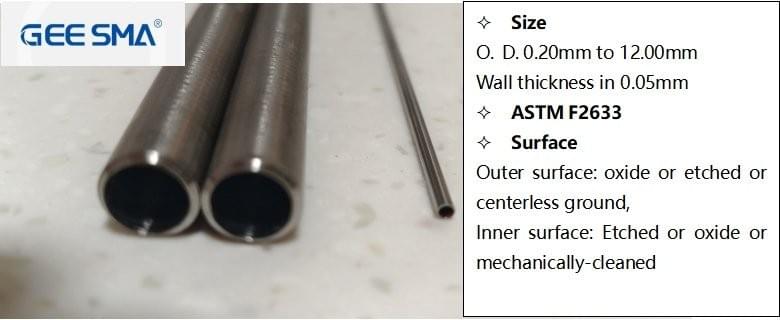
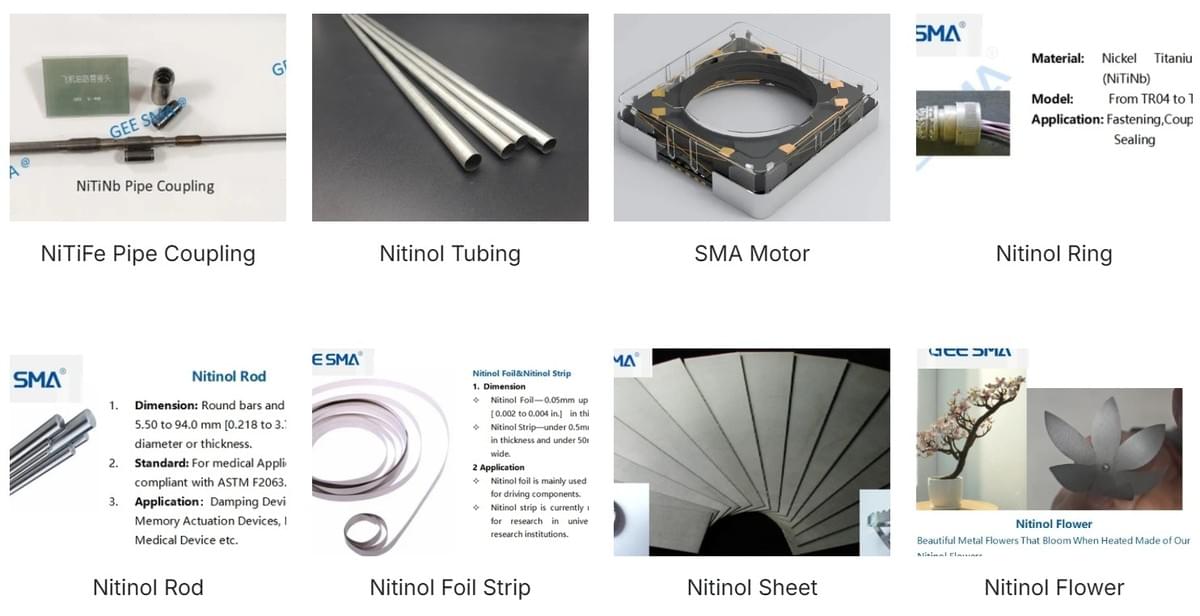
Nitinol medical devices do not all use the same material form. Wire is common for guidewires, snares, baskets, springs, orthodontic components, and formed elements. Tube can be laser cut for self-expanding structures. Sheet and strip can support flat springs, formed components, or development samples. Springs and actuator wires can support compact motion or force delivery.
GEE SMA's wire capabilities include fine diameters, straight lengths, spools, custom profiles, black oxide surfaces, and mechanically polished options. For teams working on unusual geometries, GEE SMA's custom nitinol wire forming content is relevant because many devices require formed loops, profiles, or application-specific shapes.
The product form should be chosen from the device function. If the component must guide, wire may be the starting point. If it must expand radially, tube or formed wire may be more appropriate. If it must actuate thermally, actuator wire may be worth discussing. Starting with function prevents the team from buying the wrong nitinol form.
Surface Condition Is Part of the Medical Use Case
Nitinol is often associated with medical use, but the final surface condition matters. Surface oxide, roughness, inclusions, polishing, etching, passivation, coatings, heat-affected zones, and cleaning residues can affect corrosion behavior, nickel release, coating adhesion, fatigue initiation, and inspection. In medical devices, those are not cosmetic details.
GEE SMA's nitinol biocompatibility article explains why finished-device evaluation is more important than a simple material label. A raw wire, a polished tube, a coated component, and a laser-cut implant may each need different evidence. Medical device teams must evaluate the component in its final or worst-case condition.
That is also why supplier conversations should cover downstream processing. If a customer will heat set, polish, electropolish, passivate, coat, weld, crimp, or sterilize the material, those steps should be discussed before samples are ordered.
Fatigue and Recovery Need Real Testing

Nitinol is attractive because it can recover from deformation, but fatigue performance is still a design question. A medical component may bend once during delivery, cycle continuously after implantation, flex during repeated use, or experience complex loading during deployment. These situations should not be treated as the same problem.
Testing should match the finished geometry and expected use. A straight wire coupon can provide useful baseline information, but it may not represent a formed loop, a laser-cut tube, a crimped assembly, or a component that operates in a curved anatomical path. Surface condition and small defects can also affect fatigue behavior.
GEE SMA's ASTM F2063 SE nitinol wire, rod, bar, and tube article can help teams frame material standards, but device-level fatigue and recovery still need a test plan tied to the actual component.
Miniaturization Rewards the Right Material
Many medical devices become harder to design as they get smaller. A conventional mechanism may need hinges, pins, springs, or separate assemblies. Nitinol can sometimes reduce part count by letting one component provide flexibility, recovery, and force. This is not always the lowest-cost route, but it can be valuable when the device must pass through a catheter, fit inside a compact handle, or deploy from a constrained delivery system.
The material also helps when a device must survive handling before use. Fine components can be bent during packaging, loading, or delivery. A superelastic nitinol element may recover from deformation that would permanently damage another metal. That recovery can protect both product function and user confidence, as long as the component has been designed within its strain limits.
For sourcing teams, miniaturization means the RFQ should include more than a drawing. It should explain the delivery path, bend radius, packaging constraints, surface requirements, and expected use cycles. This gives the nitinol supplier a chance to identify whether wire, tube, spring, or a custom formed component is the best starting point.
Why Supplier Experience Matters
A supplier does not merely provide a metal name. For nitinol medical device development, supplier experience matters because the alloy is process-sensitive. Chemistry, melting, working, heat treatment, surface condition, packaging, and lot control can all influence the final result. A small process change may affect transformation behavior, straightness, fatigue, or surface performance.
When speaking with a supplier, medical device teams should define the part's role, dimensions, surface, transformation temperature expectations, downstream processing, documentation needs, and test stage. GEE SMA's technical information page is useful because it presents nitinol as a controlled manufacturing process rather than a commodity purchase.
Good supplier conversations keep claims realistic. GEE SMA can support material and component discussions for nitinol wire, springs, actuator wire, sheets, tubes, and custom forms. The OEM remains responsible for finished device design, validation, regulatory submissions, and clinical claims.
Questions to Answer Before the First Sample
- Is the nitinol component temporary, implantable, reusable, or part of a delivery system?
- Does it need superelastic recovery, shape memory activation, spring force, or flexible support?
- What form is most realistic: wire, tube, sheet, spring, actuator wire, or custom profile?
- Which surface condition is needed before coating, bonding, polishing, or sterilization?
- What evidence will be needed later for fatigue, corrosion, nickel release, or biocompatibility?
Answering these questions before the first sample makes the development path cleaner. It also helps the supplier respond with engineering input instead of a generic catalog quote.
Bottom Line
Nitinol is used in medical devices because it helps engineers solve problems created by small access paths, recovery after deformation, controlled deployment, flexible support, and compact motion. Its value is strongest when the material property directly matches the component function.
For medical device teams, the next step is not simply to choose nitinol. It is to choose the right nitinol form, surface condition, transformation behavior, documentation level, and test plan. GEE SMA can be considered as a nitinol material and component partner for that early engineering work.