

More Than a Clever Metal
Nitinol alloy properties are often introduced with a simple demonstration: bend a wire, heat it, and watch it return to shape. That demonstration is memorable, but it is not enough for engineering decisions. In real products, nitinol is selected because its properties can solve a specific mechanical, thermal, or packaging problem better than conventional materials. The value comes from matching the property to the component function.
Nitinol is a nickel-titanium shape memory alloy. Depending on composition and processing, it can show superelastic behavior, shape memory behavior, useful recovery strain, kink resistance, fatigue performance potential, and corrosion resistance after appropriate finishing. Those properties make it attractive for medical devices, actuators, springs, guidewire-related components, orthodontics, industrial mechanisms, and compact devices.
GEE SMA supplies nitinol materials and components such as nitinol wire, actuator wire, springs, sheets, tubes, and custom forms. For engineers and sourcing teams, the practical task is to translate broad material properties into a form, size, surface, and test plan that can be manufactured consistently.
Superelasticity: Recovery Under Load

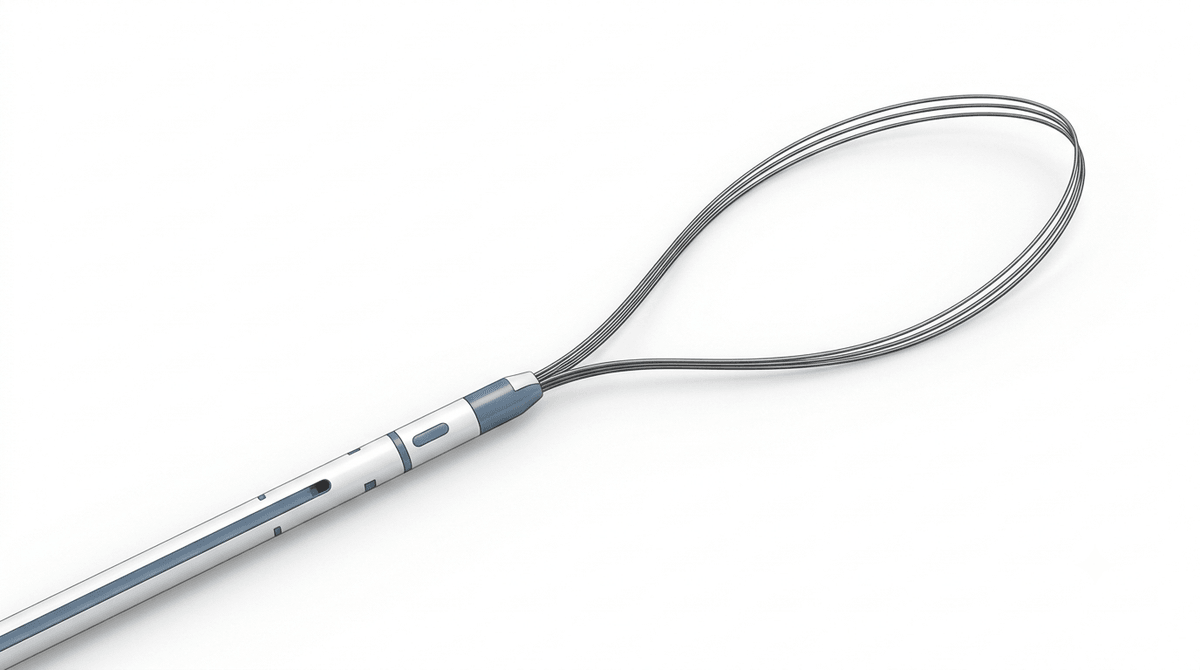
Superelasticity is one of the best-known nitinol alloy properties. Under suitable conditions, a nitinol component can deform significantly and recover when the load is removed. This is why nitinol is often considered for guidewires, stents, frames, snares, baskets, eyeglass frames, springs, and other components that must flex without taking a permanent set.
Superelasticity is especially useful where space is limited. A component may need to fit through a small delivery path, bend around a curve, or recover after being compressed. GEE SMA's nitinol guidewire technology article shows why recovery and kink resistance are valuable in complex anatomical pathways. Similar logic applies to many small mechanisms outside medicine.
The caution is that superelasticity is not magic. Recoverable behavior depends on alloy condition, temperature, strain level, geometry, and process history. If the component is overstressed, scratched, poorly heat treated, or used outside its intended temperature range, performance can change. Superelastic behavior must be designed, not assumed.
Shape Memory: Motion From Temperature
Shape memory behavior is different from superelasticity. A shape memory component can be deformed in one condition and then return toward a trained shape when heated through its transformation range. This can support compact actuators, thermal triggers, deployable structures, and self-recovering elements. The property is powerful when a design needs movement without a conventional motor or large mechanism.
GEE SMA's shape memory alloy products page describes how phase transformation creates useful behavior in SMA materials. In product design, the most important question is the transformation temperature. A part that activates too early, too late, too slowly, or with the wrong force will disappoint even if the material is technically nitinol.
For actuator concepts, designers should define stroke, force, heating method, cooling path, duty cycle, ambient temperature, reset method, and fatigue life. GEE SMA's actuator wires are relevant when a small wire contraction can perform useful work. The surrounding mechanism still needs stops, bias force, insulation, thermal control, and safety margins.
Transformation Temperature Sets the Window
Transformation temperature determines when nitinol changes phase and therefore when its superelastic or shape memory behavior appears. This is one of the most important nitinol alloy properties to specify because the same part may behave differently at room temperature, body temperature, production temperature, or elevated test conditions.
For a medical device, transformation temperature can influence deployment, recovery, and mechanical response at body temperature. For an industrial actuator, it can determine whether the component activates in a normal operating environment or only when deliberately heated. For a spring, it can influence force output and response time. Transformation temperature should be discussed before prototypes are ordered.
GEE SMA's technical information describes nitinol spring and material options, including active Af considerations. Engineers should treat transformation behavior as a design parameter, not a background property.
Fatigue: The Property That Needs Proof

Nitinol is often chosen for components that move repeatedly, but fatigue performance cannot be reduced to a simple catalog claim. Fatigue depends on strain amplitude, mean strain, surface quality, inclusions, geometry, processing, environment, temperature, and the number of cycles expected in service. A wire that survives simple manual bending may still need rigorous fatigue evaluation in its real geometry.
For medical devices, fatigue can be central. A stent-like structure may experience pulsatile loading. A guidewire may bend through tortuous anatomy. A snare or basket may open and close repeatedly. A spring may cycle through thermal or mechanical loads. For industrial devices, vibration, repeated actuation, and contact with other components can also matter.
The safest approach is to test the finished or worst-case geometry. A coupon can teach useful material information, but it may not capture bends, laser-cut struts, welds, surface defects, or local strain concentrations. GEE SMA can support material conversations, but the final fatigue evidence must match the component's real use.
Surface Properties Influence More Than Appearance
Nitinol surface condition affects performance. Surface roughness, oxide quality, inclusions, machining marks, heat-affected zones, polishing, passivation, coatings, and cleaning can influence corrosion, nickel release, coating adhesion, friction, fatigue initiation, and inspection. In medical devices, these factors can become regulatory and biological evaluation concerns. In industrial devices, they can affect wear, life, and assembly reliability.
GEE SMA's wire products include black oxide and mechanically polished options for certain nitinol wire forms. Those options are not just cosmetic choices. They can support different downstream processes and different device requirements. A buyer should define whether the supplied surface is final or whether the customer will grind, polish, etch, electropolish, coat, clean, or sterilize the component later.
The FDA's nitinol guidance highlights surface-related concerns because finished-device behavior depends on the surface that actually reaches the user or patient. GEE SMA's nitinol biocompatibility article provides useful context for medical teams thinking about corrosion, nickel release, and surface finish.
Corrosion Resistance Still Needs Context
Nitinol is often valued for corrosion resistance after suitable processing, but the application environment still matters. Saline, body fluids, cleaning agents, sterilization exposure, industrial chemicals, crevices, contact with other metals, and surface damage can change the risk. Corrosion resistance should be verified for the actual environment rather than inferred from the alloy name alone.
Medical device teams may need corrosion and nickel release testing that reflects the finished geometry and surface condition. Industrial teams may need testing in the actual fluid, temperature, load, or cleaning cycle. A polished straight wire sample may not represent a laser-cut structure with edges and heat-affected regions.
When corrosion resistance is one of the reasons for choosing nitinol, include it in the specification and validation plan. Ask what surface condition is supplied, how it is controlled, and what downstream finishing steps are expected.
Formability and Shape Setting Enable Custom Geometry
Nitinol can be formed and shape set into useful geometries, but the process must be controlled. Wire can become loops, hooks, frames, springs, or custom profiles. Tube can be laser cut into expandable structures. Sheet and strip can be formed into flat springs or small components. Each route creates different process and inspection questions.
GEE SMA's custom nitinol wire forming content is relevant because many applications do not use simple straight wire. Forming changes local strain and can create critical bend areas. Heat setting defines the recovered shape. Inspection must confirm that the geometry, surface, and material behavior remain inside the design window.
For sourcing teams, the important point is to share the function of the shape, not just a drawing. A supplier may be able to suggest a different diameter, profile, surface, or heat setting approach when the mechanical requirement is clear.
How to Specify Nitinol Alloy Properties
A practical specification should connect each property to a requirement. If the design needs superelastic recovery, define the strain range, temperature, geometry, and recovery expectation. If it needs shape memory actuation, define transformation temperature, stroke, force, heating and cooling conditions, and cycle life. If it needs corrosion resistance, define the exposure environment and finished surface. If it needs fatigue life, define the loading path and number of cycles.
The specification should also define product form, dimensions, tolerances, mechanical condition, surface finish, packaging, and documentation. Standards such as ASTM F2063 may be relevant for certain medical material forms, but the finished component still needs its own requirements. GEE SMA's ASTM F2063 overview can help engineers connect standards with practical material discussions.
For early prototypes, it is useful to test simple samples first, then move toward finished geometry. For production, the team should control supplier process, lot traceability, surface condition, and change communication. Nitinol's best properties appear when material selection and process control work together.
Bottom Line
Nitinol alloy properties can change a design conversation because they offer recoverable deformation, thermally driven motion, compact mechanisms, and useful performance in demanding applications. Those benefits are real, but they are not automatic. They depend on alloy family, transformation temperature, geometry, surface, processing, and validation.
For engineers comparing nitinol wire, tube, sheet, springs, actuator wire, or custom forms, the best starting point is the component function. Define the property that matters most, then build the specification around it. GEE SMA can support material and component discussions for teams that need nitinol behavior matched to real engineering requirements.