

Introduction: Biocompatibility Is More Than a Material Label
Nitinol biocompatibility is one of the most important topics for engineers who design minimally invasive medical devices, implants, guidewires, stents, filters, orthopedic components, and other products that may contact tissue or blood. Nitinol is valued because it combines superelasticity, shape memory behavior, fatigue resistance, and recoverable deformation in ways that conventional metals cannot easily match. Those same advantages explain why the alloy is widely used in modern medical devices.
However, biocompatibility is not a simple yes-or-no property of the raw alloy. It depends on device design, intended body contact, exposure duration, surface condition, corrosion resistance, cleaning, passivation, coating strategy, manufacturing history, and final verification testing. A nitinol wire, tube, sheet, or component can begin as a promising material, but the final biological response depends on how that material is processed and controlled.
For OEM medical device teams, the practical question is not only whether nitinol can be biocompatible. It is how to select, specify, process, and document nitinol so that the final device can support a credible biocompatibility and risk assessment. This article reviews the major material considerations behind nitinol biocompatibility and explains why early supplier collaboration matters.
Why Nitinol Is Used in Medical Devices
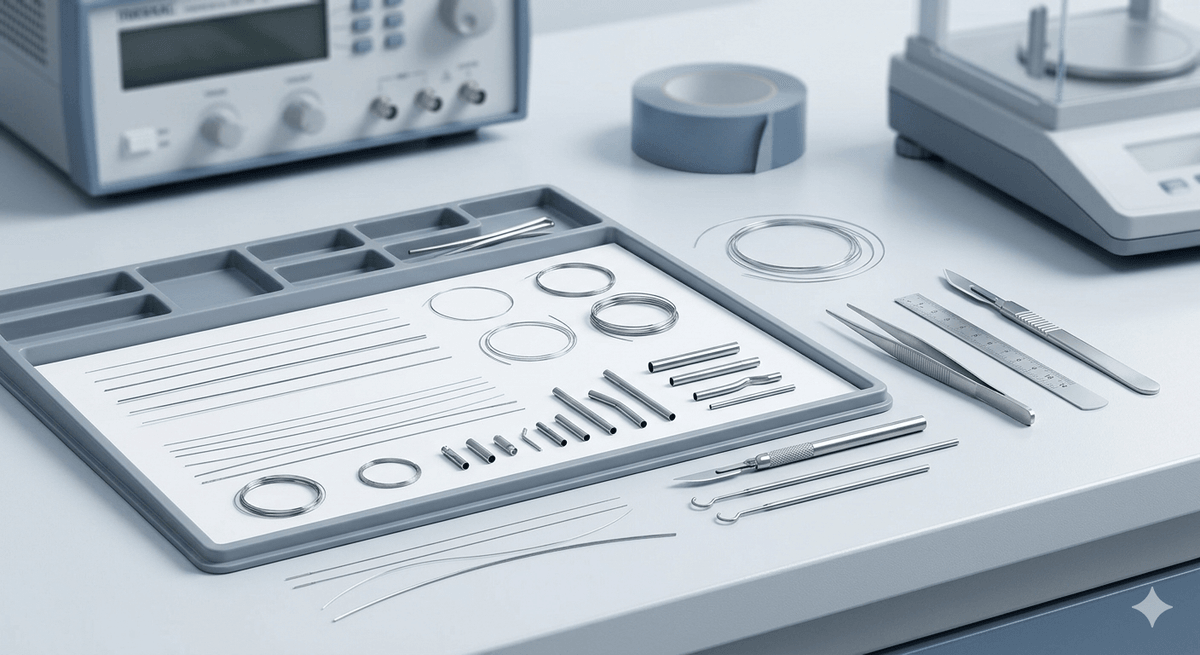
Nitinol is a nickel-titanium shape memory alloy known for superelastic behavior and shape recovery. In medical device design, these properties can support flexible delivery systems, self-expanding structures, kink-resistant guidewires, retrieval baskets, orthodontic wires, vascular implants, and other devices that must deform during use and then recover a functional shape.
GEE SMA's overview of medical nitinol describes how the alloy's mechanical behavior makes it useful across medical applications. In guidewire-related devices, GEE SMA's nitinol guidewire technology article highlights flexibility, durability, and navigation through complex pathways. These characteristics are central to the alloy's appeal, especially when device miniaturization and minimally invasive delivery are important.
Biocompatibility makes this discussion more demanding. A device that performs mechanically on the bench still needs appropriate biological evaluation for its intended use. For nitinol, that evaluation often focuses on surface oxide quality, nickel release, corrosion behavior, fatigue durability, particulate control, and how manufacturing processes affect the exposed surface.
What Biocompatibility Means for Nitinol
Biocompatibility means that a material or device performs with an appropriate host response in a specific application. The phrase "specific application" matters. A short-term catheter component, a blood-contacting guidewire, and a long-term implant do not carry the same biological questions. Contact type, duration, anatomical location, and clinical use all shape the testing and risk analysis.
For nitinol, engineers often focus on three connected issues. The first is nickel content. Nitinol contains a high percentage of nickel, so teams must understand and control the conditions that may influence nickel ion release. The second is corrosion resistance. A stable surface oxide can help protect the alloy in physiological environments, while poor surface control can increase risk. The third is manufacturing sensitivity. Heat treatment, grinding, polishing, etching, cleaning, laser processing, welding, and coating can all change the surface that the body sees.
The FDA's guidance on medical devices containing nitinol emphasizes that nitinol has special technical considerations because of its thermomechanical behavior and processing sensitivity. In other words, the alloy's performance is inseparable from its history. A medical device team should treat nitinol biocompatibility as a design and process-control topic, not only as a material datasheet claim.
The Role of the Nitinol Surface Oxide Layer
The surface of nitinol is especially important because the body interacts with the surface first. A stable titanium-rich oxide layer can support corrosion resistance and reduce metal ion release. Surface finishing studies consistently point to the oxide layer's thickness, chemistry, uniformity, and stability as major factors in nitinol's corrosion and biological performance.
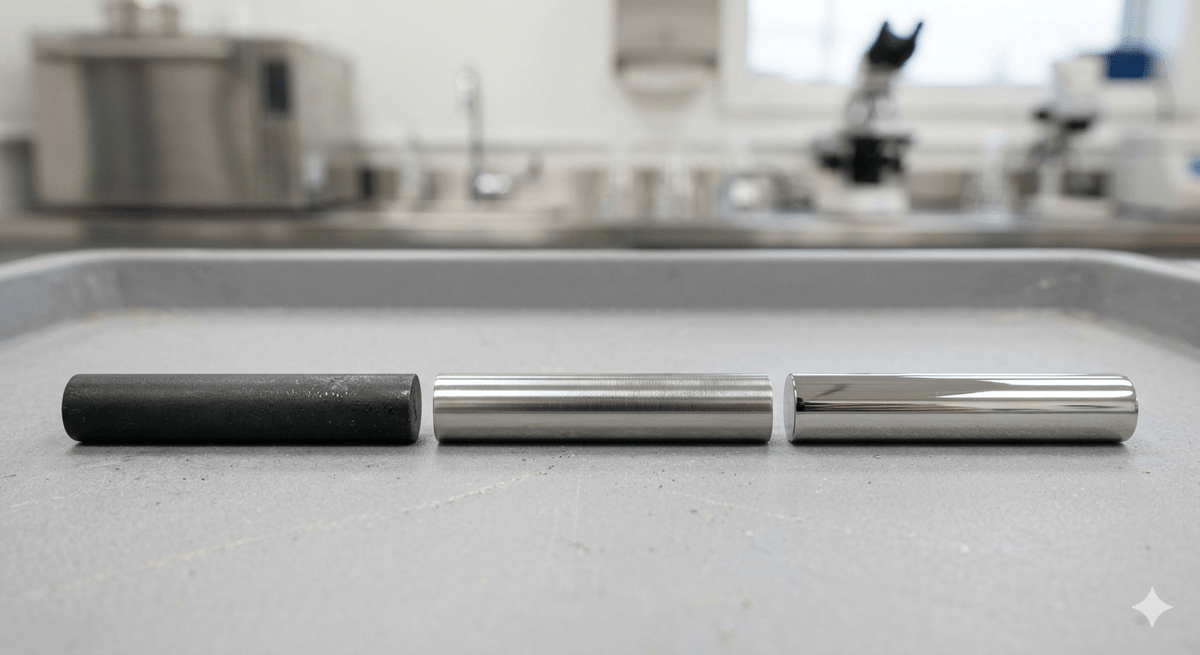
This is why surface finish decisions should happen early. Black oxide, mechanically polished, electropolished, etched, passivated, coated, or centerless-ground surfaces can behave differently. Even if the bulk alloy chemistry is similar, a different surface condition may affect corrosion behavior, coating adhesion, cleaning validation, and downstream inspection.
GEE SMA's nitinol wire capabilities include options such as black oxide and mechanically polished surfaces. For early development, those options give engineering teams a practical starting point for comparing surface conditions and discussing downstream finishing requirements. The right choice is not always the brightest finish. It is the finish that supports the final device process, biological evaluation, and functional performance.
Nickel Release and Corrosion Risk
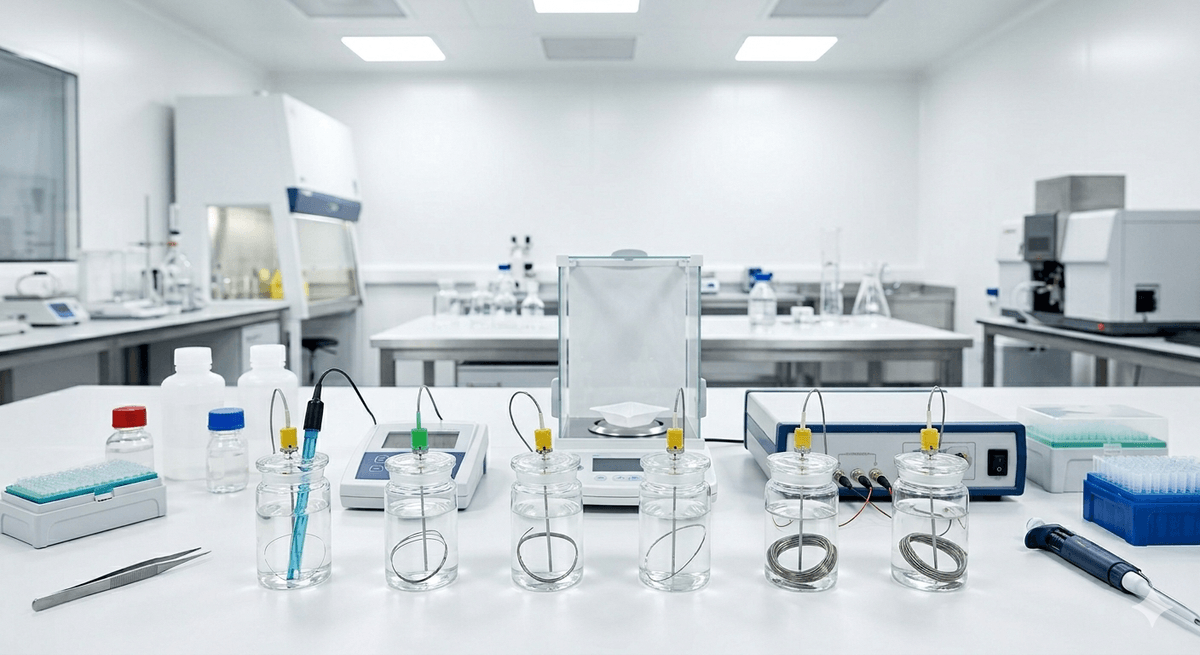
Because nitinol is a nickel-titanium alloy, nickel release is a common concern in medical device development. The presence of nickel does not automatically disqualify nitinol from medical use. Many widely used medical devices contain nitinol. The key question is whether the finished device, with its final surface and manufacturing history, can meet the relevant safety expectations for the intended use.
Nickel release can be influenced by surface roughness, oxide quality, inclusions, residual processing damage, heat-affected zones, cleaning residues, and exposure conditions. It may also be affected by device geometry. Fine wire, laser-cut structures, small struts, sharp transitions, or high-strain areas can create different local conditions than a simple flat coupon.
The FDA has discussed metal ion release and accelerated testing methods for nitinol, including the effect of different surface finishes. This reinforces a practical point for OEM teams: nickel release and corrosion behavior should be evaluated using representative material, representative processing, and appropriate test conditions. Early material selection should support the final test strategy rather than create surprises late in development.
ASTM F2063 and Material Expectations
ASTM F2063 is a key standard for wrought nickel-titanium shape memory alloys used in medical devices and surgical implants. The ASTM abstract describes requirements related to chemical, physical, mechanical, and metallurgical properties for nickel-titanium mill products. It also notes that mill product is not the final medical device shape, surface finish, or final property set. This distinction is important.
In practice, ASTM F2063 can help define incoming material expectations, but it does not replace device-level design verification or biocompatibility evaluation. A wire or tube can meet material requirements and still need additional processing, surface finishing, cleaning, and testing before it becomes part of a finished medical device.
GEE SMA has several resources on ASTM F2063, including key features of nitinol ASTM F2063 and ASTM standard nitinol specifications. These pages are useful background for engineers who need to connect material supply discussions with design requirements, documentation, and medical-device expectations.
Processing Choices That Can Affect Biocompatibility

Nitinol's final surface and mechanical behavior are shaped by processing. Heat treatment may tune transformation behavior and mechanical response, but it can also influence oxide formation. Grinding and polishing can improve dimensions or surface appearance, but they may introduce local damage if not controlled. Laser cutting can create heat-affected zones that require post-processing. Cleaning steps can remove residues, but process validation must show that the final surface is appropriate for the device.
For wire-based applications, drawing history, straightness, diameter tolerance, surface finish, and packaging can all matter. A component that will be coated, welded, crimped, or assembled into a catheter may need a different starting condition than a component that will remain exposed. For custom geometries, GEE SMA's page on custom wire forming is relevant because shape, profile, and downstream processing can influence both function and surface requirements.
In development, teams should document the intended process path as early as possible. The material supplier does not replace the OEM's quality system or regulatory responsibilities, but a supplier that understands nitinol processing can help align alloy selection, dimensions, surface condition, and packaging with the device team's next steps.
Biocompatibility Testing Is Device-Specific
A common mistake is to treat raw-material biocompatibility as if it automatically proves finished-device biocompatibility. Medical device evaluation is usually device-specific. Contact duration, body contact type, manufacturing residues, coatings, sterilization, packaging, and final geometry can all affect what testing is needed.
For nitinol devices, a test program may include cytotoxicity, sensitization, irritation or intracutaneous reactivity, systemic toxicity, material-mediated pyrogenicity, implantation, hemocompatibility, chemical characterization, corrosion testing, nickel release assessment, particulate evaluation, fatigue testing, and other studies depending on the device. The exact plan should be built from the intended use, applicable standards, and regulatory expectations.
The FDA's medical device materials resources emphasize that manufacturers submit biocompatibility information to demonstrate that device materials can be safely used in or on the body. For nitinol, the strength of the submission depends on representative final-device information, not only supplier claims. Good incoming material control still matters because it reduces variation and supports a more predictable development path.
How OEM Teams Should Specify Nitinol for Biocompatibility
A strong nitinol specification starts with the intended device function. Define whether the component is implantable, blood-contacting, tissue-contacting, or only indirectly exposed. Define how long it contacts the body and whether it will be coated, polished, welded, heat treated, sterilized, or assembled with other materials.
Next, define the material form and geometry. GEE SMA offers ASTM F2063 SE nitinol wire, rod, bar, and tube information that can help teams think through material form, alloy condition, and application requirements. For each form, OEMs should specify dimensions, tolerances, transformation temperature expectations, surface condition, packaging, and documentation needs.
Then define the surface and cleanliness requirements. If the component will be exposed in the finished device, surface finish may be part of the biological safety strategy. If the component will be coated, surface preparation may be critical for coating adhesion and durability. If it will be welded or laser processed, post-processing and inspection may be needed to control local surface changes.
Supplier Questions for Nitinol Biocompatibility Projects
When sourcing nitinol for a medical application, ask questions that connect material capability to biological risk. What alloy families and transformation temperature ranges are available? What diameter or wall-thickness tolerances can be held consistently? Which surface finishes are standard? Which finishes require custom development? Can the supplier provide traceability, lot documentation, dimensional inspection, and packaging suitable for fine medical components?
It is also useful to ask how the supplier handles special profiles, fine wire, tubing, or component-level processing. For projects involving movement, deployment, or repeated strain, ask about superelastic behavior, fatigue considerations, and process history. GEE SMA's nitinol properties and applications resource provides broader context on the alloy's behavior across different uses.
The best supplier conversation should include more than price and lead time. It should include material form, surface finish, downstream process steps, biocompatibility strategy, inspection requirements, and what information the OEM will need for design history and supplier qualification.
Conclusion
Nitinol biocompatibility depends on more than the fact that nitinol is widely used in medical devices. It depends on the final device design, surface condition, processing route, corrosion behavior, nickel release, cleaning, coating, sterilization, and verification strategy. The alloy offers valuable mechanical advantages, but those advantages must be supported by disciplined material selection and process control.
For medical device engineers and sourcing teams, the practical takeaway is clear: define the biological contact scenario early, then specify nitinol around both performance and safety needs. A well-controlled nitinol wire, tube, or component can support a stronger development process when the supplier understands the intended application and the OEM maintains appropriate device-level testing and quality controls.
GEE SMA can be considered as a nitinol material and component partner for teams evaluating medical nitinol, superelastic wire, shape memory alloy wire, ASTM F2063 material forms, custom profiles, and surface finish options. For regulated medical devices, final claims, validation, clinical use, and regulatory submissions must remain under the OEM's formal development and quality systems.