

A buyer may search for se508 niti materiasls, but the sourcing conversation should use the corrected term SE508 NiTi materials and then move quickly into specification details. SE508 is a familiar binary nickel-titanium superelastic alloy family. It is not a single finished product, and it is not enough to request it by name without defining form, active Af, surface, delivery condition, and test method.
GEE SMA product notes describe SE508 as a common superelastic NiTi alloy, with "SE" indicating superelastic behavior and "508" indicating about 50.8 at% nickel. The notes list SE508 in multiple forms, including wire, flat wire, rod, sheet, plate, foil, and strip. That matters because GEE SMA's shape memory alloy product range supports more than one SE508 buying route.
The Same Alloy Code Can Become Different Product Forms
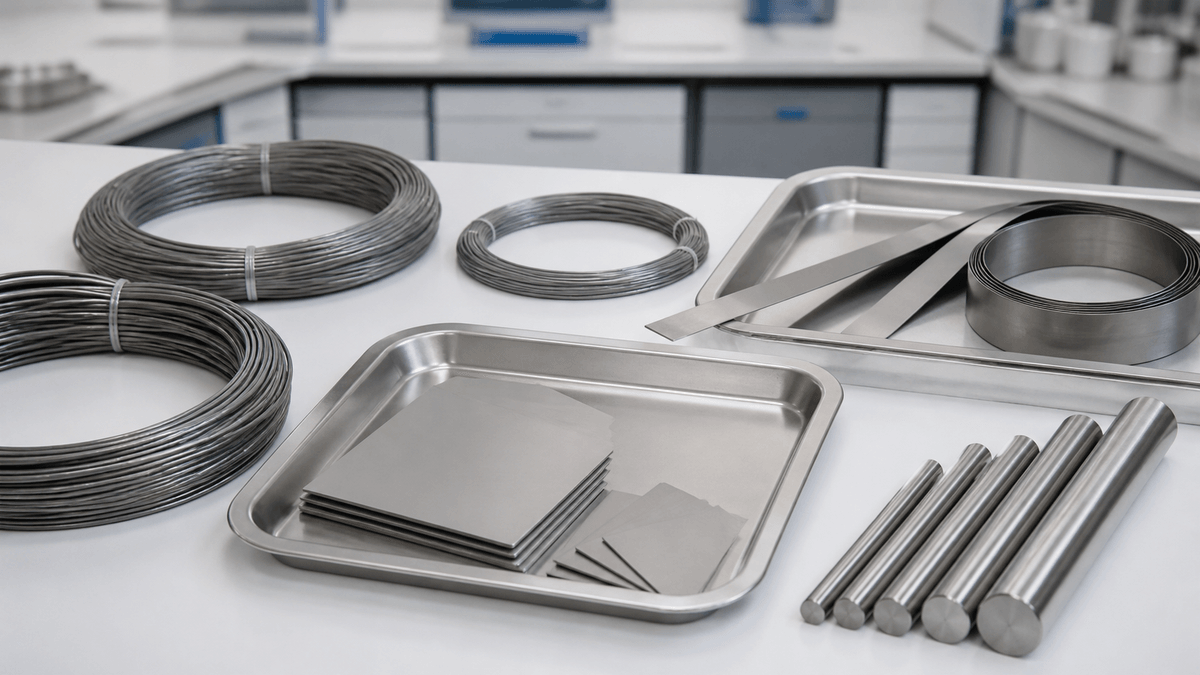
SE508 NiTi materials are often discussed as wire first, but many projects need a different form. A fine wire may be used for guidewire-related subcomponents, baskets, mandrels, orthodontic elements, fishing leaders, springs, or custom formed parts. Flat wire may be selected when a rectangular cross section, wider contact area, or specific bending profile is needed. Rod, sheet, plate, foil, and strip can support machining, forming, stamping, prototype fixtures, or component development.
GEE SMA product notes list SE508 wire diameter from 0.05 mm [0.002 in.] and up. For flat wire, they list minimum thickness around 0.1 mm for rolled flat wire, with drawn flat wire used where precision and shape consistency are important. For larger product forms, the notes connect SE508 with rod, sheet, plate, foil, and strip dimensions. These ranges should be treated as starting points for discussion, not as a substitute for drawing-based confirmation.
GEE SMA's nitinol wire capability is relevant when the SE508 requirement is round or shaped wire, while its broader product-family language is useful when buyers compare flat wire, strip, sheet, or rod for the same alloy family.
Active Af Controls the Useful Superelastic Window
SE508 is selected for superelastic behavior, but active Af still needs to be controlled. If active Af is not matched to the use environment, the material may not provide the expected recovery, plateau behavior, or handling feel. Product notes list fully annealed SE508 active Af around -10 to 5 degrees C, typical active Af around -5 to 10 degrees C for superelastic straight annealed material, about 15 to 30 degrees C after short-time heat treatment, and up to about 60 degrees C after long-time heat treatment.
Those values show why "SE508" is not enough. A straight annealed wire for superelastic recovery is not the same as a heat-treated part that has been adjusted for a warmer transformation response. A buyer should state the working temperature, active Af target, tolerance, and whether the supplier or customer will perform final heat treatment. GEE SMA's SE508 active Af and test controls are important when the material must meet a defined superelastic response.
ASTM F2516 is often used to describe superelastic tension behavior through upper plateau strength, lower plateau strength, residual elongation, tensile strength, and elongation. Transformation temperature may require DSC or another suitable thermomechanical method depending on the specification. The test method should match the form and final condition being purchased.
Surface Finish Depends on the Next Process
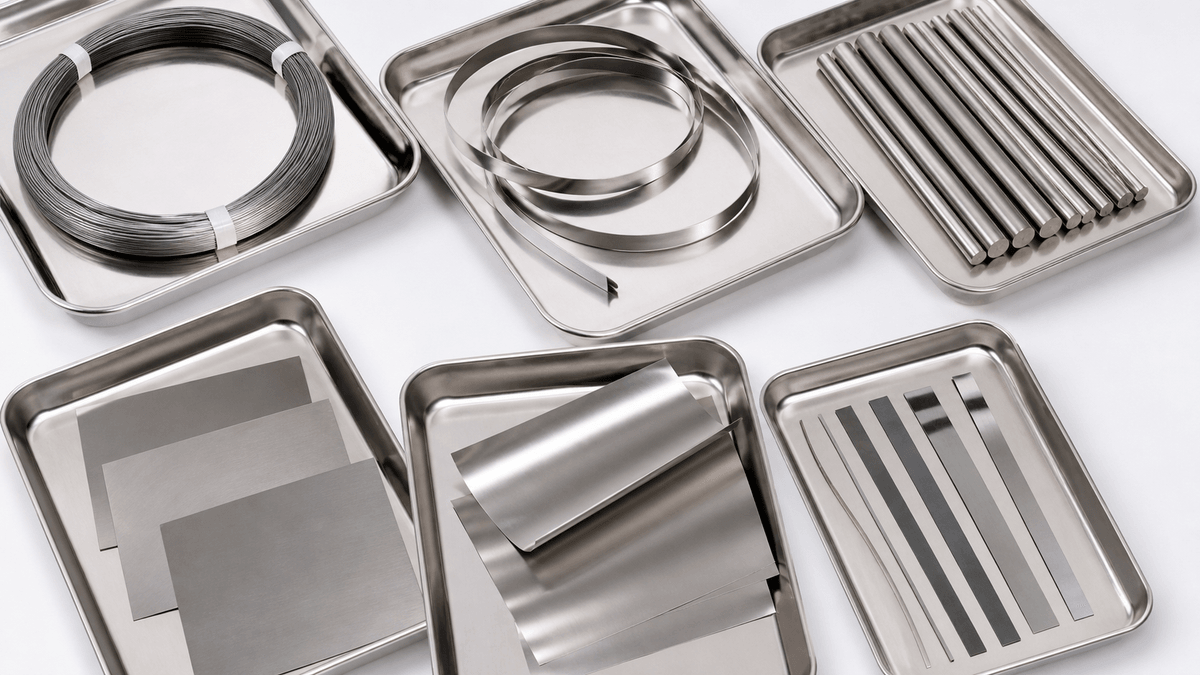
GEE SMA product notes list SE508 surface options such as black oxide, light oxide, and mechanically polished finishes. The right choice depends on how the material will be used after delivery. Black oxide may be acceptable as an intermediate surface for some processing routes. Light oxide can be useful when a cleaner drawn condition is preferred. Mechanically polished material may be selected when a brighter surface, reduced roughness, or easier inspection is needed.
Surface condition becomes more critical when SE508 NiTi materials are used in medical-device development, precision guidewire-related components, fatigue-sensitive springs, or small formed parts. The surface that arrives from the supplier may still be changed by grinding, polishing, electropolishing, passivation, coating, cleaning, or assembly. GEE SMA's nitinol surface-control process thinking is relevant because the final surface cannot be separated from manufacturing history.
For medical material discussions, ASTM F2063-26 covers wrought nickel-titanium mill products for medical devices and surgical implants. Its scope also notes that mill product is not intended to have the final shape, final surface finish, or final properties of the device or component. That distinction keeps SE508 material sourcing precise and avoids unsupported finished-device claims.
Delivery Condition Shapes What the Buyer Can Do Next
Delivery condition should be written clearly on the RFQ. Cold worked material may be appropriate when the buyer intends to perform additional heat treatment, forming, or thermomechanical processing. Annealed or straight annealed material may be preferred when the supplied form needs a controlled starting response. For wire, straightness, spool size, coil memory, cut length, and packaging can all affect downstream handling.
For formed components, delivery condition and heat setting cannot be separated. If a customer receives straight SE508 wire and then forms it in-house, the customer must confirm how the final process changes active Af, plateau behavior, geometry, and surface. If the supplier provides formed components, the drawing and inspection plan should include the final shape and final material behavior. GEE SMA's custom wire forming route fits projects where SE508 must become a loop, hook, frame, basket, or other trained shape.
SE508 Is Not Always the Best Nearby Option
SE508 is common, but material selection should still compare neighboring alloy families. GEE SMA product notes include SE510, SE508 ELI, LSE5065, LSE507 ELI, and SE NTC in related superelastic discussions. SE510 can be considered for colder transformation behavior. LSE grades can provide warmer transformation temperatures and different plateau behavior under comparable processing. SE NTC includes chromium for lower-temperature superelastic applications.
The point is not to replace SE508 automatically. It is to make sure the selected material window fits the design. A buyer working on guidewire-related material may value stiffness, kink resistance, and surface control. A buyer working on a flexible industrial part may prioritize recoverable bending and price. A buyer working on a medical component may need documentation, surface evidence, and incoming inspection. GEE SMA's SE508 selection guidance is strongest when used as a comparison tool, not as a one-word answer.
When SE508 Enters Medical Material Discussions
Medical nitinol sourcing needs extra caution. A supplier can provide controlled material and component support, but it should not imply finished-device approval from raw material status alone. The OEM remains responsible for finished design, verification, validation, biological evaluation, regulatory submission, labeling, and all use claims. FDA nitinol guidance asks device teams to consider material composition, processing, surface characterization, corrosion, nickel release, fatigue, and other device-specific questions when applicable.
GEE SMA's medical nitinol material-control approach is useful when SE508 is being discussed for a medical-device program because it keeps the conversation at the material and component level. The specification should include lot traceability, alloy code, active Af, surface, mechanical behavior, and final processing route.
RFQ Checklist for SE508 NiTi Materials
- Correct the material name to SE508 NiTi materials or SE508 nitinol, then state the required form.
- Define wire diameter, flat wire thickness and width, strip size, rod diameter, sheet thickness, or drawing dimensions.
- Specify active Af target, tolerance, and whether the material is fully annealed, straight annealed, cold worked, or heat treated.
- Choose surface condition: black oxide, light oxide, mechanically polished, or a specified downstream finish.
- Ask what test evidence is available for the supplied condition, including transformation temperature and superelastic behavior when relevant.
- Describe downstream forming, heat setting, polishing, coating, assembly, or medical-device development needs.
SE508 NiTi materials are useful because they can provide controlled superelastic behavior across several product forms. The sourcing risk is treating the alloy code as the whole specification. Product form, active Af, delivery condition, surface finish, test evidence, and final processing route turn SE508 from a search term into an engineering material that can be evaluated with confidence.