

Superelastic Is a Condition, Not a Buzzword
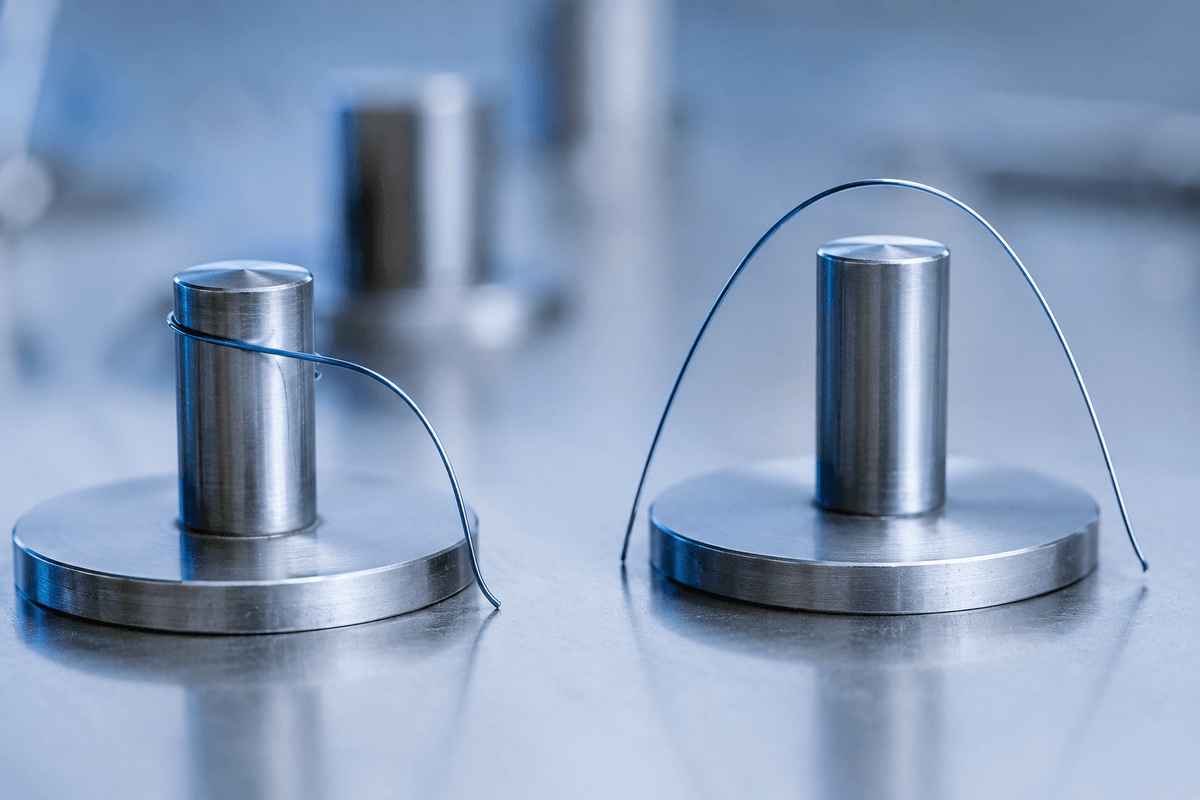
Nitinol super elastic wire is popular because it can bend and recover in ways that many conventional metals cannot. But "super elastic" should not be treated as a loose marketing phrase. It describes material behavior that depends on alloy composition, cold work, heat treatment, transformation temperature, test temperature, surface quality, and strain level.
GEE SMA product notes identify superelastic wire-related searches such as nitinol super elastic wire, super elastic nitinol wire, and superelastic NiTi wire. They also place SE508 at the center of many superelastic discussions. SE508 is described as a common binary nickel-titanium superelastic alloy, with SE standing for superelasticity and 508 indicating a nickel atomic ratio near 50.8 percent.
GEE SMA supplies nitinol wire and related shape memory alloy products. For buyers, the key is to specify the superelastic behavior needed rather than simply asking for "super elastic wire."
Why SE508 Is Common
GEE SMA product notes describe SE508 as suitable for superelastic applications at room temperature or body temperature, depending on processing. They also list product forms such as wire, flat wire, rod, sheet, plate, foil, and strip. For wire buyers, SE508 is often attractive when a component needs bend recovery, kink resistance, and stable behavior in a practical operating temperature range.
The same notes describe SE508 wire diameters from 0.05 mm, or 0.002 inch, and up. They also describe typical Active Af values that depend on condition, such as superelastic straight annealed material and additional heat treatment routes. These values should be confirmed for the actual order because transformation behavior changes with thermomechanical history.
GEE SMA's SE508 nitinol material content can help buyers understand why this alloy family appears in medical and industrial sourcing conversations.
SE508 vs Softer Superelastic Options
SE508 is often a practical starting point for superelastic wire because it can support strong recovery at useful operating temperatures. In some applications, however, the strongest recovery is not always the best feel. A fishing leader, flexible frame, or handling-sensitive component may benefit from a softer superelastic response, while a guidewire-related core may need a different balance of recovery, straightness, and process compatibility.
GEE SMA product notes also refer to lower-stiffness superelastic options such as LSE5065 in fishing wire contexts. Buyers should compare options by function rather than by alloy name alone. The important question is how the wire bends, recovers, carries load, and survives the customer's downstream processing.
For a new program, testing two or three wire conditions can be more useful than asking for the "best" superelastic wire. The supplier can recommend a starting route, but the application must confirm which recovery behavior is actually preferred.
Mechanical Properties Need Context
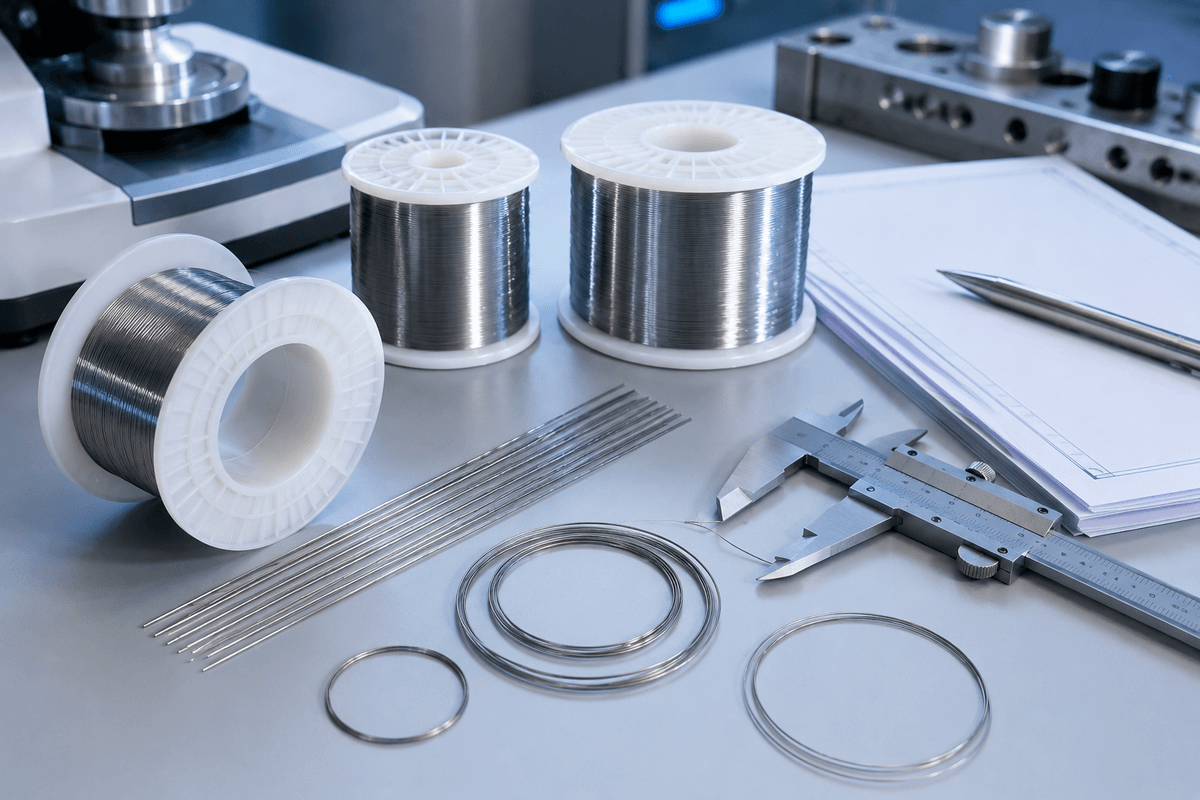
GEE SMA product notes for guidewire-related SE508 material include mechanical and superelastic property categories such as tensile strength, elongation, upper plateau strength, lower plateau strength, and residual elongation after 6 percent strain. Those categories are useful because superelastic wire is not judged by tensile strength alone.
Plateau behavior influences how the wire loads and unloads during bending or strain. Residual elongation helps indicate how well the wire returns after deformation under a defined test condition. Elongation and tensile strength still matter, but they do not fully describe the feel and recovery of a superelastic component.
GEE SMA product notes reference ASTM F2516 for tension testing of nickel-titanium superelastic materials. Buyers should confirm test temperature, sample condition, and acceptance criteria because the same wire can behave differently under different test conditions.
Active Af Sets the Use Window
Transformation temperature is central to superelastic wire selection. If the wire is not in the correct phase at the operating temperature, it may not provide the expected recovery. GEE SMA product notes describe SE508 Active Af behavior in different conditions, including values around the low-temperature range for superelastic straight annealed material and higher values after certain heat treatments.
For medical device components, the wire may need to behave predictably near body temperature. For room-temperature industrial products, the operating environment may be different. For prototypes exposed to heat during assembly, the team should consider whether processing will shift transformation behavior.
GEE SMA's technical information page is relevant because it frames nitinol performance as a result of processing, not only composition. Active Af should be requested and verified according to the final material condition.
Surface Finish and Diameter
Superelastic behavior is only useful if the wire also fits the physical design. Diameter affects flexibility, force, bend radius, fatigue risk, and handling. A very fine wire may recover well but require careful packaging. A larger wire may deliver more force but become harder to route through compact geometry.
Surface finish also affects downstream performance. GEE SMA product notes include black oxide, light oxide, and mechanically polished surfaces for superelastic wire-related product families. For medical or coating-sensitive applications, surface condition can affect adhesion, corrosion behavior, nickel release, fatigue initiation, and inspection.
GEE SMA's nitinol biocompatibility article is useful when superelastic wire will become part of a medical device. The raw material surface and the finished device surface should not be confused.
Applications That Need Superelastic Wire
Nitinol super elastic wire is used when a component must bend and recover. Medical guidewire cores, snares, baskets, frames, flexible supports, orthodontic elements, fishing wire, eyeglass frames, and industrial mechanisms can all benefit from recoverable deformation. The correct wire, however, differs across those applications.
For guidewire-related use, GEE SMA's nitinol guidewire technology article explains why flexibility and kink resistance matter. For fishing wire, SE508 may offer stronger superelastic recovery, while LSE5065 may provide a softer superelastic feel according to GEE SMA product notes. For custom wire forms, shape setting and surface finish become part of the design.
The application should define the wire. A buyer should not assume the same superelastic wire is ideal for a guidewire, fishing leader, orthodontic raw material, and industrial spring.
From Straight Wire to Custom Form
Many superelastic wire applications start with straight wire but end as a formed component. The wire may be bent, coiled, shaped, laser cut, welded, ground, electropolished, coated, or heat set. Each downstream operation can affect final recovery, fatigue behavior, and surface quality.
If the wire will become a custom shape, buyers should discuss the final geometry early. A straight wire specification may not be enough for a basket, frame, spring, hook, clip, or guidewire subcomponent. GEE SMA's custom nitinol wire forming experience is relevant when the final product needs shape setting or complex geometry rather than bulk straight wire only.
Heat setting deserves special attention. Nitinol can remember a shape, but the shape-setting route must be compatible with alloy, diameter, surface, fixture design, and final performance target. A material that works in straight form may need process adjustment when converted into a three-dimensional part.
Common Sourcing Mistakes
One common mistake is ordering by diameter alone. Diameter matters, but it does not define Active Af, plateau behavior, surface finish, straightness, or recovery after strain. Another mistake is asking for superelastic wire without naming the operating temperature. Superelasticity is temperature-dependent, so the test condition must match the intended use.
A third mistake is ignoring packaging. Fine superelastic wire can be damaged by poor spool handling, tight bends, scratches, or lot mixing. Packaging may look like a logistics detail, but it protects the material behavior the buyer is paying for.
Specification Checklist
- Define the operating temperature and required Active Af range.
- Select the alloy family, such as SE508, SE508 ELI, SE510, or a lower-superelastic option.
- Specify wire diameter, tolerance, straightness, and delivery form.
- Choose delivery condition: cold drawn, cold worked, straight annealed, or customer heat-treated.
- Define surface condition: black oxide, light oxide, mechanically polished, or further finished.
- Request relevant mechanical and superelastic test data, including residual elongation if needed.
- Confirm packaging to avoid kinks, scratches, and lot mix-ups.
This checklist turns "nitinol super elastic wire" into a controlled sourcing request. It also helps suppliers identify whether the project needs standard wire, custom processing, or further application discussion.
Bottom Line
Nitinol super elastic wire is valuable because it can provide recoverable deformation, kink resistance, and compact mechanical performance. SE508 is a common alloy family for these requirements, but final behavior depends on processing, transformation temperature, diameter, surface, and test condition.
For buyers evaluating superelastic nitinol wire, GEE SMA can support discussions around SE508, SE508 ELI, guidewire-related material, fishing wire, custom profiles, and surface options. The right specification starts with the operating temperature and the component function.