

Why Fishing Wire Is a Serious Material Topic
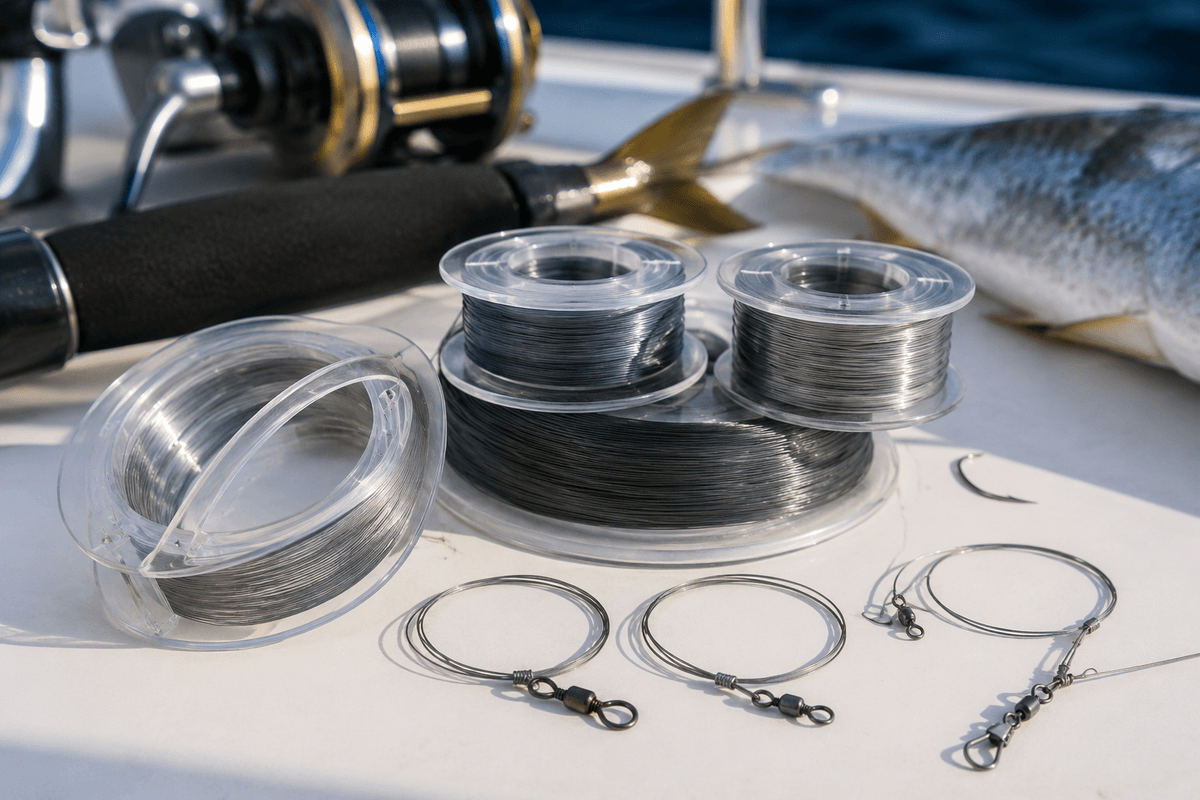
Nitinol fishing wire may sound like a niche product, but the material challenge is real. Fishing leaders and wire lines can face bending, twisting, bite damage, saltwater exposure, abrasion, repeated handling, and sudden tensile loads. A wire that kinks, corrodes, or takes a permanent bend can fail at exactly the wrong moment.
GEE SMA product notes describe nitinol fishing wire as nickel-titanium shape memory alloy wire with flexibility, kink resistance, corrosion resistance, wear resistance, and strong tensile behavior. The notes connect the material with deep-sea, ocean, and marine fishing conditions where ordinary wire may break, wear, or deform too easily.
GEE SMA supplies nitinol wire and related shape memory alloy materials. For fishing wire buyers, the key is to specify the wire around actual use conditions instead of selecting only by diameter or price.
SE508 and LSE5065: Two Different Feels
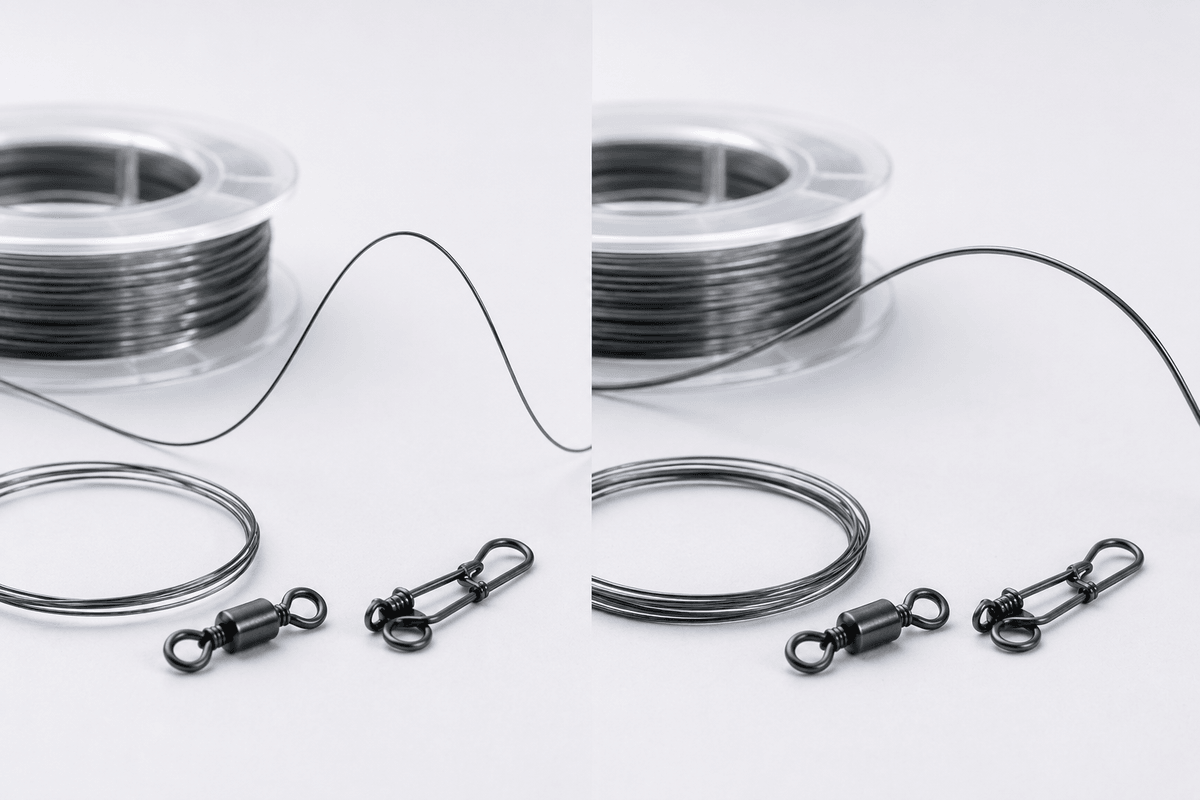
GEE SMA product notes list SE508 and LSE5065 as alloy options for nitinol fishing wire. The notes describe SE508 as offering stronger superelastic behavior, while LSE5065 is described as a softer superelastic option. That difference can matter because fishing applications do not all want the same wire feel.
A stiffer, stronger recovery may be useful when bite resistance, snap-back, and shape recovery are priorities. A softer wire may be easier to handle, tie, or rig in certain situations. The product notes also indicate that SE508 and LSE5065 differ in residual elongation after 6 percent strain under ASTM F2516-style testing and in transformation temperature under ASTM F2082-style testing.
Buyers should treat these descriptions as selection guidance, not as a replacement for field testing. The right wire depends on target fish, lure type, leader length, handling style, water environment, and user preference.
What Kink Resistance Means on the Water
For fishing applications, kink resistance is practical, not theoretical. A leader may be bent during rigging, twisted by a lure, crushed by pliers, pulled against structure, or shocked by sudden movement. A conventional wire that keeps a sharp bend can change lure action and become a weak point. Superelastic nitinol is attractive because it can recover from bending that would permanently deform many other wires.
That does not mean the wire is indestructible. End terminations, crimps, knots, coatings, abrasion, and overloading can still create failure points. Product developers should test the entire leader or rigging system, not only a bare wire segment.
Field feel is also part of the decision. A wire that recovers strongly may feel lively and springy, while a softer superelastic option may be easier to handle in certain rigs. This is why SE508 and LSE5065 should be compared in the actual product form before a brand commits to one alloy option.
Diameter and Surface Choices
GEE SMA product notes list nitinol fishing wire diameters from 0.10 mm, or 0.004 inch, and up. They also identify 0.20 to 0.60 mm, or 0.008 to 0.035 inch, as a common range. Those values give buyers a practical starting point, but diameter should be selected around tensile requirement, flexibility, lure action, and rigging method.
Surface finish also matters. The product notes list black oxide and mechanically polished surfaces. For black oxide, the notes caution that the wire should not leave graphite residue that contaminates hands. Mechanically polished wire provides a metallic surface. Buyers should think about handling feel, corrosion exposure, visibility, and downstream packaging when selecting surface condition.
GEE SMA's superelastic nitinol wire content is relevant because fishing wire relies on the same recoverable deformation behavior that makes nitinol attractive in other applications.
Superelasticity in Real Use
Superelasticity is the reason nitinol fishing wire can be different from conventional metal wire. When used within the proper strain range, the wire can bend and recover instead of forming a permanent kink. This can be valuable when the wire is pulled through rough motion, coiled and uncoiled, struck by fish, or stored between uses.
GEE SMA product notes describe advantages such as superelasticity, kink resistance, corrosion resistance, anti-bite behavior, wear resistance, and strong tensile performance. These characteristics should be evaluated in the actual fishing setup. A wire that looks excellent in a straight pull test may behave differently when knotted, crimped, bent around hardware, or exposed to repeated saltwater use.
For product developers, bench testing should include bending, tensile loading, abrasion, corrosion exposure, surface residue, and end-termination methods. Nitinol can provide useful performance, but the rigging system still matters.
Cold Drawn and Straight Annealed
GEE SMA product notes describe fishing wire processing as cold drawn and then straight annealed. This matters because nitinol behavior is process-sensitive. Cold work and heat treatment shape the final superelastic response, straightness, and handling feel.
For buyers, the delivery condition should be stable across lots. If one order feels different from the next, the issue may come from diameter, alloy code, heat treatment, surface condition, or packaging. This is why fishing wire should still be sourced with engineering discipline, even when the end market is recreational or marine rather than medical.
GEE SMA's technical information page provides broader context on nitinol manufacturing steps and process control.
Packaging for Tackle Brands
Fishing wire often moves from bulk material into branded leader packs, spools, or assembled rigs. Packaging should protect the wire from tight bends, abrasion, and surface contamination before it reaches the final user. For fine diameters, spool winding quality can affect how easily the wire pays off and how consistently it handles during assembly.
Lot separation is useful for brands that want consistent product feel. If a tackle brand is testing several diameters, alloy codes, or surface conditions, each sample should be marked clearly so field feedback can be traced back to the correct material. That discipline avoids confusing one wire condition with another.
Surface choice can also influence the retail product. Black oxide may provide a darker look, while mechanically polished wire gives a metallic appearance. The preferred surface depends on visibility, handling feel, residue expectations, downstream coating, and the product's target fishing environment.
How to Compare Against Other Wire Materials
Compared with stainless steel or coated wire, nitinol fishing wire is usually selected for recoverable bending and kink resistance. The buyer should still compare tensile strength, abrasion behavior, crimp compatibility, knot behavior, corrosion exposure, cost, and user preference. The best material is the one that performs in the whole rig, not only in a material data sheet.
For marine use, corrosion resistance is only one part of the decision. Saltwater exposure, sand, teeth, rocks, hooks, swivels, and storage conditions all affect performance. A practical evaluation should include wet handling and repeated bending, not only a dry tensile pull.
What to Ask Before Buying
- Is SE508 or LSE5065 better for the desired balance of recovery and softness?
- What diameter range is suitable for the target fishing application?
- Which surface is preferred: black oxide or mechanically polished?
- Will the wire be crimped, knotted, coated, packaged, or assembled into leaders?
- What tests are needed for tensile strength, kink recovery, corrosion exposure, and abrasion?
- How will the wire be spooled and protected during shipping?
These questions are useful for wholesalers, tackle brands, and product developers who want nitinol fishing wire to behave consistently in real use.
Bottom Line
Nitinol fishing wire is attractive because superelastic nickel-titanium wire can resist kinking, recover shape, and survive harsh handling better than many conventional wire options. SE508 and LSE5065 offer different behavior profiles, so the best choice depends on the fishing application and desired wire feel.
For buyers evaluating nitinol fishing wire, GEE SMA can support discussions around alloy code, diameter, surface finish, delivery condition, packaging, and test expectations. The strongest sourcing approach is to match the wire to the fishing environment and rigging method.