

Orthodontic Wire Is a Material System
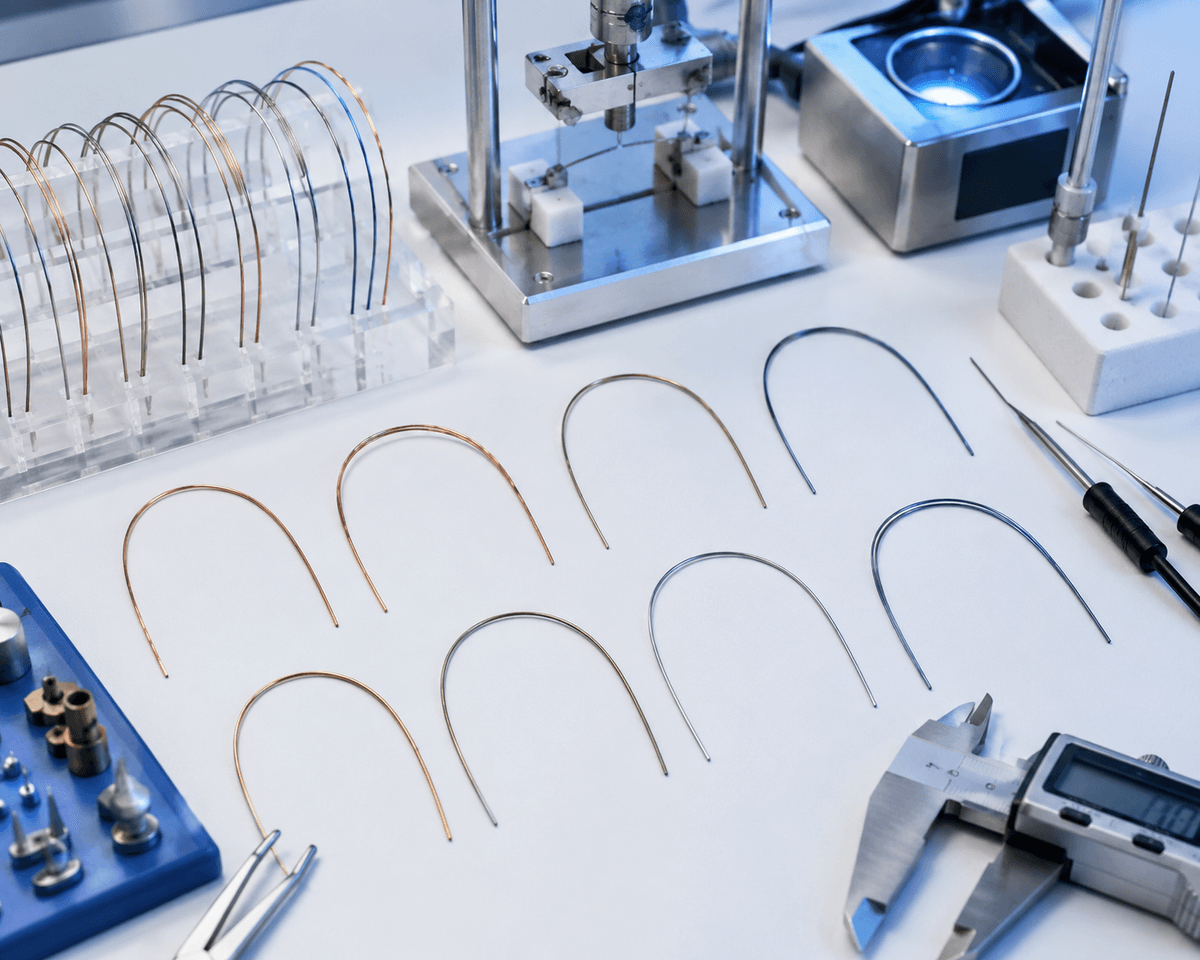
Copper NiTi wire in orthodontics is not only a dental product topic. It is a material-control topic. The wire must combine thermal response, force delivery, springback, surface quality, and downstream arch wire processing. A small change in alloy family, transformation temperature, cold work, or heat treatment can change the way the finished arch wire behaves.
GEE SMA product notes describe Copper NiTi wire and Copper NiTiCr wire as raw materials for preparing NiTi arch wire. The notes indicate that both Copper NiTi and Copper NiTiCr can be used for dental arch wire preparation, with Copper NiTiCr used more frequently in this context. They also connect these alloys with thermal activated NiTi arch wire and light-force NiTi arch wire.
GEE SMA supplies nitinol wire, actuator wires, springs, and shape memory alloy materials. For orthodontic raw material, the company should be considered at the material-supply level, while finished orthodontic device claims remain with the OEM or dental product manufacturer.
Why Copper and Chromium Matter
GEE SMA product notes describe Copper NiTi as a narrow-hysteresis shape memory alloy. They also explain that chromium can be added to mediate the increase in transformation temperature caused by copper. This is why Copper NiTiCr appears in orthodontic arch wire discussions: it can support thermal-response behavior in a temperature range relevant to oral use.
The product notes list Copper NiTiCr Active Af values from about 25 to 45 degrees C, with common points such as 27, 35, and 40 degrees C. For orthodontic wire development, those values matter because the wire may be easier to engage when cooler and then provide force as it warms in the mouth. The exact behavior depends on the final arch wire design and process.
GEE SMA notes also describe an Active Af tolerance around +/-2 degrees C, with stricter control possible through composition and thermomechanical treatment. Buyers should confirm what tolerance is needed for the finished orthodontic product rather than treating all Copper NiTi wire as equivalent.
Force Delivery Is the Real Buyer Concern
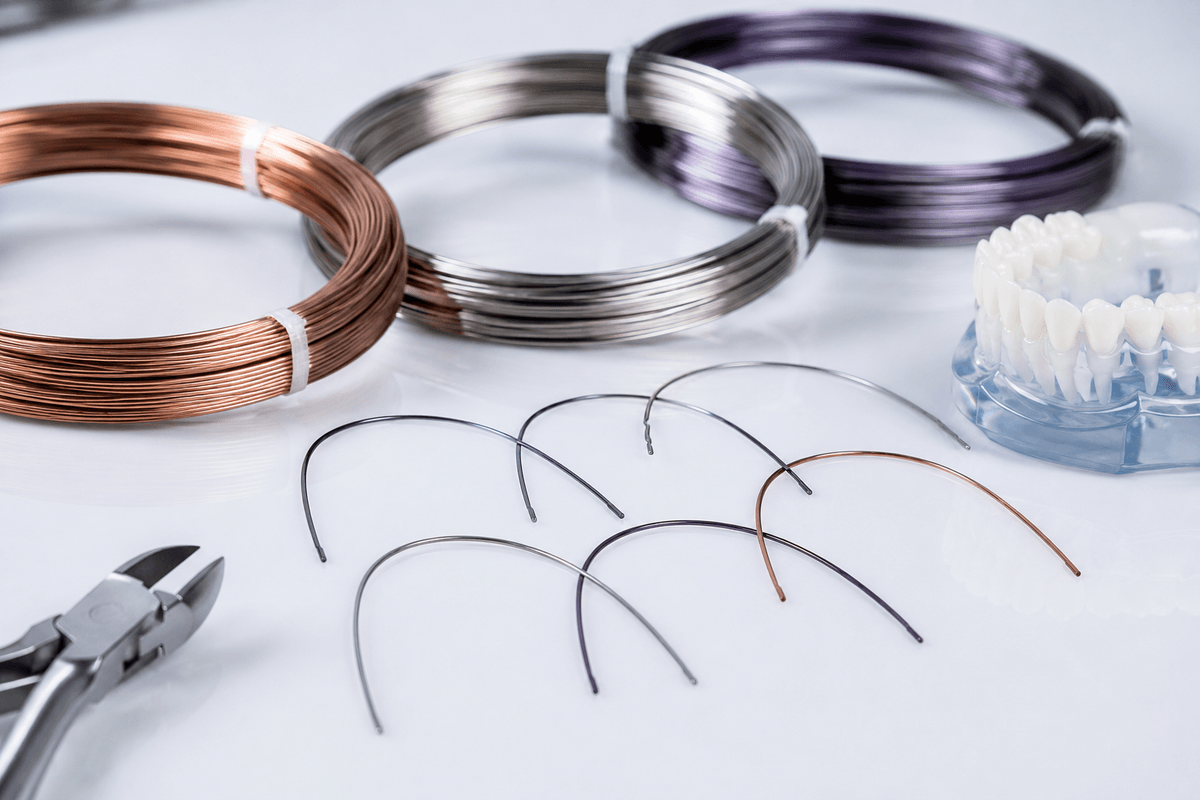
In orthodontics, the material is chosen for force behavior, not only for composition. GEE SMA product notes discuss superelastic behavior and stress-strain cycling for Copper NiTi arch wire material. They state that copper addition can improve stress-strain cycling characteristics and reduce stress hysteresis compared with binary NiTi in the cited internal notes.
For a buyer, the practical question is how the raw wire will support the final arch wire program. The finished product may need light continuous force, engagement behavior, springback, and stable response through repeated temperature and loading changes. Raw wire quality is necessary, but final performance also depends on downstream drawing, shaping, heat treatment, surface treatment, and packaging.
GEE SMA's shape memory alloy products page provides broader context on shape memory and superelasticity. Orthodontic applications are a specialized use of those material principles.
Specification Details to Confirm
GEE SMA product notes list Copper NiTi orthodontic wire raw material diameters from 0.05 mm, or 0.002 inch, and up. They also list cold worked, cold drawn, and straight annealed delivery condition options. Surface options include black oxide and mechanically polished conditions. These details should be selected based on the customer's downstream arch wire process.
If the customer will perform additional thermomechanical treatment, cold worked material may be appropriate. If the customer needs a more stable straight material condition, straight annealed supply may be relevant. If the final product requires bright appearance or easier inspection, mechanically polished wire may be preferred over black oxide.
GEE SMA's custom nitinol wire forming article is useful when orthodontic raw material will be transformed into specific arch wire shapes, rectangular profiles, or application-specific geometries.
Raw Material Is Not the Final Arch Wire
A Copper NiTi or Copper NiTiCr wire order can support an orthodontic arch wire program, but it does not replace the finished product process. The final arch wire may require rectangular profiling, forming, heat treatment, surface finishing, end-shape control, packaging, and labeling. Each of those steps can influence force delivery and temperature behavior.
This distinction is important for communication with suppliers. A material supplier can help define alloy family, diameter, Active Af range, surface condition, and lot documentation. The orthodontic product manufacturer must define the finished arch wire geometry, clinical positioning, regulatory route, and validation evidence.
For development work, buyers should keep raw material tests and finished arch wire tests separate. If the raw wire is accepted at one stage, the team still needs to confirm that downstream processing has not shifted the final force-temperature behavior outside the intended range.
Temperature Testing Should Be Clear
For Copper NiTi wire in orthodontics, transformation temperature is central. GEE SMA product notes reference Active Af and mention test methods such as ASTM F2082 for bend and free recovery in related shape memory alloy contexts. The buyer should define whether the temperature value is measured on raw material, intermediate material, or finished arch wire.
This distinction matters because thermomechanical processing can shift behavior. A raw wire may not show the same response after drawing, forming, heat treatment, or finishing. If the finished arch wire must meet a defined temperature response, the test plan should reflect the final condition or a justified intermediate condition.
Documentation should also identify alloy code, lot number, size, and transformation temperature evidence. GEE SMA product notes mention package marking with alloy code, size, and manufacturer lot number unless otherwise specified. For OEM buyers, this is part of traceability, not merely labeling.
What a Sample Plan Should Include
A useful sample plan should include more than one spool of wire. It should identify alloy family, requested Active Af, diameter, delivery condition, surface finish, package form, lot marking, and the intended downstream process. If the buyer plans to draw, flatten, form, or heat treat the wire, that information should be included before sampling.
For orthodontic development, it may also be useful to compare several Active Af targets. A 27 degrees C, 35 degrees C, or 40 degrees C material target can support different product concepts, but the final choice depends on the finished arch wire design. Controlled sampling helps the engineering team learn which route supports the desired force level and activation behavior.
Samples should be evaluated after the same processing steps planned for production. Testing only the incoming round wire may miss changes introduced by shaping, heat treatment, or finishing. This is especially important when a buyer wants stable behavior across production lots.
Surface and Cleanliness
GEE SMA product notes mention black oxide and mechanically polished surfaces for Copper NiTi-related wire products. Surface condition should be chosen with downstream orthodontic processing in mind. A raw material surface that is acceptable before forming may not be the final surface needed for a finished dental product.
Clean handling also matters. Wire should be protected from scratches, kinks, lot mix-ups, and contamination during storage and shipping. Buyers who need stricter cleanliness or surface requirements should specify those requirements early instead of assuming that standard industrial packaging covers every dental-product need.
Packaging and Handling
Orthodontic wire raw material can be sensitive to handling. GEE SMA product notes describe spooled packaging for smaller diameters and larger coils for diameters above 1.2 mm, with soft wrapping and carton packaging. They also mention keeping carton net weight controlled. These details help protect wire surface and prevent deformation during shipping.
Packaging should match the wire diameter, surface condition, and downstream process. A wire that is scratched, kinked, or mixed with the wrong lot can create production issues. If a customer needs clean surface condition or strict lot separation, packaging and marking should be part of the purchase requirement.
GEE SMA's technical information page supports this process view: nitinol performance comes from controlled manufacturing and handling, not simply from alloy name.
Supplier Questions for Orthodontic Raw Material
- Is Copper NiTi or Copper NiTiCr the better fit for the intended arch wire product?
- What Active Af target and tolerance are required for the finished wire behavior?
- What diameter, profile, delivery condition, and surface finish does the downstream process need?
- Will the customer perform additional drawing, forming, heat treatment, polishing, or packaging?
- How will the material be labeled, spooled, protected, and traced by lot?
- Which tests should be performed on raw wire versus finished arch wire?
These questions help buyers avoid treating Copper NiTi orthodontic wire as a simple catalog item. The material must fit the final arch wire process.
Bottom Line
Copper NiTi wire in orthodontics is valuable because it can support thermal activation, controlled force behavior, and narrow hysteresis when processed correctly. Copper NiTiCr is especially relevant when orthodontic arch wire applications need transformation temperatures in the oral-use range.
For manufacturers evaluating Copper NiTi or Copper NiTiCr raw material, GEE SMA can support conversations around alloy family, Active Af, delivery condition, surface finish, diameter, packaging, and traceability. The best results come from specifying the finished arch wire requirement before buying raw wire.