

"Medical" Must Be Defined in the Purchase Order
The phrase nitinol wire medical can mean several different things. A buyer may be looking for guidewire core material, surgical tool wire, orthodontic raw material, retrieval device wire, frame material, test samples, or early development stock for a medical device program. These uses are not identical. They may need different alloy codes, transformation temperatures, surfaces, tolerances, mechanical properties, and documentation packages.
For that reason, "medical nitinol" should not be treated as a casual label. It should become a controlled material specification. GEE SMA product notes describe medical nitinol material in relation to ASTM F2063 and alloy codes such as SE508, SE508 ELI, SE510, LSE5065, and LSE507 ELI. These details help buyers move from broad interest to an actual engineering order.
GEE SMA supplies nitinol wire, guidewire-related material, superelastic wire, shape memory wire, actuator wire, springs, sheets, tubes, and custom forms. For medical device teams, the company should be viewed as a material and component partner. Finished device design, validation, biological evaluation, sterilization, labeling, and regulatory submissions remain the device manufacturer's responsibility.
ASTM F2063 Is a Starting Point
GEE SMA product notes describe medical grade nitinol material in compliance with ASTM F2063, the standard specification commonly referenced for wrought nickel-titanium shape memory alloys for medical devices and surgical implants. This standard language is important because it gives buyers and suppliers a shared framework for composition, material form, and quality expectations.
ASTM F2063 does not answer every question a buyer will have. A real wire order still needs diameter, tolerance, alloy code, surface condition, delivery condition, transformation temperature expectations, mechanical property requirements, lot traceability, and certificate content. A medical device team should treat the standard as the foundation, then build the project-specific specification on top of it.
For a deeper GEE SMA discussion of the standard, see the ASTM F2063 SE nitinol wire, rod, bar, and tube article. It is especially relevant when buyers are comparing wire, rod, bar, and tube material routes.
Alloy Code Selection Affects Device Development
GEE SMA product notes list SE508, SE508 ELI, SE510, LSE5065, and LSE507 ELI among medical nitinol material options. The notes also identify SE508 and SE508 ELI as especially relevant for guidewire-related production. Buyers should understand why alloy code matters before requesting a sample.
SE508 is commonly discussed as a superelastic binary NiTi alloy family suitable for room-temperature or body-temperature superelastic behavior depending on processing. SE510 is associated with superelastic behavior at colder temperatures. LSE alloy options can provide different body-temperature or lower-stiffness behavior depending on the application. These are not interchangeable names.
For guidewire-related projects, GEE SMA's nitinol guidewire material article explains why flexibility, surface, diameter, and documentation all have to be specified together. A wire that is right for one guidewire design may not be right for another.
Diameter and Tolerance Must Match the Component
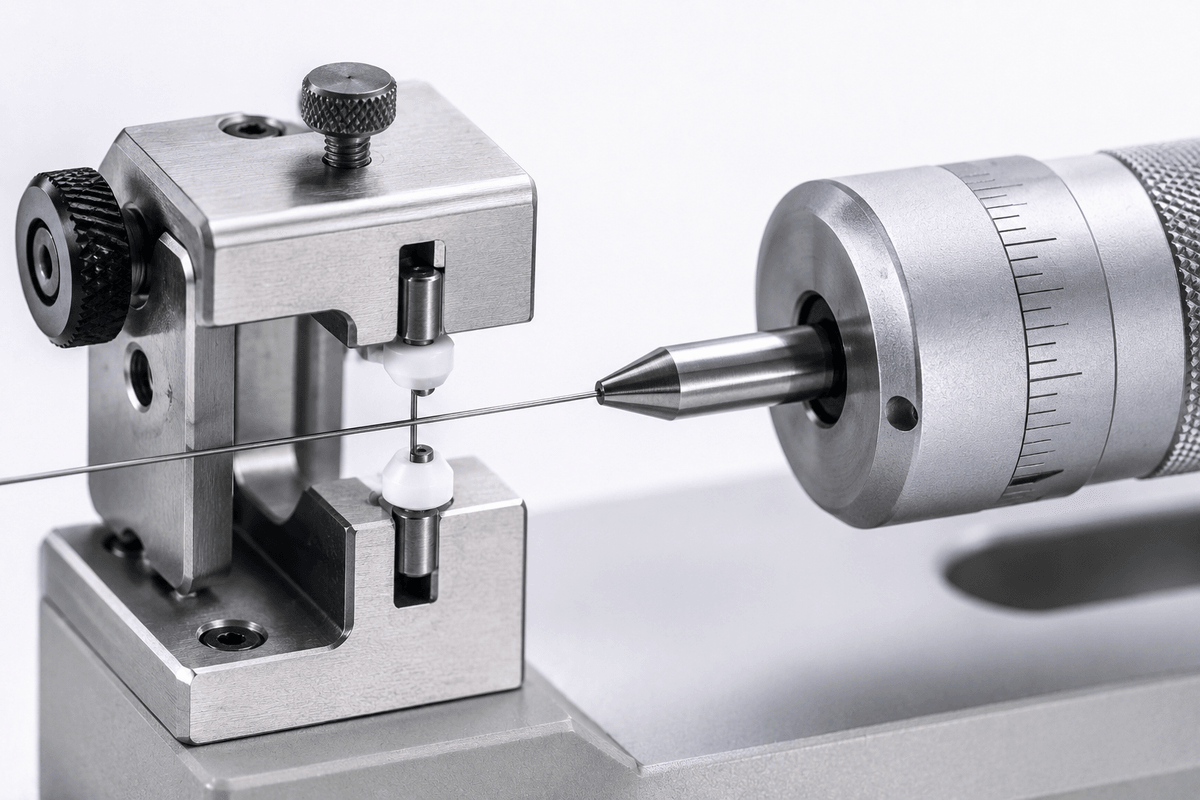
GEE SMA product notes list medical nitinol wire diameters from 0.05 mm, or 0.002 inch, and up. They also provide tolerance categories for several diameter ranges and note that out-of-round tolerance should be considered as part of the total size tolerance. For medical component buyers, this is not paperwork. It affects assembly, coating, grinding, fatigue behavior, and dimensional inspection.
Small wire can be difficult to handle and easy to damage. Larger wire may deliver more support or force but can change flexibility and profile. If the wire will be centerless ground, coated, laser welded, crimped, shaped, or assembled into a device, the supplier should know those downstream operations before the order is finalized.
For buyers starting from broad commercial language such as "nitinol wire price" or "nitinol wire for sale," GEE SMA's nitinol wire specification before price article is a useful reminder that diameter and tolerance are only one part of the final cost and quality equation.
Surface Finish Is a Medical Design Variable
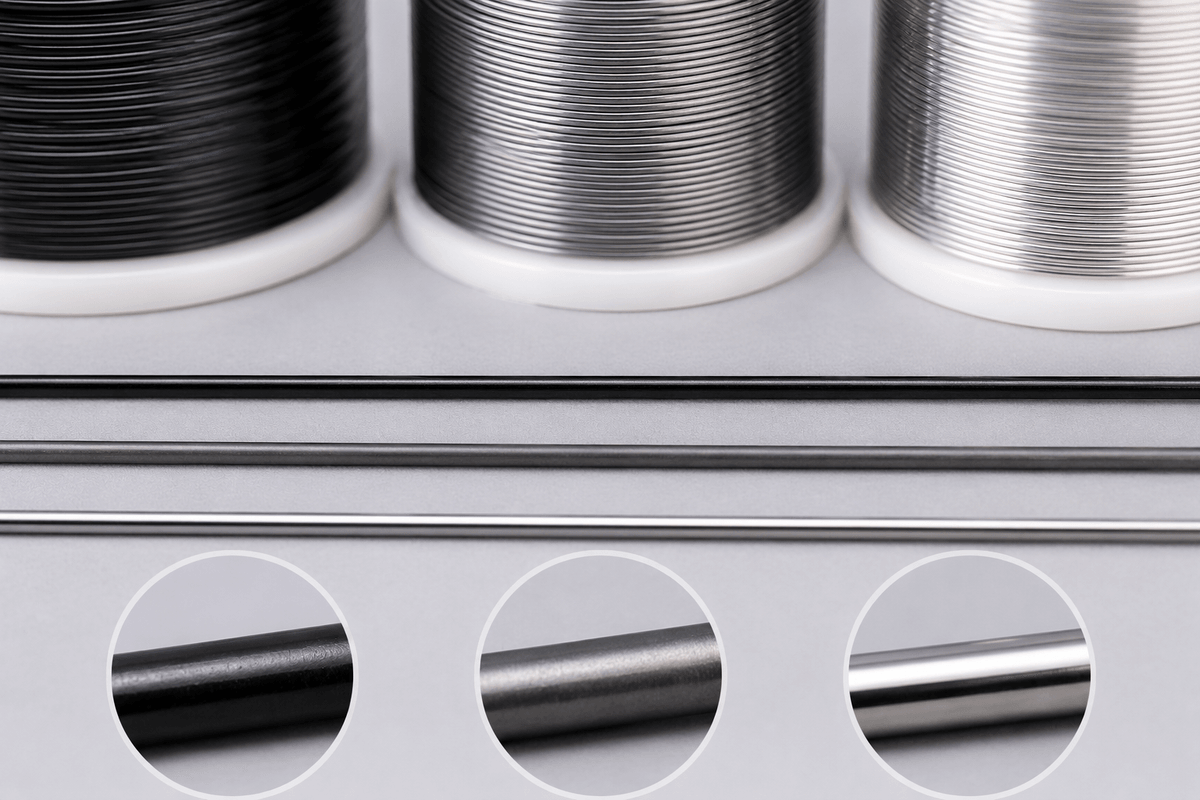
GEE SMA product notes list black oxide, light oxide, and mechanically polished surfaces for medical-related nitinol wire. Light oxide is described as a brown or blue surface often selected for medical-device-related work because it can be removed by later electropolishing or etching. Mechanically polished wire provides a metallic surface. Black oxide may be part of the drawing-process condition.
Surface choice affects more than appearance. It can affect inspection, coating adhesion, corrosion behavior, nickel release evaluation, cleaning route, and fatigue initiation. The final device surface may be very different from the incoming raw wire surface after electropolishing, passivation, coating, heat treatment, or assembly.
GEE SMA's nitinol biocompatibility article is relevant here. The buyer should not assume that raw material status alone establishes finished-device biocompatibility. The final condition matters.
Documentation Should Be Planned Early
Medical nitinol wire programs often need more documentation than industrial sample orders. GEE SMA product notes describe certificate content that can include chemical composition, diameter and diameter tolerance, mechanical and superelastic properties, transformation temperature measured by thermal analysis, and Active Af measured by bend and free recovery methods. The buyer should identify which records are required before placing the order.
ASTM F2516 may be used for tension testing of nickel-titanium superelastic materials. ASTM F2004 may be used for transformation temperature by thermal analysis. ASTM F2082 may be used in bend and free recovery transformation temperature testing. The exact method, sample condition, and acceptance criteria should be written into the purchasing and quality plan.
Documentation should also support lot traceability. The wire lot, alloy code, diameter, surface condition, delivery condition, and certificate should connect cleanly so that incoming inspection and development records remain usable later in the device program.
Medical Wire Is Not a Finished Medical Device
A common sourcing mistake is to treat medical nitinol wire as if it automatically carries finished-device approval. It does not. The wire can be supplied as a controlled material for a medical device program, but the final device manufacturer must validate the final design, final surface, final geometry, final packaging, sterilization process, biological evaluation, and regulatory route.
This matters especially for components that are ground, coated, welded, laser cut, formed, or heat treated after purchase. Each downstream operation can change surface chemistry, fatigue behavior, dimensions, and transformation response. A material certificate is important, but it does not replace finished-product validation.
GEE SMA can support the material conversation accurately when the buyer provides the device function, material form, target dimensions, surface expectations, test stage, and documentation needs. That keeps claims realistic and useful.
Supplier Questions Before Sampling
- Which alloy code is required: SE508, SE508 ELI, SE510, LSE5065, LSE507 ELI, or another route?
- What diameter, tolerance, straightness, and length format are needed?
- Should the surface be black oxide, light oxide, mechanically polished, or prepared for later finishing?
- What delivery condition is needed for downstream heat treatment or assembly?
- Which test reports and certificates are required?
- How should the wire be packaged to protect surface, straightness, and lot identity?
These questions help make a nitinol wire medical inquiry specific enough for supplier review. They also prevent the buyer from comparing quotes that do not actually describe the same material.
Bottom Line
Medical nitinol wire sourcing starts with controlled material language. ASTM F2063, alloy code, diameter, tolerance, surface finish, transformation temperature, mechanical data, and traceability all matter. The strongest sourcing request describes the wire's role in the finished device program without overstating what the raw material alone can prove.
For medical device OEMs evaluating nitinol wire, GEE SMA can support material-level discussions across superelastic wire, guidewire-related material, custom wire forms, and medical-relevant alloy options. The right specification protects both engineering performance and documentation clarity.