

Niti material is often discussed as if it were one material with one predictable behavior. In real sourcing work, that is where many mistakes begin. Nickel titanium alloy can be supplied as wire, flat wire, sheet, foil, strip, rod, bar, tube, spring stock, actuator wire, and special alloy families such as SE508 or NiTiFe. The product form changes how the alloy is processed. Processing changes cold work, straightness, surface condition, transformation behavior, and what the buyer can realistically do next.
For engineers and sourcing teams, the practical question is not simply "Can you supply NiTi?" A better question is: which Niti material form matches the function, manufacturing route, surface requirement, and transformation temperature window of the part? GEE SMA's shape memory alloy products cover multiple material forms, which helps buyers compare wire, sheet, tube, rod, and component routes before locking a specification too early.
Why Product Form Comes Before Price
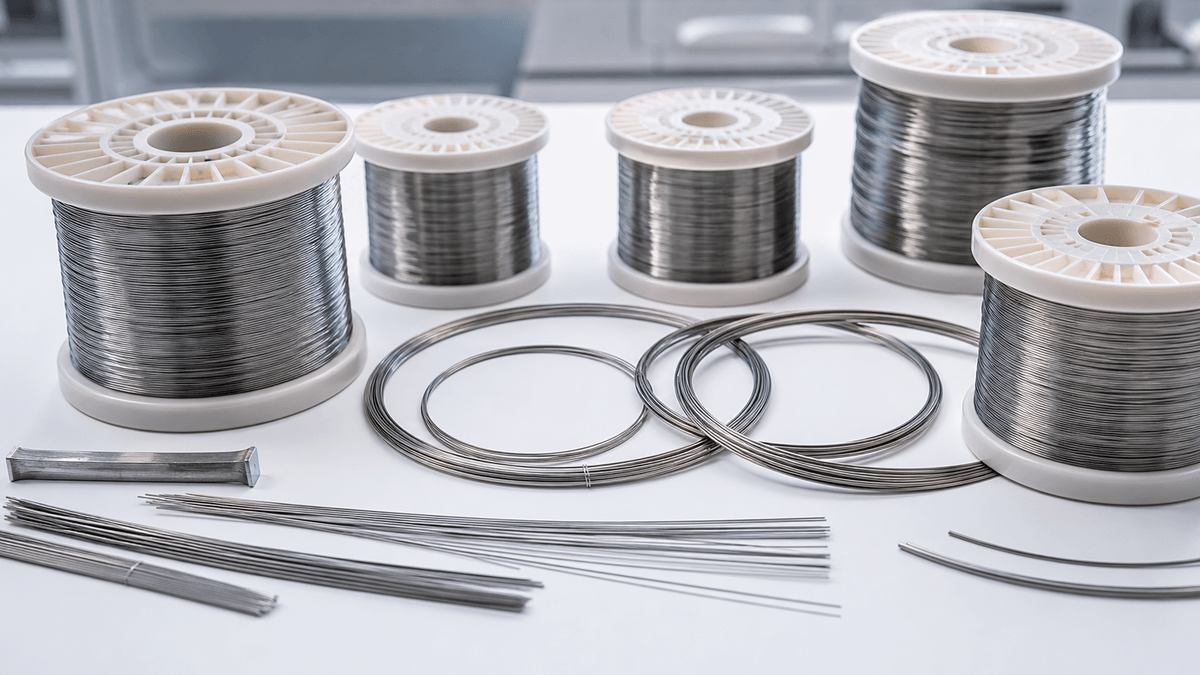
Price questions are easy to ask, but they rarely define the material. A 0.05 mm superelastic wire, a 0.10 mm foil, a 5.50 mm sheet, a straight annealed rod, and a low-temperature NiTiFe bar all sit inside the broad Niti material family. They do not carry the same processing burden, packaging method, tolerance risk, or quality inspection path. If a drawing only says "NiTi material" without form and condition, the supplier has to guess which behavior matters most.
Wire is usually selected when the design needs flexibility, bending recovery, spring force, electrical heating, or miniature actuation. Sheet, foil, and strip are used when the design starts from a flat profile, laser cut pattern, stamped geometry, or small flexible element. Rod and bar are chosen for larger machined parts, damping components, structural forms, or heavy-load shape memory elements. Tube matters when the geometry needs a hollow profile, lumen, or precision tubular starting stock.
GEE SMA's nitinol wire capability is especially useful when a buyer needs fine diameter stock, custom profiles, black oxide or mechanically polished surface, and spool or straight-length delivery. For flat starting stock, the product classification file lists nitinol sheet, nitinol foil, and nitinol strip as separate buying categories, because thickness, width, flatness, and surface finish become the governing dimensions.
Wire, Flat Wire, Sheet, Foil, and Strip
Niti wire is the most familiar form because it appears in guidewire material, springs, antennas, fishing leaders, eyeglass frames, actuator wires, and many custom formed components. GEE SMA public product information lists wire from 0.05 mm to 7.0 mm, with black oxide and mechanical polished surfaces available by diameter range. The same wire family may be supplied for superelastic behavior or shape memory behavior, so the alloy code and active Af must be specified together with diameter.
Flat wire, sheet, foil, and strip deserve separate attention. They may look similar in a photo, but they do not behave the same in cutting, forming, and post-processing. GEE SMA product notes list nitinol sheet from 0.10 mm to 5.50 mm in thickness, nitinol plate above that range, nitinol foil around 0.05 mm to 0.10 mm, and nitinol strip under 0.5 mm in thickness and under 50 mm wide. Those ranges help buyers decide whether the next manufacturing step should be rolling, laser cutting, forming, heat setting, or machining.
GEE SMA's flat wire specification guidance is relevant when a part requires a rectangular profile rather than round wire. Edge condition, thickness tolerance, width tolerance, and surface condition are not cosmetic details; they influence fatigue risk, forming consistency, and downstream assembly.
Rod, Bar, Tube, SE508, and NiTiFe
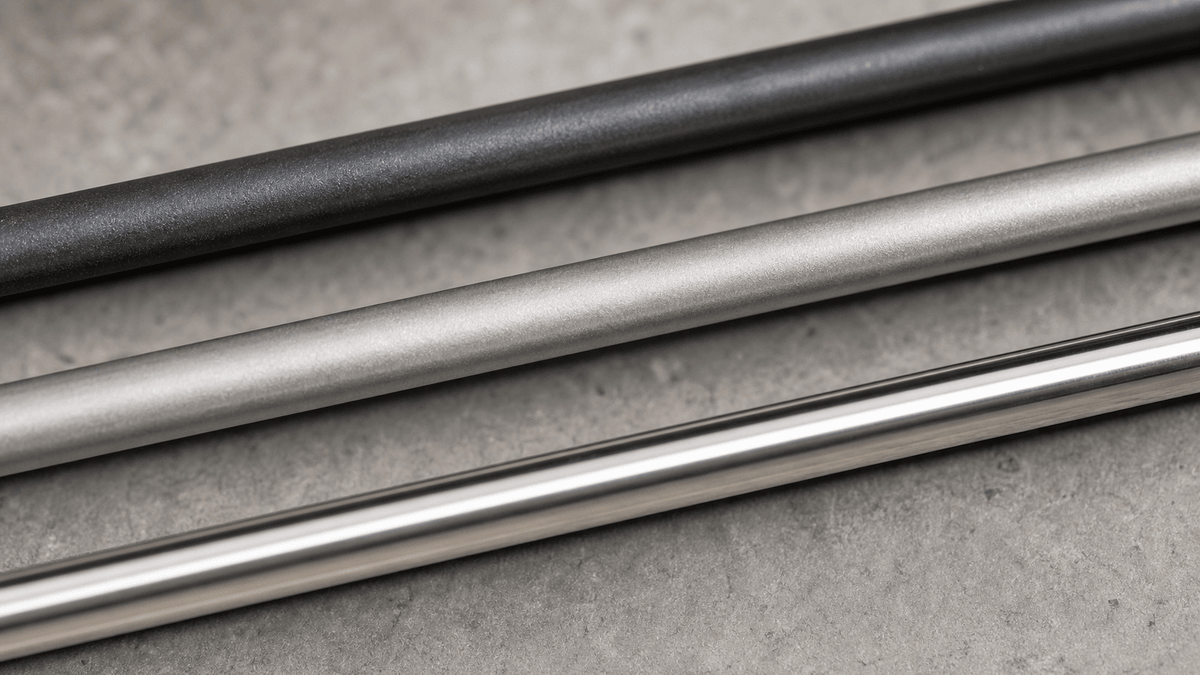
Nitinol rod and bar move the discussion away from miniature wire behavior and toward cold work, straightness, machinability, and large-section response. The product classification file notes a useful point: cold deformation is easier to introduce in wire than in rod, yet cold work is central to superelastic and memory properties. When a buyer needs nitinol rod, the request should define not only diameter and length, but also whether the target is damping, machining stock, shape setting, or a larger driving component.
Tube selection is different again. Nitinol tube buyers often care about outside diameter, wall thickness, internal cleanliness, straightness, and whether the tube will be laser cut, ground, polished, or further shaped. ASTM F2063 covers wrought nickel titanium bar, flat rolled products, and hollow forms for medical-device material, while finished NiTi tube may be handled under tube-specific standards. That distinction matters because mill product is not the same thing as a finished medical device or finished implant.
SE508 is a widely recognized superelastic NiTi alloy code. GEE SMA's public product information lists SE508 with a typical active Af range of about -5 to 10 degrees C and positions SE alloys for superelastic properties. In practice, SE508 can be a strong starting point when the design needs elastic recovery around room or body-adjacent temperatures, but the final decision should still consider wire size, surface, heat treatment, and application testing. GEE SMA's SE508 selection discussion fits projects that need this combination of alloy identity and processing control.
NiTiFe belongs to a different material conversation. GEE SMA product notes describe NiTiFe as a ternary low-temperature Ni-Ti alloy in which iron helps reduce transformation temperature and improve cold workability. The same notes list NiTiFe wire from 0.05 mm and up, NiTiFe bar from 5.50 mm to 94.0 mm, and NiTiFe pipe coupling as an application direction. Buyers should not treat NiTiFe as a direct replacement for ordinary superelastic wire. It is selected when low-temperature transformation behavior, coupling concepts, or mechanical engineering requirements justify the alloy choice.
Transformation Temperature Is a Specification, Not an Afterthought
The most important Niti material property may not be visible in a photo. Active Af, or austenite finish temperature under defined test conditions, helps determine when the alloy has completed transformation into austenite. In shape memory parts, it influences when the component starts to recover. In superelastic parts, it influences whether the material is fully in the right phase for the use environment.
GEE SMA's technical information on transformation temperatures reinforces a basic sourcing rule: alloy chemistry alone cannot fully define functional behavior. Thermal processing, cold work, and shape setting also matter. ASTM F2063 makes a similar point for medical-grade wrought nickel titanium, noting that transformation behavior must be assured by calorimetry or equivalent thermomechanical testing rather than by chemistry alone.
For a purchase order, that means "NiTi material" should become a controlled specification. A practical request may include product form, alloy code, diameter or thickness, surface finish, delivery condition, active Af target and tolerance, straightness or flatness requirement, and inspection expectations. When those fields are missing, the first quote may look fast, but the sample can miss the real design need.
Surface Finish and Delivery Condition Change the Next Step

Nitinol surfaces are not just about appearance. Black oxide, light oxide, pickled, mechanically polished, centerless ground, and other custom surfaces affect cleaning, visibility, handling, friction, and downstream processing. Product notes for GEE SMA list black oxide, light oxide, mechanically polished, and pickled surfaces across different product forms. Public GEE SMA product information also highlights material surface options such as black or brown oxide, polished, centerless ground, and other surfaces.
Delivery condition deserves the same attention. Cold worked material may be requested when the customer intends to do further thermomechanical treatment. Straight annealed material may be more appropriate when straightness, handling, and superelastic response are already part of the supplier's process. Flat annealed sheet may be the expected starting condition for flat stock. A mismatch here can create extra development loops after the material arrives.
GEE SMA's ASTM F2063 material-control guidance is valuable even outside strictly medical sourcing because it emphasizes traceability, chemistry, mechanical testing, surface condition, and transformation temperature as linked parts of one specification.
A Practical Niti Material RFQ Checklist
A strong RFQ does not need to be long, but it should prevent the most common wrong assumptions. For early supplier discussions, include the target application and the part's function. Is the material expected to bend and recover, contract when heated, provide spring force, be laser cut, be machined, act as a coupling, or serve as raw stock for a customer-controlled process?
- Define the form: round wire, flat wire, sheet, foil, strip, rod, bar, tube, spring, actuator wire, or custom component.
- State the dimensional requirement: diameter, thickness, width, wall thickness, length, tolerance, and quantity.
- Specify the behavior: superelastic, shape memory, two-way memory, low-temperature alloy, or narrow hysteresis alloy.
- Confirm the active Af target and tolerance, especially for temperature-dependent designs.
- Choose surface and delivery condition based on the next manufacturing step.
- Ask what inspection data, lot traceability, or test certificates can be supplied with the material.
GEE SMA's custom wire forming capability becomes relevant when the buyer is no longer sourcing only raw Niti material but needs a controlled shape, bend, spring, loop, or formed geometry from the same material family. That is often where material choice and component manufacturing become inseparable.
Supplier Selection: Match Capability to the Risk
For simple concept testing, a buyer may need only a small quantity and a reasonable starting alloy. For a production program, supplier questions become more serious. Can the supplier explain the difference between SE, SM, NiTiCu, NiTiCr, NiTiFe, and NiTiNb families? Can they discuss surface finish without treating it as decoration? Can they help choose between cold worked and straight annealed material? Can they provide repeatable lots rather than one sample that happens to work?
GEE SMA's process chain from raw materials through melting, forging, drawing or rolling, testing, and shipping supports buyers who need more than a commodity quote. The value is not that every Niti material form is right for every project. The value is that wire, sheet, tube, rod, actuator, spring, and component discussions can be connected early enough to avoid a poor first specification.
Niti material is powerful because it combines metallurgy, processing, geometry, and temperature response. It is also unforgiving when those factors are separated. The right starting point is a clear form, a clear function, and a supplier conversation that treats transformation behavior, surface, and delivery condition as core requirements from the first RFQ.