

A NiTi spring is not just a normal metal spring made from unusual wire. It can be a shape memory spring that moves with heat, a superelastic spring that recovers through load and unload cycles, or a custom component that combines spring geometry with trained shape memory behavior. The useful stroke comes from coil geometry and material behavior together.
GEE SMA product notes state that nitinol spring and nitinol muscle wire are two common forms of nitinol actuator. The notes also state that the stroke of a nitinol spring is greater than that of a comparable muscle wire, while muscle wire can fit smaller spaces. GEE SMA's shape memory alloy product range is relevant because the first decision is whether the spring should move with temperature or provide recoverable elastic force.
Spring Geometry Multiplies Material Recovery
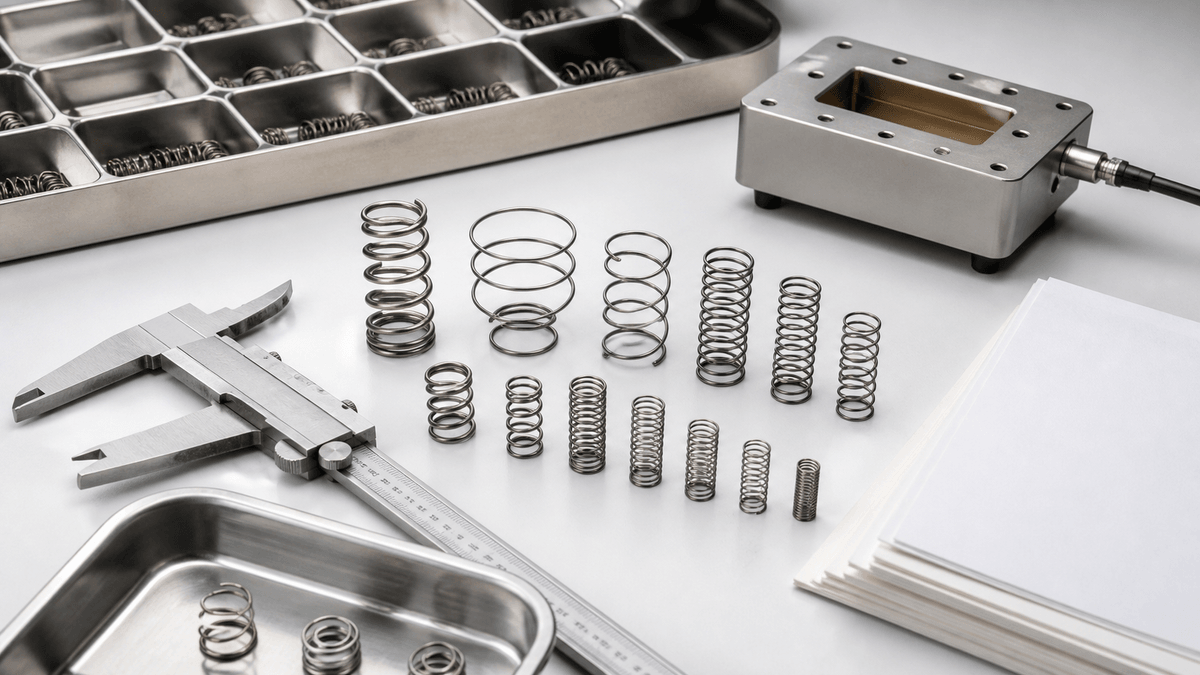
A straight muscle wire can contract only a small percentage of its length in a conservative design. A coil spring can convert that material recovery into a much larger visible stroke because the helix geometry opens or closes along the spring axis. GEE SMA product notes give a simple comparison: when the same wire length is wound into a coil, spring geometry can produce much larger travel than a straight wire with the same material strain.
That does not make the geometry free. Coil diameter, wire diameter, number of active coils, pitch, free length, end style, preload, stroke, load, and available space all affect the result. GEE SMA's coil spring stroke and force controls fit projects where the buyer needs more than a catalog spring shape.
Shape Memory and Superelastic Springs Need Different Routes
GEE SMA product notes separate shape memory springs and superelastic springs. Shape memory springs are mainly used when heating should create motion or force. Superelastic springs are used when the spring should recover under mechanical loading at the intended use temperature. The manufacturing route can differ as well: the notes describe manual methods for shape memory spring production and spring winding machines for many superelastic spring products.
The buyer should state the behavior explicitly. If the spring should open a vent, move a valve, correct temperature position, or actuate a small mechanism, active Af is central. If the spring should provide recoverable force during mechanical movement, superelastic plateau behavior and working temperature matter more. GEE SMA's actuator wire capability is relevant when the spring itself is part of a compact thermal motion system.
Active Af Turns the Spring Into a Temperature Device
For a shape memory NiTi spring, active Af should be written into the RFQ. GEE SMA product notes state that active Af control for shape memory springs can reach +/-2 degrees C when the process is set up around that requirement. That tolerance matters in thermostats, valves, air-direction mechanisms, circuit protection, and other products where the spring should respond inside a defined temperature window.
ASTM F2082/F2082M can be used for bend and free recovery transformation-temperature testing on suitable nickel-titanium wire, tube, or strip specimens. ASTM F2004 uses thermal analysis. The buyer should discuss which method is appropriate for material acceptance and which functional test should be used for the final spring geometry. GEE SMA's wire and spring actuator controls keep the active Af target connected to geometry and test conditions.
Force and Stroke Need a Load Case
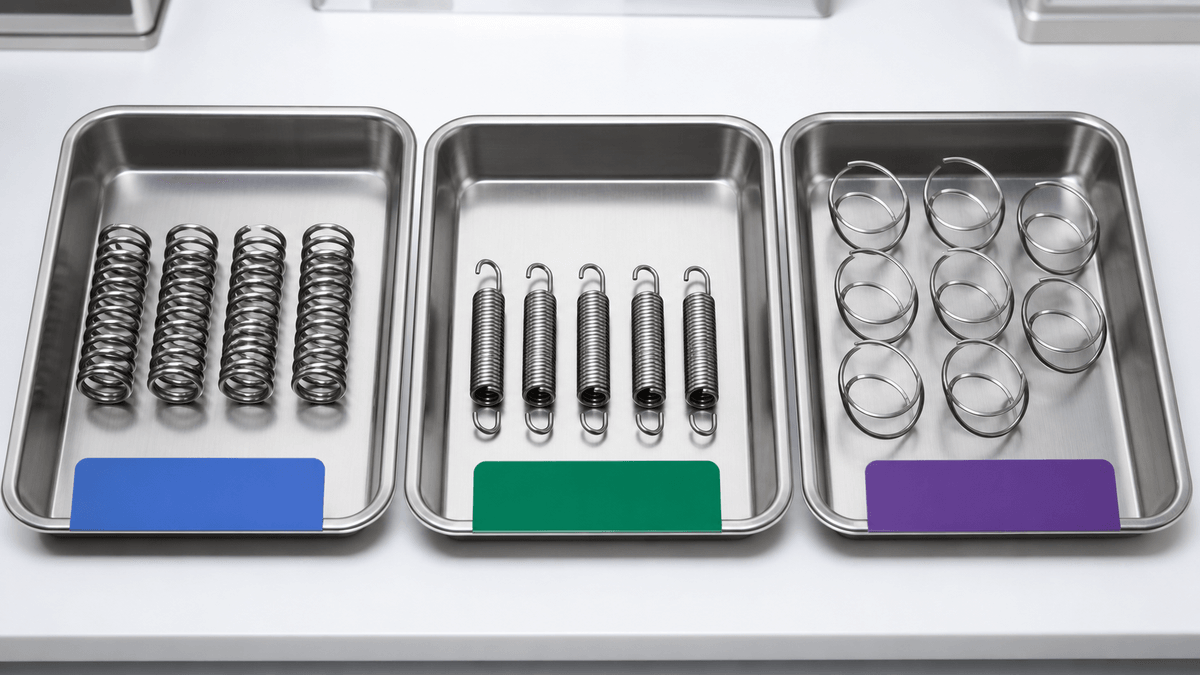
A NiTi spring quote should not be based only on outside diameter and free length. The supplier needs load at temperature, available stroke, preload, blocked force if relevant, direction of movement, cycle expectation, and allowable recovery time. A compression spring, tension spring, torsion-style feature, open coil, closed coil, or custom end-form spring can all use nitinol wire, but they do not share one test plan.
GEE SMA product notes list automotive thermostats, refrigerator thermostats, air conditioning wind direction adjustment mechanisms, constant temperature mixing valves, circuit protection, intelligent robots, and other engineering uses. Those applications demonstrate why load case matters. A thermostat spring and a robotic spring may both be NiTi springs, but their thermal environment and duty cycle are different. GEE SMA's spring actuator motion controls connect stroke, force, and heat input in one specification.
Wire Size and Surface Still Matter
The wire used to make the spring controls fatigue behavior, force, heat transfer, bend severity, surface risk, and manufacturability. Fine wire can support compact springs but may be delicate during winding and handling. Larger wire can provide more force but may require larger coil geometry and stronger heat input. Surface condition can affect friction, corrosion behavior, fatigue initiation, and inspection.
GEE SMA's nitinol wire production capability is relevant because a spring problem often starts as a wire problem: alloy code, active Af, diameter, surface, and delivery condition must match the intended spring process. If the spring has special hooks, legs, loops, or integrated wire shapes, GEE SMA's custom wire forming route can connect the coil with the final geometry.
Prototype Lots Should Be Narrow
Because spring behavior depends on both material and geometry, prototype sampling should be controlled. It is better to compare a small number of well-defined variants than to request many loosely described springs. Each sample should have a defined wire diameter, spring OD, active coils, free length, active Af target, surface, heat-treatment route, and test condition. Otherwise, the team may not know which variable caused a performance change.
GEE SMA product notes describe shape memory spring design according to customer needs as a strength and list monthly production capacity around 600,000 pieces for nitinol spring products. Production capacity is useful only after the process window is known. The prototype stage should prove stroke, force, temperature response, reset, and repeatability first.
RFQ Checklist for a NiTi Spring
- State whether the spring is shape memory, superelastic, or a comparison of both.
- Provide spring drawing: wire diameter, outside diameter, active coils, free length, pitch, and end form.
- Define active Af target and tolerance for shape memory springs.
- List load, stroke, preload, reset condition, duty cycle, and heating or cooling method.
- Specify surface finish, packaging, quantity, and any downstream assembly constraints.
- Ask for functional testing around temperature, force, stroke, recovery, and repeatability.
A NiTi spring succeeds when the material and coil geometry are designed as one component. Active Af, spring geometry, wire size, load, surface, and test method define the behavior. GEE SMA can support buyers who need shape memory springs, superelastic springs, actuator springs, custom NiTi spring drawings, and prototype-to-production process planning.