

Introduction
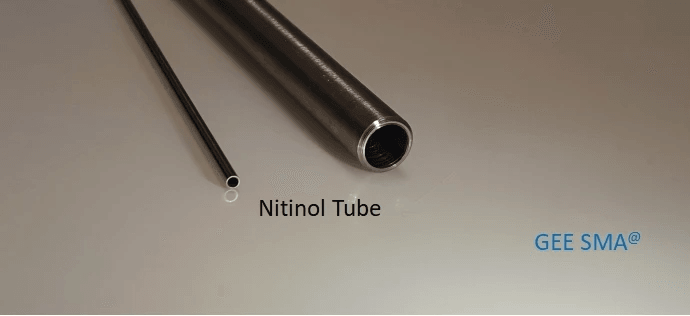
Nitinol, a remarkable alloy of nickel and titanium, has captured the attention of material scientists and engineers alike due to its extraordinary properties. Among these, the density of Nitinol plays a crucial role in determining its applications and effectiveness across various industries. Understanding what is the density of Nitinol not only sheds light on its unique characteristics but also allows for meaningful comparisons with other materials like 6Al-4V titanium alloy and aluminum.
Understanding Nitinol's Unique Properties
What sets Nitinol apart from traditional metals is its shape memory effect, allowing it to return to a predetermined shape when heated above a certain temperature. This property, combined with its superelasticity, makes Nitinol an invaluable material in fields ranging from medical devices to aerospace innovations. By exploring the properties of Nitinol, we can appreciate how this alloy excels where others may falter.
Importance of Density in Material Science
Density is more than just a number; it influences everything from an alloy's strength-to-weight ratio to its thermal conductivity and overall performance in practical applications. For instance, understanding what is the density of 6Al-4V compared to that of aluminum in kg m³ provides insights into how these materials might perform under stress or heat. In the case of Nitinol, knowing its density helps engineers make informed decisions about which applications are most suitable for this exceptional material.
How Nitinol Compares to Other Materials
When comparing the density of Nitinol with other alloys like 6Al-4V and aluminum, it's essential to consider not just weight but also functionality in specific environments. While aluminum boasts low density making it lightweight, 6Al-4V offers superior strength but at a higher weight cost; meanwhile, Nitinol balances these aspects with unique properties that enable innovative uses across various sectors including medical devices and aerospace technology. GEE SMA’s commitment to enhancing product quality ensures that their high-quality Nitinol shape memory alloys are tailored for optimal performance even in extreme conditions.
What is Nitinol?

Nitinol, a remarkable alloy of nickel and titanium, is known for its unique properties that set it apart in the world of materials science. This section delves into its composition and structure, the fascinating shape memory effect that defines its functionality, and how Nitinol stacks up against other alloys in terms of performance and applications.
Composition and Structure
Nitinol is primarily composed of nickel (Ni) and titanium (Ti), typically in a ratio of approximately 50:50. This precise composition gives rise to its unique characteristics, including the ability to undergo phase transformations at different temperatures, which plays a crucial role in its applications. The density of Nitinol is around 6,450 kg/m³, which provides insights into its lightweight yet strong nature compared to other materials like 6Al-4V titanium alloy or aluminum.
Shape Memory Effect Explained
One of the standout features of Nitinol is its shape memory effect, which allows it to return to a predetermined shape after deformation when exposed to specific temperatures. When heated above a certain temperature threshold, Nitinol can remember its original configuration—an attribute that has revolutionized various industries by enabling innovative designs in medical devices and aerospace components. Understanding this phenomenon not only highlights what are the properties of Nitinol but also illustrates why it's such a sought-after material for high-performance applications.
Nitinol vs Other Alloys
When comparing Nitinol with other alloys like 6Al-4V or aluminum, several factors come into play beyond just density considerations. For instance, while 6Al-4V boasts a density of about 4,430 kg/m³ and aluminum's density stands at around 2,700 kg/m³, neither can replicate the unique shape memory capabilities offered by Nitinol. Moreover, while both alternatives serve well in various engineering applications due to their strength-to-weight ratios, they lack the exceptional biocompatibility and corrosion resistance that make Nitinol indispensable in medical uses such as stents or guidewires.
What is the Density of Nitinol?

When discussing materials in engineering and manufacturing, density is a fundamental property that cannot be overlooked. The density of Nitinol, a unique alloy composed primarily of nickel and titanium, plays a significant role in its applications across various industries. Understanding how the density of Nitinol compares to other materials can provide insights into its suitability for specific uses.
Defining Nitinol's Density
The density of Nitinol typically ranges from 6.45 to 6.75 g/cm³, depending on its specific composition and processing methods. This relatively low density contributes to its lightweight nature, making it an attractive option for applications where weight reduction is crucial, such as in aerospace and medical devices. Inquiring What is the density of Nitinol? reveals that this property not only influences performance but also impacts cost-effectiveness in manufacturing.
Factors Affecting Nitinol Density
Several factors influence the density of Nitinol, including alloy composition, heat treatment processes, and mechanical processing techniques used during production. Variations in nickel-to-titanium ratios can lead to slight changes in the overall density; thus, manufacturers must carefully control these parameters to achieve desired properties. Additionally, impurities or secondary phases introduced during fabrication can further affect the final density of Nitinol.
Comparing Density with Other Alloys
When comparing densities among popular alloys like 6Al-4V titanium alloy and aluminum, it's essential to understand their respective characteristics. The density of 6Al-4V is approximately 4.43 g/cm³ while aluminum's typical density stands at about 2.7 g/cm³ (or 2700 kg/m³). This comparison highlights that while Nitinol's density may be higher than aluminum's, it offers distinct advantages such as superior shape memory capabilities and corrosion resistance—qualities that are particularly valuable across various applications.
What are the Properties of Nitinol?

Nitinol, a remarkable alloy of nickel and titanium, possesses several unique properties that make it stand out in the material science field. Understanding these properties is crucial for evaluating its applications across various industries. From its mechanical characteristics to its impressive thermal and corrosion resistance, the properties of Nitinol contribute significantly to its versatility.
Mechanical Properties Explained
The mechanical properties of Nitinol are largely defined by its unique ability to undergo phase transformations, which is tied to the density of Nitinol. This alloy exhibits both superelasticity and shape memory effect, allowing it to return to a pre-defined shape when heated after being deformed. Such characteristics make Nitinol an ideal choice for applications where flexibility and resilience are paramount—think medical devices like stents that need to expand within the body without losing their structural integrity.
When comparing Nitinol with other alloys like 6al 4v or aluminum, one can see that while 6al 4v has excellent strength-to-weight ratios, it lacks the unique shape memory capabilities inherent in Nitinol. The density of 6al 4v is about 4,430 kg/m³ compared to approximately 6,450 kg/m³ for Nitinol; this difference plays a crucial role in their respective uses. In contexts where lightweight materials are essential yet require specific deformation characteristics, Nitinol shines brightly.
Thermal Conductivity and Shock Resistance
Another fascinating aspect of what makes up the properties of Nitinol is its thermal conductivity combined with shock resistance. While not as thermally conductive as metals like copper or aluminum (which has a density in kg/m³ around 2,700), Nitinol's thermal performance is suitable for many applications where rapid temperature changes occur. Its ability to withstand sudden shocks without fracturing adds another layer of reliability—especially vital in aerospace innovations powered by GEE SMA's high-quality materials.
In extreme environments such as those encountered during space missions like Chang’e-5 and Tianwen-1, having materials that can endure temperature fluctuations while maintaining integrity becomes essential. The shock-resistant nature of Nitinol makes it invaluable for components exposed to harsh conditions while ensuring operational reliability throughout their lifecycle. Thus, understanding how these thermal and mechanical attributes interplay can help industries leverage this alloy effectively.
Corrosion Resistance and Biocompatibility
Corrosion resistance is yet another property that sets Nitinol apart from many other alloys used today; it performs exceptionally well even under challenging environmental conditions due to its stable oxide layer formation on the surface. This makes it particularly useful in medical applications where biocompatibility is non-negotiable—after all, no one wants a stent causing adverse reactions inside their body!
When we consider how other materials fare against corrosion—like aluminum which can corrode easily under certain conditions—the superiority of Nitinol becomes evident again through its durability over time without significant degradation or loss of functionality. The combination of corrosion resistance with biocompatibility means that not only does this alloy stand up against environmental challenges but also integrates seamlessly into biological systems—a critical factor driving numerous Nitinol uses in healthcare.
In summary, understanding what are the properties of Nitinol—from mechanical strength and thermal conductivity to corrosion resistance—helps clarify why GEE SMA invests heavily in producing high-quality shape memory alloys tailored for diverse needs across industries.
Nitinol Uses Across Industries

Nitinol, with its unique properties and versatility, has found applications across various industries that leverage its shape memory effect and superelasticity. From medical devices to aerospace innovations, the uses of Nitinol are transforming how we approach engineering challenges. Understanding the density of Nitinol is crucial as it plays a significant role in its applications.
Applications in Medical Devices
In the medical field, Nitinol is a game-changer due to its biocompatibility and unique mechanical properties. Devices such as stents and guidewires benefit from the shape memory effect, allowing them to return to a predetermined shape after deformation—this capability is vital for minimally invasive procedures. The density of Nitinol also contributes to lightweight designs that reduce patient discomfort while ensuring durability and reliability.
Moreover, many surgical instruments utilize Nitinol for their flexibility and strength; they can navigate complex anatomical structures without compromising performance. As we explore what is the density of Nitinol compared to other materials like 6al 4v titanium or aluminium in kg m³, it's evident that this alloy offers an optimal balance between weight and functionality for critical applications. The growing demand for advanced medical technologies ensures that Nitinol will remain at the forefront of innovation in this sector.
Aerospace Innovations With Nitinol
Nitinol's remarkable properties extend into aerospace applications where reliability under extreme conditions is paramount. GEE SMA specializes in producing high-quality Nitinol Shape Memory Alloys that have powered significant missions like Chang’e-5, Chang’e-6, and Tianwen, showcasing their capability for reliable deployment and actuation even in harsh environments. The combination of low density alongside high strength makes it an ideal choice for components such as actuators and couplings.
When engineers consider what is the density of 6al 4v or even aluminium in kg m³ for aerospace components, they often find that while these materials have their merits, none match the unique advantages provided by Nitinol’s shape memory characteristics combined with its favorable density profile. This allows aerospace designers not only to save weight but also enhance operational efficiency—an essential factor when every gram counts on space missions or aircraft design.
How Automotive Industries Benefit
The automotive industry has also embraced Nitinol due to its potential for improving safety features and performance enhancements in vehicles. Components such as active suspension systems utilize the superelasticity of Nitinol to provide better handling dynamics while maintaining lightweight structures—a critical aspect given modern vehicle design trends toward fuel efficiency.
Additionally, when comparing prices among materials like aluminium or 6al 4v titanium against Nitinol price points, manufacturers must weigh not just initial costs but long-term benefits derived from enhanced performance characteristics driven by superior material properties—including density considerations which directly influence overall vehicle mass and efficiency metrics.
In conclusion, whether it’s through innovative medical devices or cutting-edge aerospace technologies, or even advancements within automotive engineering—Nitinol continues proving itself indispensable across industries thanks to its unique properties including favorable density metrics that facilitate diverse applications.
Cost Considerations of Nitinol

When discussing the cost of Nitinol, it's essential to recognize that price variability can be influenced by various factors. The density of Nitinol plays a crucial role in its production costs, as materials with higher densities often require more resources and advanced manufacturing techniques. Additionally, fluctuations in raw material prices and demand for specific applications can lead to significant changes in the overall price of Nitinol.
Understanding Nitinol Price Variability
The price of Nitinol can vary widely based on its unique properties and the specific applications it serves. What is the density of Nitinol? This question not only pertains to its physical characteristics but also reflects on how these properties contribute to its value in different industries. For instance, in medical devices where precision and reliability are paramount, the cost might be higher due to stringent quality requirements.
Factors Influencing the Cost of Nitinol
Several factors influence the cost of Nitinol beyond just its density. The complexity involved in producing shape memory alloys adds another layer to pricing; specialized equipment and expertise are necessary for manufacturing high-quality materials like those produced by GEE SMA. Furthermore, global supply chain dynamics, including tariffs on nickel and titanium—the primary components—can also affect how much you’ll pay for this remarkable alloy.
Comparing Prices: Nitinol vs 6al 4v vs Aluminium
When comparing prices among different materials such as Nitinol, 6al 4v titanium alloy, and aluminium, it's important to consider their respective densities as well as their unique properties. What is the density of 6al 4v? It typically ranges around 4420 kg/m³ compared to aluminium's density at approximately 2700 kg/m³; thus making both lighter than Nitinol’s average density range between 6000-6500 kg/m³. While aluminium may be cheaper upfront due to lower production costs, when you factor in performance benefits—like corrosion resistance or shape memory capabilities—Nitinol's price may justify itself for many applications.
Conclusion
In wrapping up our exploration of Nitinol, it's clear that this remarkable alloy's unique properties, particularly its density, play a pivotal role in its numerous applications. The density of Nitinol is not just a number; it defines how the material behaves under various conditions and influences its performance in critical scenarios. Understanding what is the density of Nitinol helps engineers and scientists unlock its full potential across diverse industries.
The Importance of Nitinol's Density
When we discuss the significance of the density of Nitinol, we must consider how it compares to other materials like 6al 4v titanium alloy and aluminum. What is the density of 6al 4v? It's around 4,430 kg/m³, while aluminum comes in at about 2,700 kg/m³. In contrast, Nitinol typically has a density ranging from 6,450 to 6,500 kg/m³, which impacts its mechanical properties and suitability for applications requiring strength without excessive weight.
The higher density might seem like a drawback at first glance; however, it allows for enhanced durability and reliability in demanding environments such as aerospace missions or medical devices. For instance, GEE SMA’s Nitinol shape memory alloys are engineered to perform optimally even under extreme conditions like those faced during space explorations with missions such as Chang’e-5 and Tianwen. This balance between density and functionality underscores why understanding what are the properties of Nitinol is vital for innovations across multiple fields.
Future Prospects for Nitinol Use
Looking ahead, the future prospects for Nitinol use appear bright as advancements in technology continue to unveil new applications. Industries are increasingly recognizing that the unique characteristics—like shape memory effect and corrosion resistance—combined with an understanding of what is the density of Nitinol can lead to groundbreaking developments. As manufacturing techniques evolve and costs become more manageable (Nitinol price being one area seeing improvement), we may witness an expansion into even more sectors beyond those currently utilizing this extraordinary material.
For instance, imagine smart textiles incorporating Nitinol that can change shape based on temperature or pressure—this could revolutionize not just fashion but also protective gear! Moreover, as sustainability becomes paramount in product design across industries—including automotive—the ability to create lightweight yet robust components using materials like Nitinol will be crucial in reducing overall energy consumption during production processes.
Final Thoughts on Nitinol's Impact
In conclusion, the impact of Nitinol extends far beyond its immediate applications; it represents a paradigm shift in how materials science approaches challenges across various domains. From medical devices that save lives through minimally invasive surgeries to aerospace technologies pushing boundaries into outer space—Nitinol’s versatility shines brightly when you consider factors like its unique properties and specific attributes such as density.
As industries continue to innovate with this alloy while working closely with manufacturers like GEE SMA who specialize in high-quality production standards tailored to customer needs—the future looks promising indeed! Ultimately, embracing materials like Nitinol not only enhances functionality but also paves the way towards sustainable solutions within our ever-evolving technological landscape.