

Copper NiTi wire is usually selected because the buyer wants more than generic nickel-titanium behavior. The copper addition is used to adjust transformation behavior, narrow hysteresis, and make the temperature window more predictable for certain shape memory, actuator, spring, and orthodontic raw-material applications. The useful specification is not just "Copper NiTi." It is the combination of active Af, alloy route, diameter, surface, delivery condition, and downstream process.
GEE SMA product notes list Copper NiTi and Copper NiTiCr as important shape memory wire families. Copper NiTi is described with active Af from 45 to 75 degrees C, while Copper NiTiCr is described with active Af from 25 to 45 degrees C. GEE SMA's Copper NiTi wire behavior matters when a buyer needs thermal response and narrower hysteresis rather than a simple binary NiTi option.
The Temperature Window Comes First
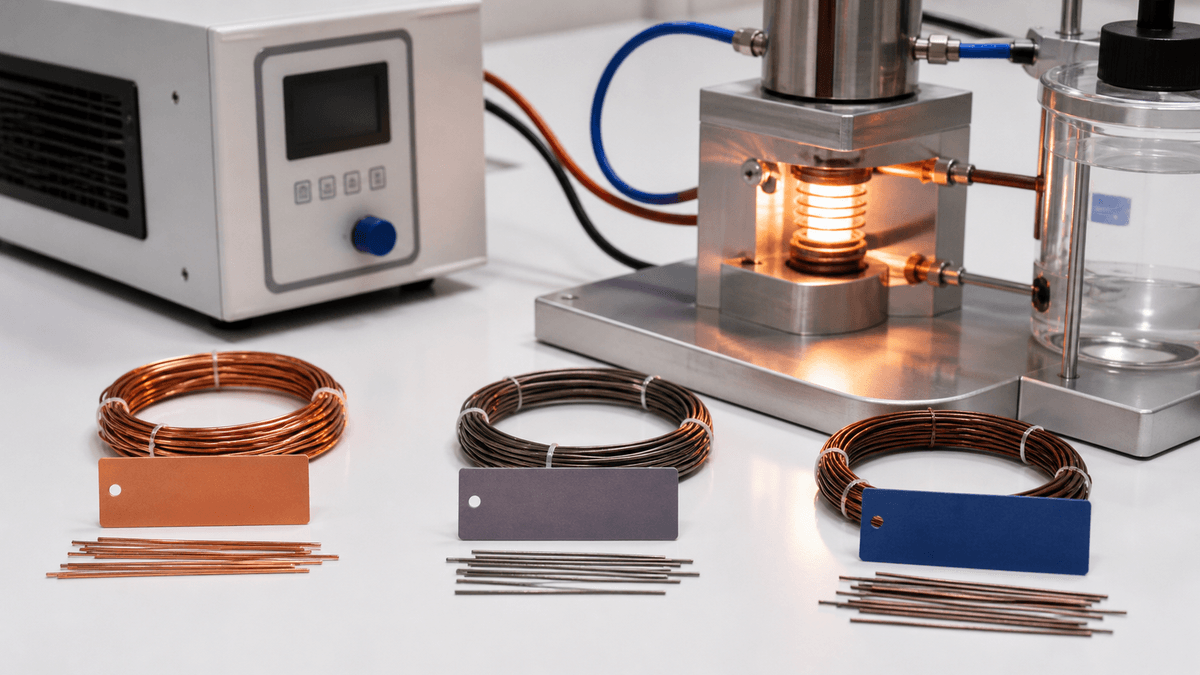
In Copper NiTi wire sourcing, active Af should be one of the first fields on the RFQ. It defines the temperature region where the wire completes a key transformation during heating. If active Af is too low, the wire may respond too early for the environment. If active Af is too high, the wire may require more heating than the product can provide. A narrow and repeatable transformation window is often the reason buyers consider copper-containing NiTi in the first place.
GEE SMA product notes list Copper NiTi active Af from 45 to 75 degrees C. They list Copper NiTiCr active Af mainly around 27, 35, and 40 degrees C, with a broader range of 25 to 45 degrees C. The notes also describe active Af tolerance around +/-2 degrees C, with stricter +/-1 degree C possible when composition and thermomechanical treatment are controlled together. That level of control should be discussed before sample production begins.
GEE SMA's shape memory alloy product range gives buyers a way to compare Copper NiTi, Copper NiTiCr, binary NiTi shape memory wire, and superelastic wire without forcing every design into one family.
Copper NiTi and Copper NiTiCr Are Not Interchangeable
Copper NiTi and Copper NiTiCr may appear close in a keyword list, but they target different transformation-temperature needs. Copper NiTi is commonly used when a warmer activation window is acceptable or desired. Copper NiTiCr adds chromium, which can help mediate the transformation-temperature increase associated with copper and bring the active Af into a lower range. That makes Copper NiTiCr important for certain thermally activated wire requirements.
GEE SMA product notes state that Copper NiTi materials have been produced since 2000 and that Copper NiTiCr wires for arch-wire raw material have been produced since 2016. The notes also connect Copper NiTi and Copper NiTiCr with shape memory actuators, springs, muscle wire, and orthodontic wire raw material. GEE SMA's Copper NiTiCr Af and surface controls are relevant when the buyer needs lower active Af values such as 27, 35, or 40 degrees C.
Hysteresis Is a Functional Requirement
Hysteresis describes the separation between heating and cooling transformation behavior. A narrower hysteresis can make a thermal response easier to design around because the activation and reset windows are closer. Published research on copper-containing NiTi orthodontic archwires reports that copper addition can narrow stress hysteresis and improve stability of superelastic behavior under cyclic deformation compared with conventional NiTi in the studied designs.
That research is useful, but a raw material supplier should still avoid turning it into a finished-product claim. Wire chemistry, cross section, thermomechanical route, surface, forming, heat setting, and final use all affect performance. The buyer should ask for material data in the supplied condition and then verify the wire after the customer's final process.
GEE SMA's Cu NiTi arch wire raw-material controls are useful because orthodontic wire performance starts upstream with alloy control, active Af, surface, and lot consistency before any finished archwire claim is made.
Diameter and Delivery Condition Shape the Process Route
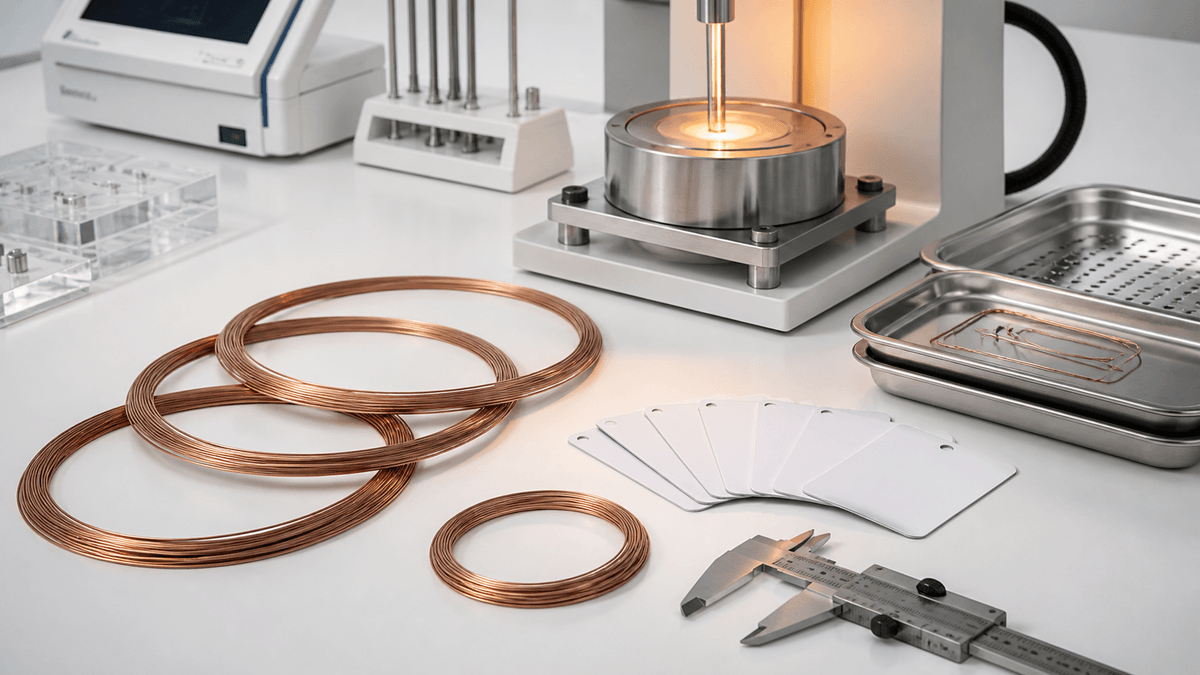
GEE SMA product notes list Copper NiTi and Copper NiTiCr wire diameter from 0.05 mm [0.002 in.] and up. They list delivery conditions such as cold worked and straight annealed, with surfaces including black oxide and mechanically polished. Cold worked material can be useful when the buyer plans additional thermomechanical treatment. Straight annealed material may be preferred when handling, straightness, or a more defined supplied condition is needed.
Diameter affects force, bend radius, thermal response, handling, and packaging. Fine Copper NiTi wire can be useful for miniature actuator or orthodontic raw-material work, but it may require careful spool handling and surface protection. Larger wire can offer more force but may heat and cool differently. GEE SMA's nitinol wire production capability is relevant because diameter, delivery condition, and surface are practical manufacturing controls, not just catalog fields.
Actuator and Spring Designs Need More Than Af
For shape memory actuator, spring, or muscle-wire applications, active Af is central but not sufficient. The design also needs available stroke, force, strain limit, load path, heating method, cooling path, reset force, cycle expectation, and surrounding material limits. A wire can meet a transformation-temperature target and still fail to move the mechanism well if the geometry, anchor design, or thermal management is wrong.
GEE SMA's actuator wire capability is relevant when Copper NiTi wire is being evaluated as a thermal motion element. If the design needs a coil spring, trained loop, hook, or special shape rather than straight wire, GEE SMA's custom nitinol wire forming capability connects the alloy decision with final geometry.
Surface Finish Should Match Final Use
Surface finish should be selected around downstream processing and final use. A black oxide surface may be acceptable for intermediate forming or processing. A mechanically polished surface may be required for a cleaner metallic finish, easier inspection, or lower roughness in the supplied condition. If the wire will be coated, formed, polished, or cleaned later, the buyer should define whether the supplier surface is final or transitional.
For orthodontic raw material or medical-device development, surface decisions should be especially disciplined. Research on archwire behavior can be useful, but the final brand, geometry, packaging, and use condition add additional variables. GEE SMA's nitinol surface-control approach is a strong fit when Copper NiTi wire must move from raw material into a more demanding component route.
Lot Consistency Belongs in the Specification
Copper-containing NiTi behavior is sensitive to composition and thermomechanical history. Published orthodontic-wire research has found interlot variation in transition temperature and force delivery for copper-nickel-titanium wires. That finding supports a practical purchasing point: the buyer should not rely on a nominal active Af label alone. Lot-level evidence, sample confirmation, and clear acceptance criteria are important.
For GEE SMA buyers, the RFQ should define active Af target and tolerance, test method, diameter and tolerance, surface, delivery condition, quantity, packaging, and whether the material is for shape memory actuator, spring, muscle wire, arch-wire raw material, or another component. GEE SMA's Copper NiTi force and temperature controls are relevant when the material must deliver a stable response across production lots.
RFQ Checklist for Copper NiTi Wire
- State whether the requested material is Copper NiTi or Copper NiTiCr.
- Define active Af target, tolerance, and test method.
- List diameter, tolerance, spool or straight-length delivery, surface finish, and quantity.
- Specify cold worked, straight annealed, or another required delivery condition.
- Describe whether the wire is for actuator, spring, muscle wire, orthodontic raw material, or custom forming.
- Ask for lot-level transformation-temperature evidence and any relevant mechanical data.
- Clarify downstream heat treatment, forming, polishing, coating, packaging, or final verification needs.
Copper NiTi wire should be selected around a controlled temperature window, not only an alloy name. The strongest specification ties active Af, alloy route, hysteresis expectations, diameter, surface, delivery condition, and final processing together. GEE SMA can support Copper NiTi and Copper NiTiCr wire discussions for buyers who need narrow transformation behavior, actuator material, spring material, arch-wire raw material, or custom formed nitinol components.