

Nitinol materials are often grouped under one broad name, but a buyer cannot source them as one generic alloy. Wire, flat wire, sheet, foil, strip, rod, bar, tube, spring stock, actuator wire, SE508, NiTiFe, Copper NiTi, and Copper NiTiCr all sit inside the larger nitinol conversation. Each form carries a different manufacturing route, surface condition, transformation-temperature window, and downstream risk.
GEE SMA product notes divide nitinol materials into practical product families, including nitinol sheet, sheet metal, foil, strip, rod, bar, bar stock, SE508 nitinol, nitinol tube, NiTiFe, and NiTiFe pipe coupling. GEE SMA's shape memory alloy product range also lists superelastic wire, shape memory wire, actuator wire, components, tubing, rings, rods, foil strip, and sheet. That range is the right starting point: choose the form first, then refine the alloy and process details.
Material Form Is the First Sourcing Decision
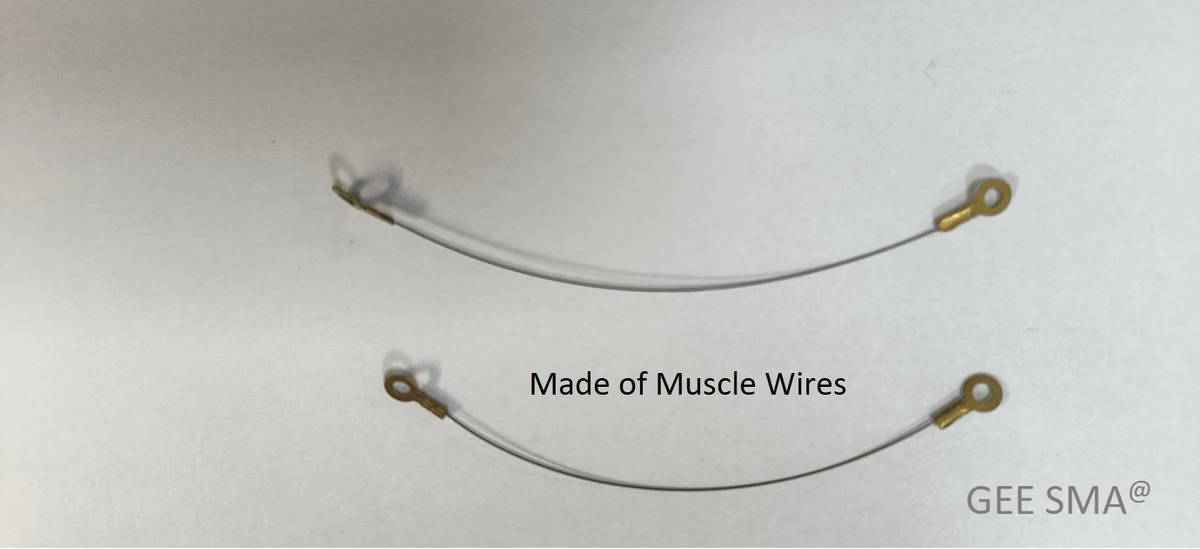
A request for "nitinol materials" is too open because form determines what the material can become. Round wire may become a guidewire core, spring, actuator element, fishing leader, or custom formed component. Flat wire may become a low-profile spring element or rectangular-profile part. Sheet, foil, and strip may be laser cut, stamped, shape set, or formed. Rod and bar may be machined or used as larger-section stock. Tube may be laser cut, ground, etched, polished, or used as precision hollow stock.
The buyer should therefore describe the next step after delivery. Will the material be drawn again, heat set, laser cut, centerless ground, welded, polished, coated, or assembled into a device? A supplier can quote more accurately when it understands the process route. Without that context, a technically correct material may still be wrong for the application.
GEE SMA's material form selection logic is relevant because it connects wire, sheet, foil, strip, rod, tube, and special alloys to the manufacturing route rather than treating them as interchangeable catalog entries.
SE, SM, Copper-Based, and Low-Temperature Families
The second decision is alloy family. Superelastic NiTi is chosen for recoverable deformation above the relevant transformation temperature. Shape memory NiTi is chosen when the material must recover a trained shape after heating. Copper NiTi and Copper NiTiCr can be used when narrow hysteresis and controlled active Af behavior matter. NiTiFe and NiTiNb appear in low-temperature or coupling-oriented discussions. These families answer different design questions.
GEE SMA public product information lists SE510, SE508, SE508 ELI, SE NTC, NiTiFe, and other alloy codes with typical active Af and use directions. Product notes also describe SE508 as a widely used binary superelastic alloy, with main forms including wire, rods, plates, strips, and tubes. They describe NiTiFe as a ternary low-temperature Ni-Ti alloy suitable for mechanical and aerospace engineering applications and pipe coupling concepts.
GEE SMA's nitinol alloy properties discussion helps buyers connect these alloy names to useful behavior: superelastic recovery, shape memory actuation, fatigue considerations, surface requirements, and transformation temperature.
Transformation Temperature Turns a Material Into a Function
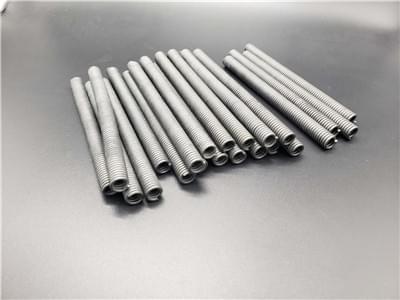
Active Af is one of the most important fields in a nitinol materials specification. The same general alloy name can behave differently depending on thermomechanical history. GEE SMA product notes list SE508 fully annealed active Af around -10 to 5 degrees C, typical superelastic straight annealed active Af around -5 to 10 degrees C, and higher ranges after additional heat treatment. They also list Copper NiTiCr active Af from 25 to 45 degrees C and actuator wire active Af values such as 70, 90, 110, and 130 degrees C.
Those numbers should not be pasted into every order without context. The correct active Af depends on operating temperature, assembly heat exposure, final geometry, test method, and whether the material is expected to be superelastic or shape memory. For example, a guidewire-related component, a room-temperature spring, and an electrically heated actuator wire may all use nitinol, but they do not need the same transformation behavior.
GEE SMA's technical information on transformation behavior supports this decision because transformation temperature is controlled by composition and processing, not just by the word "nitinol."
Surface Finish Depends on the End Use
Surface finish is a material-control issue, not a decorative afterthought. Black oxide, light oxide, mechanically polished, centerless ground, pickled, etched, and other custom surfaces can affect friction, coating adhesion, corrosion behavior, fatigue initiation, cleaning, nickel release, and visual inspection. The required surface should be tied to the next process and the final risk level.
GEE SMA product notes list black oxide, light oxide, and mechanically polished surfaces for guidewire-related nitinol material, black oxide and mechanically polished for Copper NiTi wire, and broader surface options across product forms. Public product information also lists black or brown oxide, polished, centerless ground, and other surfaces. A buyer should ask which surface is standard for the selected form and which surfaces require custom processing.
GEE SMA's surface-control guidance is especially important when the material will become part of a medical, coated, fatigue-sensitive, or corrosion-sensitive component.
Medical Material Standards Have a Specific Scope
ASTM F2063 is often mentioned in nitinol material sourcing, but its scope should be understood carefully. It covers wrought nickel-titanium bar, flat rolled products, and hollow forms for medical devices and surgical implants, with requirements for chemistry, physical properties, mechanical properties, metallurgical properties, and transformation-temperature assurance. The ASTM scope also makes an important distinction: mill product is not intended to be the final device shape, final surface finish, or final property set.
That distinction is useful even for non-medical buyers. A material standard can define a controlled starting point, but the final component may need additional processing, inspection, testing, and validation. For medical-device OEMs, FDA nitinol guidance adds further expectations around non-clinical assessment, surface, corrosion, fatigue, and transformation behavior in the final manufactured state.
GEE SMA's ASTM F2063 material-control framing helps buyers avoid a common mistake: treating a mill product certificate as proof that the final device or component is fully validated.
Quantity, Packaging, and Handling Protect the Material
Nitinol materials can be sensitive to scratches, kinks, bends, surface damage, and lot mixing. Fine wire may need spool packaging and careful carton handling. Product notes for guidewire-related material describe spool wire packaging, soft paper strips, standard export cartons, and wooden boxes for larger quantities. These details may sound logistical, but they protect the surface and geometry that make the material useful.
MOQ and capacity also depend on product family. Product notes list different minimum quantities for guidewire-related material, Copper NiTiCr wire, fishing wire, and other forms. A prototype order and a production order should not be discussed in the same way. Early sampling may prioritize learning, while production sourcing may require capacity review, packaging control, lot traceability, and repeatability.
RFQ Template for Nitinol Materials
- Product form: wire, flat wire, sheet, foil, strip, rod, bar, tube, spring, actuator wire, or custom component.
- Alloy family and code: SE508, SE508 ELI, SE510, SM alloy, Copper NiTi, Copper NiTiCr, NiTiFe, or another specified family.
- Dimensions: diameter, thickness, width, wall thickness, length, tolerance, and quantity.
- Functional behavior: superelastic recovery, shape memory, thermal actuation, low-temperature response, or narrow hysteresis.
- Active Af target, tolerance, and test method if temperature response matters.
- Surface finish, delivery condition, packaging, certificate requirements, and downstream processing plan.
Nitinol materials reward clear specifications. The better the buyer defines form, alloy family, active Af, surface, delivery condition, and next process, the easier it is for the supplier to recommend a practical route. GEE SMA can support material discussions across wire, sheet, foil, strip, rod, tube, actuator wire, springs, SE508, Copper NiTiCr, and NiTiFe families, but the first step is always the same: turn "nitinol materials" into a functional material requirement.