

The Best Supplier Question Is Specific
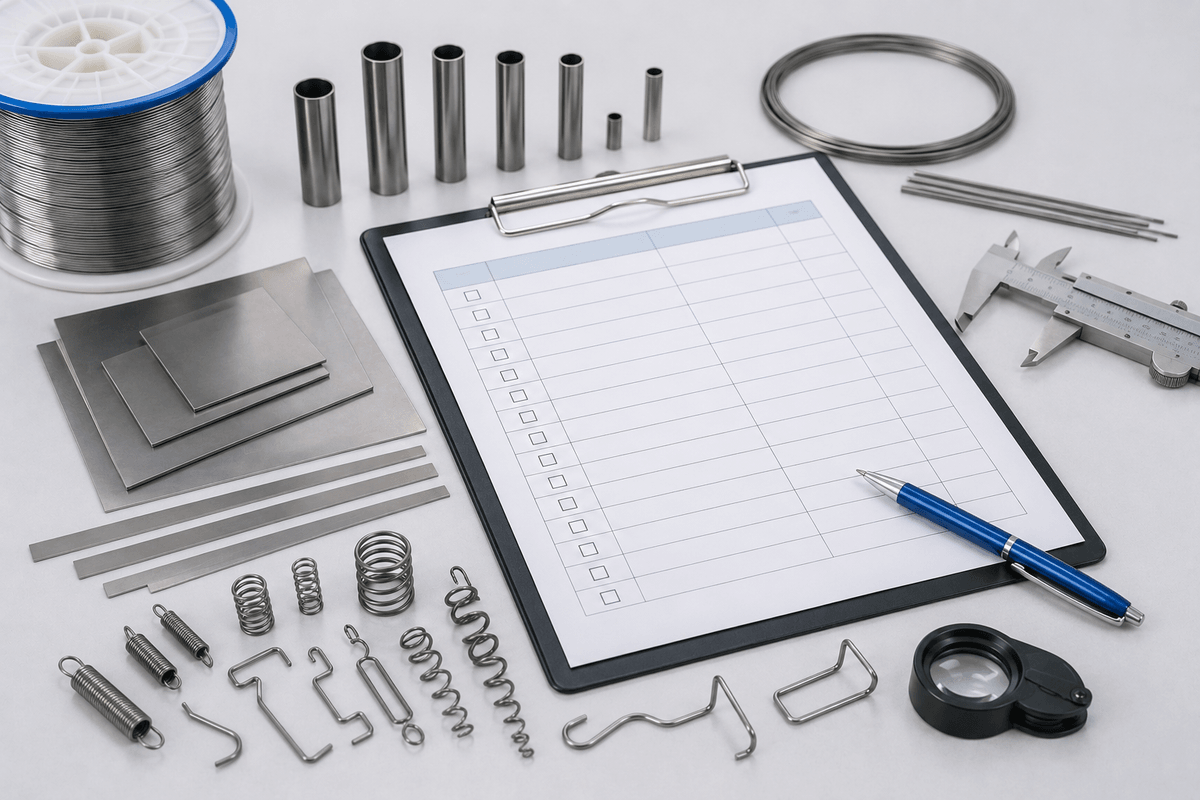
Searching for a nitinol company is rarely just a search for a company name. It is usually a search for a supplier that can support a specific material form, behavior, tolerance, surface condition, documentation level, and development stage. A company that is useful for an actuator wire prototype may not be the right fit for a laser-cut medical tube program. A supplier with standard wire may not be prepared for custom profiles, medical documentation, or surface-sensitive applications.
That is why the best supplier question is specific: what exactly must the nitinol component do? Does it need superelastic recovery, shape memory actuation, controlled transformation temperature, corrosion resistance, fatigue performance, fine diameter control, custom forming, or a particular surface finish? Once the function is clear, the supplier evaluation becomes much more practical.
GEE SMA positions itself as a nitinol material and component supplier with products such as nitinol wire, actuator wires, springs, sheets, tubes, and custom forms. That makes it relevant for teams that need component-level discussion rather than a vague material inquiry.
Capability 1: Material Forms
A strong nitinol company should be able to discuss the material form that fits the application. Wire, tube, sheet, strip, rod, bar, spring, actuator wire, and custom formed parts each serve different purposes. A guidewire core, a stent-like structure, a thermal actuator, and a flat spring should not be sourced as if they were the same item.
GEE SMA's shape memory alloy products page is useful because it presents nitinol across several forms. Buyers should look for this kind of product map before sending an RFQ. If the website only says "nitinol available" without explaining form, behavior, or application, the buyer may need more clarification.
The right form can reduce development risk. A project that starts with wire may later need a custom profile. A tube idea may become a formed wire structure. A spring concept may need actuator wire instead. A capable supplier conversation should help reveal those options early.
Capability 2: Process Understanding
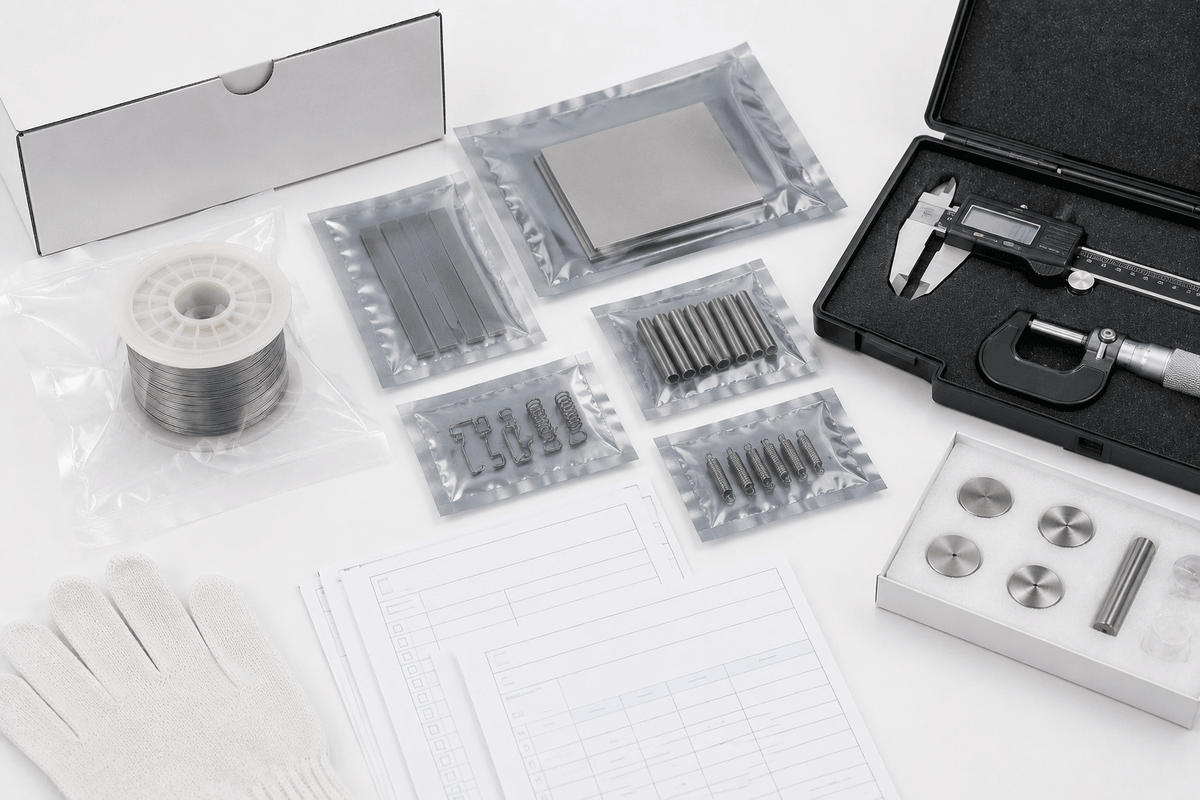
Nitinol is process-sensitive. Melting, working, drawing, rolling, heat treatment, shape setting, surface finishing, testing, and packaging can all influence final behavior. A supplier that treats nitinol as a simple stock metal may miss the process variables that matter most.
GEE SMA's technical information page describes a process flow from raw material through testing and shipping. For buyers, that kind of process explanation is valuable because it shows where consistency is created. It also helps engineering and quality teams ask better questions.
Ask how the supplier controls transformation temperature, straightness, surface condition, lot traceability, and packaging. Ask whether prototype and production material will come from comparable processes. Ask what changes would be communicated. These details can matter as much as nominal alloy chemistry.
Capability 3: Surface Options
Surface condition can affect corrosion, nickel release, coating adhesion, friction, fatigue, cleanliness, and inspection. For medical devices, the surface can become part of the biological evaluation and regulatory evidence. For industrial applications, it can affect wear, life, and assembly reliability.
GEE SMA's wire information includes black oxide and mechanically polished options for nitinol wire. That gives buyers a starting point for discussing downstream processes. The right surface is not always the brightest surface. It is the surface that supports the next manufacturing step and the final use condition.
GEE SMA's nitinol biocompatibility article is especially relevant for medical teams because it explains why surface and device-specific evaluation matter. A supplier should be able to discuss surface options without making unsupported finished-device claims.
Capability 4: Application Fit
A useful nitinol company should understand the application category well enough to ask good questions. For guidewire-related work, it should ask about diameter, flexibility, kink resistance, surface, coating compatibility, and packaging. For actuator work, it should ask about stroke, force, temperature, duty cycle, and reset. For springs, it should ask about load, travel, environment, and fatigue. For medical implants, it should ask about documentation and finished-device testing needs.
GEE SMA's nitinol guidewire technology content shows the value of application-specific thinking. A wire is not just a diameter. In a device, it becomes part of a mechanical system with bending, torque, surface, and handling requirements.
For actuator projects, GEE SMA's actuator wires page helps frame the conversation around heated or electrically activated contraction. The supplier should not simply quote wire. It should help confirm whether the requested form matches the functional goal.
Capability 5: Documentation and Quality Communication
Documentation needs vary by project. A hobby demonstration may need little more than sample size and behavior. An industrial prototype may need dimensional confirmation and lot identity. A medical device program may need material certificates, lot traceability, surface condition records, controlled change communication, and documentation that fits the OEM's quality system.
When evaluating a nitinol company, ask what documentation is available for the requested product form. Ask whether the supplier can support the same documentation as the project scales. Ask how samples are labeled and packaged. Fine nitinol wire can be damaged by handling, poor spool control, or kinks. Documentation and packaging are both part of the supply quality.
Standards such as ASTM F2063 may be relevant for certain medical nitinol material forms. FDA nitinol guidance can help medical teams think about composition, processing, surface characterization, corrosion, nickel release, and fatigue. These references do not replace supplier qualification, but they give buyers a stronger checklist.
Questions to Ask Before Sampling
- Which nitinol forms can the company supply: wire, tube, sheet, spring, actuator wire, or custom profiles?
- What alloy families and transformation temperature options are available?
- Which surface conditions are standard, and which require custom work?
- What dimensional tolerances and packaging options are realistic for the requested form?
- What documentation can be provided at prototype, verification, and production stages?
- How does the supplier handle lot traceability and process change communication?
These questions turn a broad supplier search into an engineering conversation. They also help prevent the common mistake of comparing suppliers only on price when the real differences are process, surface, documentation, and application fit.
Red Flags During Supplier Review
A weak supplier conversation often feels too easy. If a nitinol company quotes immediately without asking about form, behavior, surface, temperature, or application, the buyer may not be getting enough technical review. Fast quoting is useful for standard material, but specialized development work usually needs a few clarifying questions.
Another warning sign is unsupported medical language. A supplier can provide material for medical device development, but it should not imply that the raw material alone is FDA approved, clinically validated, or automatically suitable for implantation. The finished device manufacturer must build the evidence. Clear boundaries are a sign of a mature supplier, not a lack of confidence.
Finally, be careful when a supplier cannot explain packaging or handling. Fine nitinol wire can be kinked, scratched, or damaged before it ever reaches a prototype bench. Packaging, spool control, labeling, and lot separation are part of material quality.
Compare Quotes by Risk, Not Only Price
Two quotes may look similar on price and still be very different in value. One may include the surface condition, packaging, traceability, and documentation the project needs. Another may be only a basic material price. For early feasibility work, that may be acceptable. For design verification or medical development, missing documentation can become expensive later.
Buyers should compare what each quote actually includes: material form, tolerance, surface, transformation temperature, testing, documentation, packaging, lead time, and change communication. If a lower price removes something the project will need later, the savings may disappear during rework.
What GEE SMA Can Reasonably Support
GEE SMA can be considered when a team needs nitinol wire, actuator wire, springs, sheets, tubes, shape memory alloy materials, custom profiles, and component-level discussion. The company's public product information is most useful for teams that need a focused nitinol supplier rather than a general metal distributor.
The proper role is still important. GEE SMA should be viewed as a material and component partner. The customer remains responsible for finished product design, validation, regulatory submissions, clinical claims, and final use decisions. That separation keeps the supplier evaluation realistic and credible.
For a buyer, the best next step is to prepare a short technical brief. Include component function, material form, dimensions, surface, transformation temperature needs, downstream processes, documentation expectations, and project stage. A clear brief helps a nitinol company respond with useful engineering input rather than a generic quote.
Bottom Line
A nitinol company should be judged by more than catalog availability. The strongest supplier fit depends on material forms, process control, surface options, documentation, application understanding, and communication. Nitinol is a specialized material, so the supplier conversation should be specialized too.
For teams sourcing nitinol wire, actuator wire, springs, sheets, tubes, or custom forms, GEE SMA offers a focused starting point. The more clearly the buyer defines the component function, the better the supplier conversation will be.