

A Useful Phrase That Needs Precision
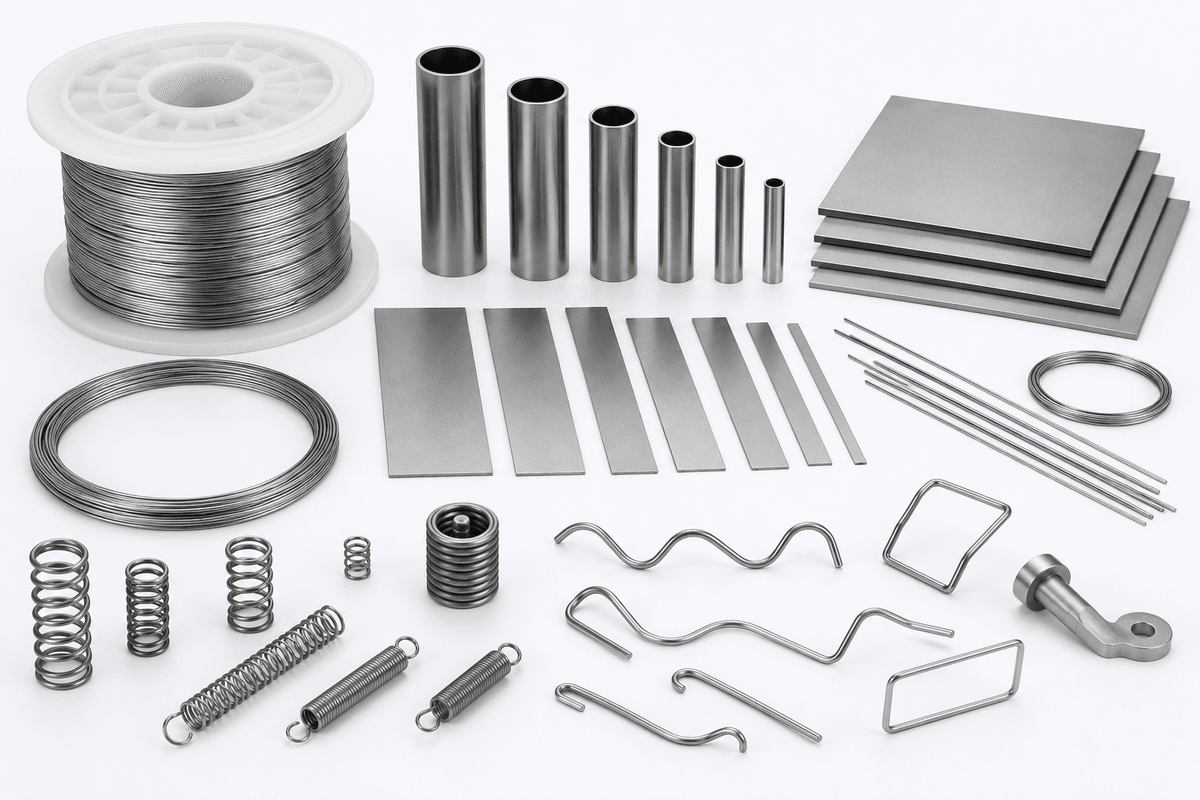
Metal nitinol is a common way to describe a nickel-titanium shape memory alloy, but the phrase can hide important engineering differences. A buyer may use it to mean superelastic wire. A researcher may mean shape memory alloy sheet. A medical device engineer may mean ASTM-referenced wrought nitinol for a component. A designer may mean actuator wire or a spring. Those are all related, but they are not the same purchase.
Nitinol is known for two core behaviors. Superelastic nitinol can deform and recover under load when used in the right condition. Shape memory nitinol can return toward a trained shape when heated through its transformation range. These behaviors are why the material is used in medical devices, robotics, actuators, orthodontics, industrial mechanisms, and specialty components.
GEE SMA supplies nitinol materials and components including nitinol wire, actuator wire, springs, tubes, sheets, and custom forms. That product range is a reminder that metal nitinol should be specified by behavior and form, not only by name.
The Nickel-Titanium Foundation
Nitinol is a nickel-titanium alloy. Its unusual behavior comes from solid-state phase transformation. In practical terms, that transformation allows the material to recover shape, deliver force, resist kinking, or move in response to temperature depending on how it is formulated and processed. The details matter because small differences in composition and thermal history can change performance.
GEE SMA's shape memory alloy overview explains the basic shape memory and superelastic behavior that makes the alloy useful. For engineers, the key lesson is that nitinol properties are manufactured through process control. Melting, working, heat treatment, drawing, rolling, finishing, and testing all affect the final result.
This is different from buying a generic metal bar only by size. With nitinol, the same nominal diameter or sheet thickness may not be enough. The buyer also needs to understand alloy family, transformation temperature, mechanical condition, surface finish, and intended use.
Superelastic Metal Nitinol
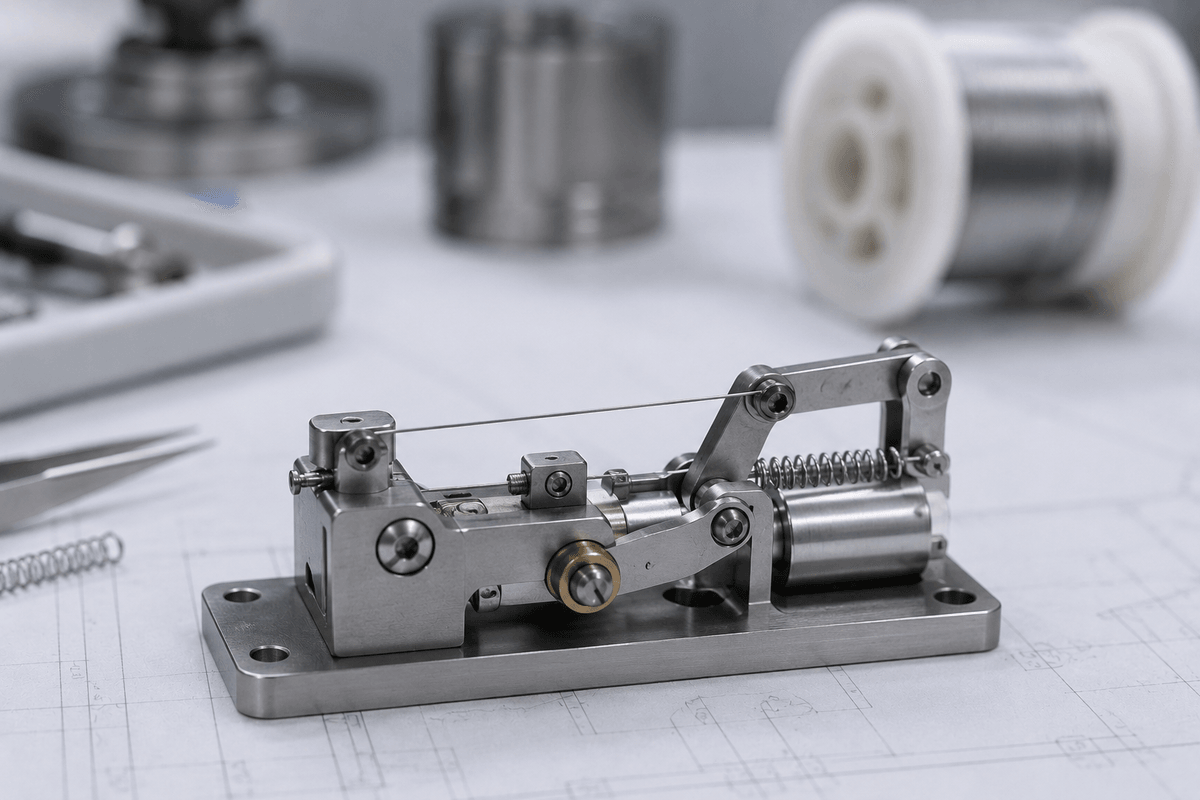
Superelastic nitinol is often used when a component needs to bend and recover. This is one reason it appears in guidewire-related components, stent-like structures, frames, eyeglass frames, snares, baskets, and flexible supports. The material can tolerate deformation that might permanently bend another metal, provided the design stays inside the right strain and temperature window.
GEE SMA's nitinol guidewire technology article shows how superelastic recovery and kink resistance can support navigation through complex pathways. In non-medical devices, similar benefits can help compact mechanisms survive bending, vibration, or repeated movement.
Superelasticity should not be treated as unlimited flexibility. Geometry, surface quality, fatigue, temperature, and processing history still matter. A wire that recovers from a demonstration bend may fail if the finished component has a sharp transition, damaged surface, or unrealistic fatigue demand.
Shape Memory Metal Nitinol
Shape memory nitinol is useful when a component needs to change shape with temperature. This behavior can support actuator wires, thermal triggers, deployable structures, self-adjusting mechanisms, and educational demonstrations. The property is especially attractive when the design has limited space for motors, gears, or pneumatic components.
GEE SMA's actuator wires are an example of nitinol used for compact motion. A wire can contract when heated or electrically activated, but the surrounding system still needs a return path, thermal management, mechanical stops, and fatigue planning.
For shape memory applications, transformation temperature is central. The material should activate in the intended environment, not during storage or too late in the operating cycle. Buyers should define active temperature, stroke, force, cycle rate, cooling, and reset method before choosing a wire or spring.
Forms: Wire, Tube, Sheet, Spring, and Custom Shapes
Metal nitinol can appear as wire, tube, sheet, strip, rod, bar, spring, actuator wire, or custom formed component. Each form has a different manufacturing path and different design use. Wire is common for flexible supports, guidewire-related components, springs, loops, and actuator elements. Tube can support laser-cut structures. Sheet and strip can support flat springs or formed parts.
GEE SMA's wire page includes round wire and custom profile options. GEE SMA's custom wire forming resource is useful when a team needs rectangles, squares, special profiles, loops, or formed components rather than ordinary round wire.
Selecting the right form should come before detailed price comparison. A low-cost wire is not useful if the design needs tube. A sheet sample is not useful if the component must cycle as a spring. The material form is part of the engineering answer.
Surface and Processing Are Part of the Material
Nitinol surface condition can affect corrosion, nickel release, coating adhesion, friction, fatigue, and inspection. Black oxide, mechanically polished, etched, passivated, electropolished, ground, or coated surfaces may each fit different downstream processes. For medical work, the finished surface can become part of the biological evaluation and regulatory evidence.
GEE SMA's nitinol biocompatibility article is relevant because it explains why the final device condition matters. A material supplier can provide controlled starting material, but the device team must evaluate what happens after forming, cutting, polishing, cleaning, sterilization, and assembly.
Processing also affects mechanical behavior. Heat setting can define shape. Cold work can affect strength and transformation behavior. Surface damage can reduce fatigue life. Nitinol should be treated as a process-controlled material, not just a chemical composition.
Common Misunderstandings
The first misunderstanding is that all nitinol returns to shape in the same way. In reality, superelastic recovery and heat-activated shape memory are different design behaviors. A buyer should not assume that a sample that bends well will also actuate well, or that an actuator wire will automatically behave like a guidewire core.
The second misunderstanding is that the word metal makes nitinol easy to machine, form, or finish like ordinary alloys. Nitinol can be challenging because processing changes properties. Cutting, grinding, heat setting, polishing, passivation, and coating should be planned around the material's sensitivity. A supplier conversation should include downstream processing before the drawing is frozen.
The third misunderstanding is that a standard material certificate answers every product question. Standards can support material control, but finished geometry, surface condition, fatigue, corrosion, and application testing still matter. This is especially true for medical devices and other safety-sensitive products.
Applications Should Guide the Product Form
Medical devices often use nitinol for access, recovery, expansion, or gentle force. Robotics and compact mechanisms may use it for small actuators. Orthodontics may use it for controlled force over time. Industrial products may use it for temperature response, flexible supports, or corrosion-resistant mechanisms. The same material family appears in all of these areas, but the product form changes with the application.
That is why a buyer should describe the use case when asking for metal nitinol. A supplier may recommend superelastic wire, shape memory wire, a spring, a flat strip, or a custom profile depending on the function. The more clearly the application is described, the less likely the buyer is to order a material form that is technically nitinol but practically wrong.
Medical and Industrial Requirements Differ
Medical nitinol projects usually require more documentation, traceability, and device-specific testing than general industrial prototypes. Standards such as ASTM F2063 may be relevant for certain wrought nitinol medical material forms. FDA nitinol guidance highlights non-clinical topics such as composition, processing, surface characterization, corrosion, nickel release, and fatigue.
Industrial projects may care more about actuation, wear, corrosion, packaging, or repeatability. Robotics, aerospace mechanisms, consumer products, and thermal actuators can use nitinol for different reasons than a cardiovascular device. The material may be the same family, but the evidence package is different.
GEE SMA's technical information page helps bridge both worlds because it presents the manufacturing route and material controls behind nitinol products. The buyer's job is to define which controls match the application.
How to Specify Metal Nitinol
A practical specification should answer several questions. What form is needed? What dimensions and tolerances matter? Should the material be superelastic, shape memory, or another alloy family? What transformation temperature is required? What surface condition is expected? Will the customer perform heat setting, polishing, passivation, coating, welding, crimping, or sterilization?
The specification should also define documentation and packaging. Fine wire can be damaged by poor spool control or handling. Medical development material may require lot traceability and certificates. Custom profiles may need inspection beyond simple diameter checks. Standards and guidance can support the discussion, but they do not replace the component-specific requirement.
For teams starting from a broad metal nitinol search, GEE SMA can help move the discussion toward wire, actuator wire, spring, tube, sheet, or custom form requirements. That translation is where many sourcing mistakes are avoided.
Bottom Line
Metal nitinol is not one simple stock item. It is a family of nickel-titanium materials and product forms that can provide superelastic recovery, shape memory motion, compact force, and useful performance in demanding applications. The correct choice depends on form, transformation behavior, surface condition, processing, documentation, and validation.
For engineers and buyers, the smartest path is to describe the component function first. Then select the nitinol form and properties that fit that function. GEE SMA can support that material-level conversation across wire, actuator wire, springs, sheets, tubes, and custom components.