

Market Growth Starts With Device Physics
The nitinol-based medical device market continues to attract attention because nickel-titanium alloys solve problems that many conventional metals cannot solve easily. A device may need to pass through a small catheter, recover shape after deployment, resist kinking, apply gentle continuous force, or maintain flexibility under repeated motion. Those physical requirements, not market buzz alone, are what keep nitinol in the sourcing conversation.
Market reports often group nitinol medical devices into stents, guidewires, retrieval devices, catheters, orthodontic products, orthopedic fixation, and other device categories. The exact numbers vary by source and methodology, but the trend is consistent: minimally invasive procedures, cardiovascular intervention, urology, neurovascular treatment, and orthopedic applications keep driving interest in nitinol components.
GEE SMA is positioned as a focused nitinol material and component supplier, with products including nitinol wire, actuator wires, springs, tubes, sheets, and shape memory alloy materials. For OEM teams, the market story matters because growth creates both opportunity and sourcing pressure. A device program needs not only a clever design, but also reliable material supply and process control.
Demand Signal 1: Smaller Access Paths
Nitinol is widely used because it combines large recoverable strain, kink resistance, shape recovery, corrosion resistance after suitable processing, and useful fatigue behavior. GEE SMA's shape memory alloy overview describes superelasticity and shape memory as the core mechanisms behind many applications. These properties allow a component to be compressed, bent, or deformed and then recover in a controlled way.
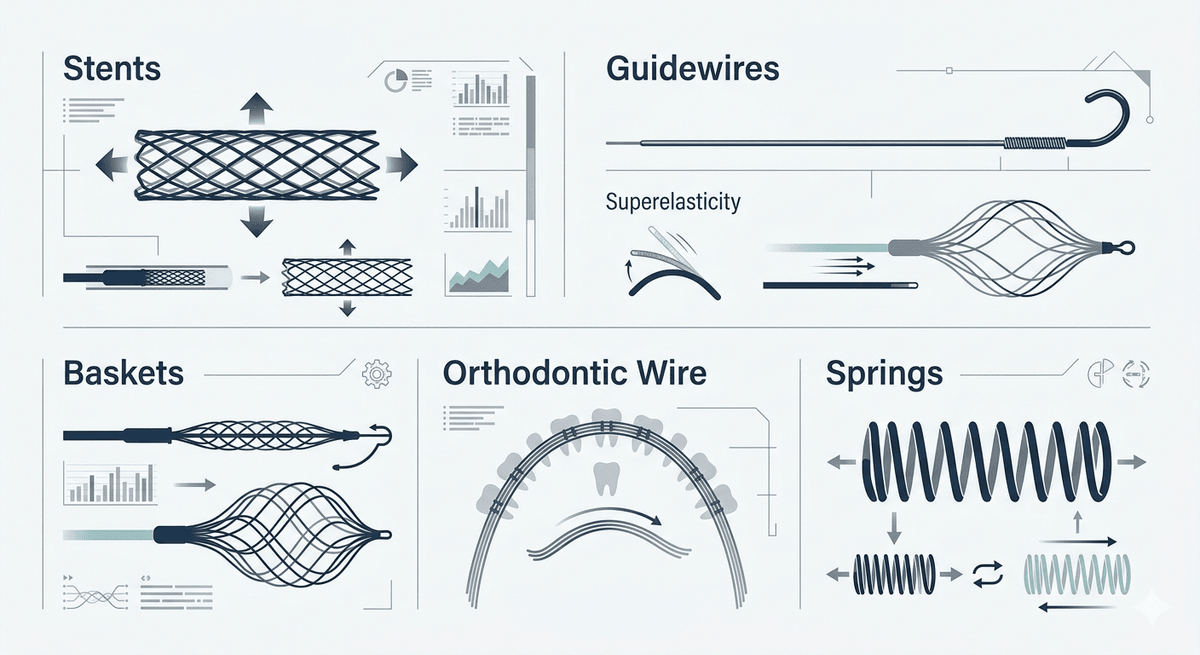
In vascular stents, nitinol can support self-expansion after catheter delivery. In guidewires, it helps the wire travel through tortuous anatomy with less permanent kinking. In snares and baskets, it enables flexible retrieval forms. In orthodontic wires, it can provide relatively constant force across a range of tooth movement. In orthopedic fixation, shape memory concepts can support compression or controlled recovery.
These use cases explain why the nitinol-based medical device market is linked closely to procedure trends. When physicians and patients benefit from smaller incisions, catheter-based delivery, and flexible devices, demand for high-performance material components rises as well.
Demand Signal 2: More Specialized Device Categories
Cardiovascular devices remain one of the most visible categories. Stents, heart valve frames, occluders, guidewires, and delivery systems all may use nitinol in different ways. Public product pages for transcatheter heart valve systems show how nitinol frames are used in demanding heart environments, while guidewire market reports highlight coronary and peripheral procedures as major demand drivers.
Urology is another important area. Grand View Research's urology guidewire report identifies nitinol guidewires as a material segment and discusses growth in urological procedures. GEE SMA's nitinol wire products page also lists snares and baskets among wire applications, which aligns with minimally invasive retrieval needs.
Orthopedic and dental applications remain relevant as well. Shape memory staples, fixation devices, orthodontic wires, and dental components use nitinol's ability to apply controlled force or recover shape. GEE SMA's product information includes medical and orthopedic-related alloy notes, while the company's technical page emphasizes transformation temperatures, springs, and nitinol process control.
The Growth Problem: Material Consistency
Growth in the nitinol-based medical device market does not automatically make sourcing easier. As more device programs use nitinol, buyers may face longer lead times, tighter documentation requirements, and more pressure to qualify dependable suppliers. Unlike many commodity metals, nitinol performance depends strongly on composition, processing, heat treatment, cold work, and surface finish. Two wires with similar nominal chemistry may behave differently if their process histories differ.
For medical device teams, this makes supplier selection part of engineering risk management. The supplier must understand diameter tolerance, transformation temperature, surface condition, packaging, traceability, and the downstream process. If a wire will be coated, laser welded, heat set, crimped, or electropolished, those steps should be discussed early.
GEE SMA's process information describes raw materials, melting, forging, drawing or rolling, straight annealing or cold condition, testing, and shipping. This kind of process visibility helps OEM teams ask better questions before a material is locked into a design.
The Product Map: Wire, Tube, Sheet, Spring
Wire is one of the most important nitinol product forms because so many devices depend on long, flexible, high-consistency elements. GEE SMA lists nitinol wire diameters from 0.0020 inch to 0.2755 inch, along with straight lengths, spools, custom profiles, and surface options. These capabilities support guidewires, orthodontic wires, baskets, snares, springs, and actuator-like elements.
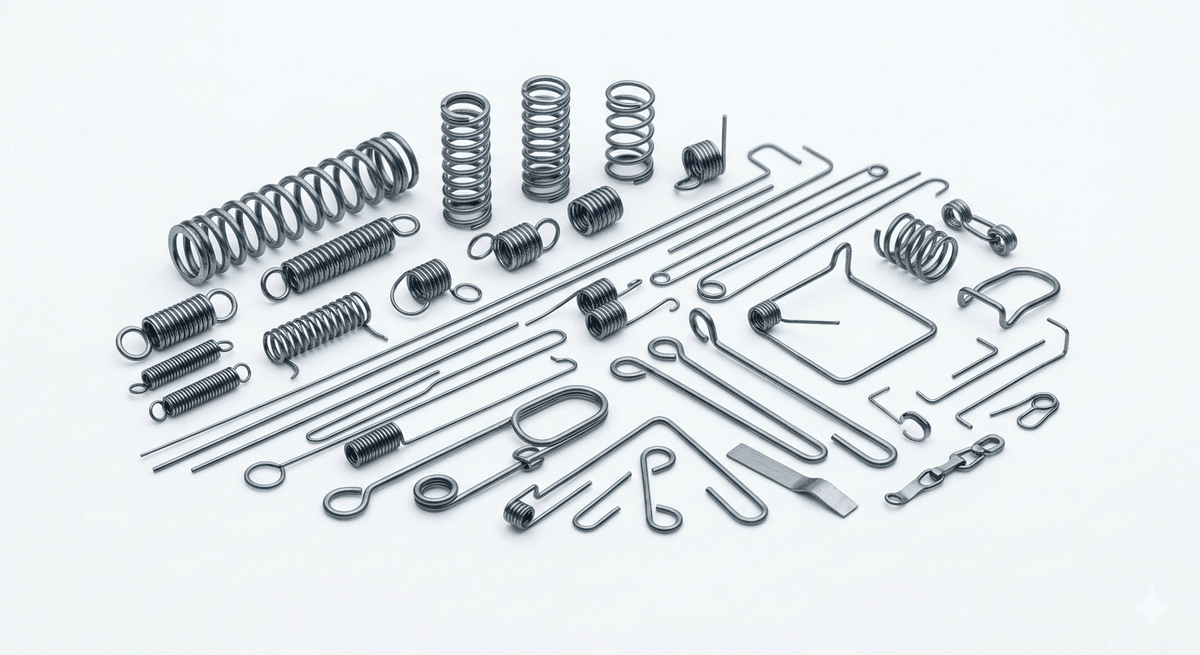
Tube is also important for laser-cut devices such as stents, frames, and expandable structures. Sheet and strip may support formed components. Springs and actuator wires may support temperature-responsive mechanisms or compact motion systems. GEE SMA's actuator wire page describes contraction behavior when heated or electrically activated, which can be relevant to small medical and industrial mechanisms.
The market trend is not simply "more nitinol." It is more specialized nitinol: tighter transformation temperature control, better fatigue performance, cleaner surfaces, custom profiles, improved documentation, and application-specific packaging.
The Quality Layer Behind the Market
Medical device markets are shaped by regulatory expectations. Nitinol components may be part of Class II or Class III devices depending on use, anatomy, duration, and risk. The material supplier does not control the OEM's regulatory pathway, but the material package must support the OEM's design history file, risk analysis, verification, and validation work.
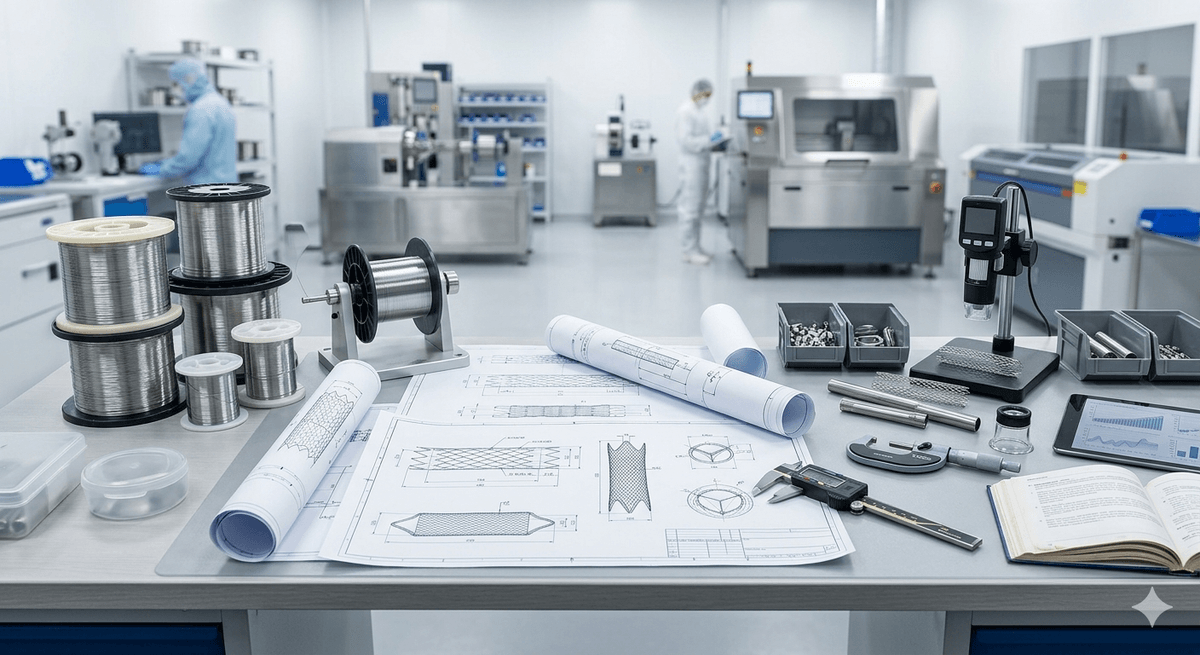
Important quality questions include material traceability, lot consistency, certificate availability, dimensional inspection, surface condition, transformation temperature measurement, and change control. For patient-contacting devices, the OEM must also evaluate biocompatibility, corrosion, nickel release, sterilization compatibility, and cleaning. These obligations are especially important in cardiovascular, neurovascular, and implantable applications.
GEE SMA should be positioned as a material and component partner rather than a finished regulated device supplier unless a specific finished device claim is verified. This distinction helps OEM teams keep responsibility clear while still gaining value from supplier expertise.
Buyer Watchlist
First, watch procedure growth. Cardiovascular, peripheral vascular, urology, and structural heart procedures can increase demand for guidewires, frames, baskets, and delivery systems. Second, watch device miniaturization. Smaller devices often require finer wire, tighter tolerances, and better packaging. Third, watch surface requirements. As devices become more specialized, coating, polishing, and passivation expectations become more demanding.
Fourth, watch supply chain resilience. Medical device OEMs often need qualified secondary sources or at least a clear supplier continuity plan. Fifth, watch design complexity. Newer device concepts may require custom profiles, composite assemblies, heat-set shapes, or special transformation temperatures. GEE SMA's custom wire forming content is relevant for teams moving beyond standard round wire.
The most successful sourcing teams bring engineering and procurement together early. Price matters, but for nitinol, uncontrolled variation can cost far more than a small unit-price difference. The right supplier conversation should include function, risk, process, and documentation.
Supplier Qualification Becomes Strategic
When a market grows, supplier qualification becomes more than a purchasing task. A medical device company may need to qualify a nitinol source before final design freeze so that material variation does not become a late-stage problem. The qualification package may include incoming inspection, process capability, transformation temperature data, surface condition, packaging evaluation, and lot-to-lot comparison. For critical components, the OEM may also need to run fatigue, corrosion, and simulated-use testing on multiple lots.
Supplier qualification should match the device risk. A non-implantable prototype may need only basic dimensional and functional checks. A cardiovascular implant or delivery system may require a deeper package with traceability and formal change communication. The supplier's ability to keep a stable process can be as important as its ability to make the first acceptable sample.
Market growth can also increase demand for custom material forms. Device teams may ask for finer wire, rectangular profiles, special transformation temperatures, polished surfaces, or packaging that protects delicate material during global shipping. These details are not glamorous, but they decide whether a nitinol component can move from prototype to repeatable production.
Engineering and Sourcing Need One Brief
The nitinol market rewards teams that treat material selection as a design input, not a purchasing afterthought. Engineering should define function, strain, temperature, surface, and fatigue needs. Sourcing should evaluate lead time, communication, documentation, and process stability. Quality should confirm traceability and change-control expectations. When those groups work together, nitinol becomes easier to manage.
GEE SMA's role is strongest when the customer brings a clear component problem: a wire that must recover after tight bending, a spring that must activate near a defined temperature, a profile that must fit inside a compact catheter, or a surface that must support downstream processing. That level of clarity helps the supplier recommend the most practical nitinol form and helps the OEM avoid over-specifying or under-specifying the material.
Market Takeaway
The nitinol-based medical device market is growing because nitinol enables compact, flexible, self-expanding, and recoverable designs across multiple medical specialties. But market growth also raises the importance of disciplined sourcing. OEM teams need suppliers who understand material behavior, process control, transformation temperature, surface finish, and documentation.
GEE SMA can support nitinol wire, actuator wire, springs, sheets, tubes, and other shape memory alloy material discussions for medical device development teams. The best starting point is a clear component requirement: what must the nitinol do, what environment will it face, and how will the OEM verify it?