

Short Answer: Usually Not the Blade
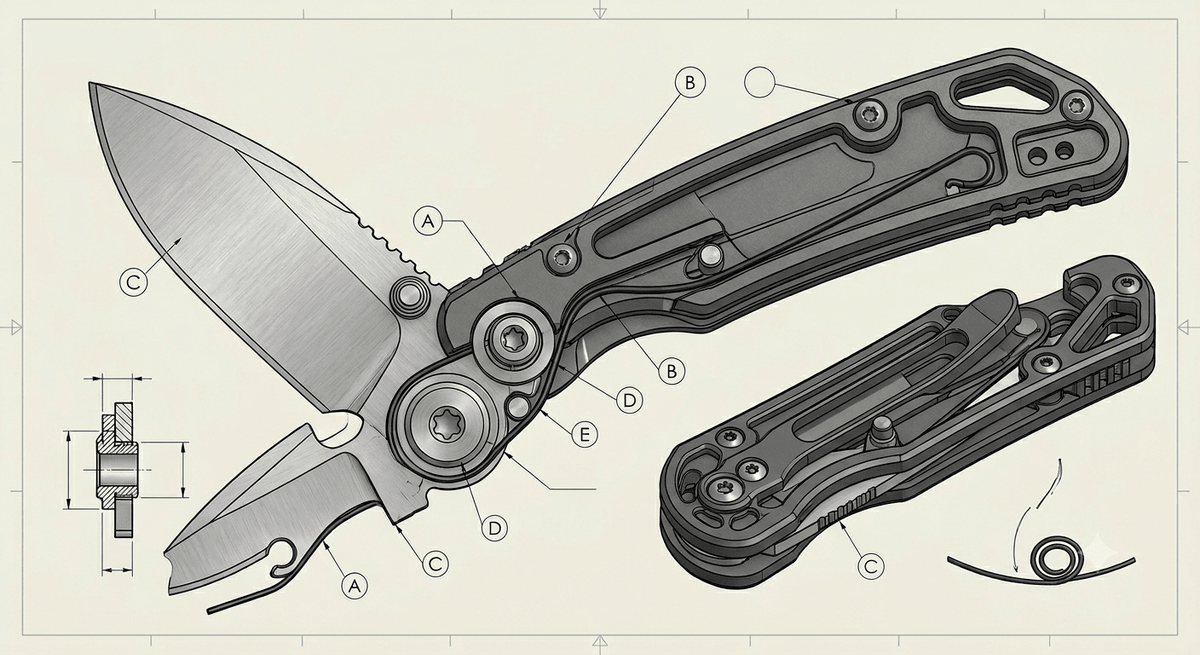
A nitinol knife sounds dramatic, but the engineering reality is more nuanced. Nitinol is famous for shape memory and superelastic behavior, so it is natural for designers to imagine a blade, surgical tool, folding mechanism, or compact actuator that bends and returns to shape. In most practical designs, however, nitinol is more convincing as the moving, flexible, or self-recovering element around a blade than as the sharpened edge itself.
This distinction matters for buyers and engineers. If the goal is a sharp knife edge that holds an edge like premium blade steel, nitinol may not be the right starting point. If the goal is a surgical or industrial mechanism that must flex, deploy, retract, or return to a preset shape, nitinol can be highly relevant. The correct question is not "Can nitinol make a knife?" It is "Which part of the knife or cutting tool benefits from shape memory alloy behavior?"
GEE SMA supplies nitinol materials and components including nitinol wire, actuator wires, springs, sheets, tubes, and custom forms. That makes the company a fit for component-level discussions around flexible, recoverable, or thermally activated tool concepts rather than unsupported finished-blade claims.
Why Designers Keep Asking
Nitinol has two properties that invite creative tool design. The first is superelasticity: under suitable conditions, the material can undergo large deformation and recover when stress is removed. The second is shape memory: after deformation at lower temperature, the material can return to a trained shape when heated above its transformation temperature. These behaviors are described in GEE SMA's shape memory alloy overview.
For compact tools, those properties can suggest flexible blades, self-opening elements, thermal triggers, miniature grippers, or folding mechanisms. In medical device development, shape memory alloys are also considered for minimally invasive surgical tools because they can be inserted in a compact form and then recover or actuate inside a constrained space.
However, a cutting tool is not only a shape. It also needs edge hardness, wear resistance, corrosion behavior, toughness, cleanability, sterilization compatibility, and safe failure behavior. A blade material is judged by how it cuts and how it fails, not only by whether it remembers a shape.
The Blade Question
The most important design distinction is between the blade edge and the tool mechanism. A conventional knife blade is selected for edge retention, hardness, grindability, toughness, and corrosion resistance. Stainless steels, carbon steels, tool steels, ceramics, and specialty alloys are common because they can be hardened and sharpened for cutting performance. Nitinol's superelastic behavior does not automatically translate into a durable cutting edge.
Nitinol may be more useful in the mechanism around the blade. A folding knife could use a nitinol spring or wire as a compact biasing element. A surgical cutting tool could use a nitinol loop, snare, basket, or deployable structure. A biopsy or endoscopic instrument might use a shape memory element to change geometry after delivery. In these cases, the cutting edge may be another material, while nitinol provides motion, flexibility, recovery, or deployment.
GEE SMA's actuator wires contract when heated or electrically activated. That behavior can support small mechanisms where space is limited and quiet motion is useful. The article is not claiming that a finished knife is supplied by GEE SMA; rather, it explains where nitinol components can contribute to a tool design.
The Surgical Tool Answer
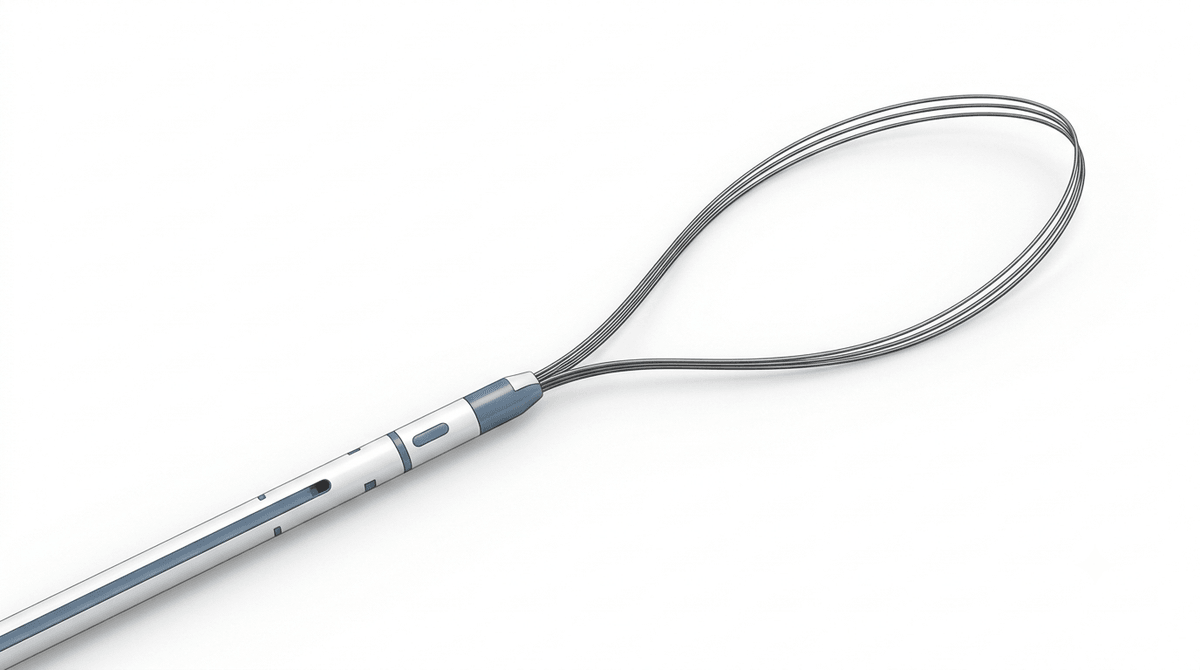
In surgical tools, nitinol is often valued for flexibility and recovery. GEE SMA's wire page lists applications such as stents, catheter guide wires, snares, baskets, orthodontics, and orthopedic fracture fixation. Those examples show how nitinol can perform in constrained anatomical pathways. A surgical cutting or retrieval tool may benefit from similar behavior when the working element must pass through a catheter or small incision.
A nitinol loop can open and recover shape. A formed wire can act as a snare. A spring can deliver controlled force. A shape-set component can deploy after leaving a sheath. These functions may support cutting-adjacent devices, but they are not the same as a stand-alone knife blade. For any medical device, the OEM must evaluate biocompatibility, corrosion, nickel release, fatigue, sterilization, cleaning, and regulatory requirements.
GEE SMA's nitinol guidewire technology content is relevant because guidewires face the same need for flexibility and recovery through curved pathways. A surgical tool that enters through a narrow path may need similar material discipline even if the final working action is cutting, grabbing, or retracting.
The Industrial Tool Answer
Outside medicine, a nitinol knife concept may appear in consumer products, robotics, aerospace mechanisms, or specialty tools. A shape memory wire can move a latch. A spring can restore position. A superelastic element can survive bending that would permanently deform another metal. These features can make a compact tool more resilient or reduce the number of mechanical parts.
For the cutting edge itself, engineers should be careful. If the project requires a blade that is sharpened repeatedly and holds a fine edge under abrasive contact, a conventional blade material may be more practical. If the project requires corrosion resistance and flexibility in a nontraditional geometry, nitinol may deserve testing. If the project involves Nitinol-60 or hardened nickel-titanium components, the design conversation shifts toward wear and hardness rather than classic superelastic wire behavior.
GEE SMA can support material conversations around nitinol processing, transformation temperatures, springs, wires, and formed components. The final decision should come from prototype testing, not from the novelty of the material name.
Specify the Moving Part First
Start by defining the component function. Is the nitinol element supposed to cut, spring, deploy, retract, flex, guide, grip, or actuate? If it must cut, define edge geometry, hardness, wear, corrosion, and sharpening requirements. If it must actuate, define stroke, force, temperature, duty cycle, heating method, cooling time, and fatigue life. If it must flex, define bend radius, strain, number of cycles, and recovery expectations.
Next, choose the product form. Wire may be appropriate for springs, loops, snares, flexible supports, or actuator elements. Sheet or strip may be relevant to flat springs or formed parts. Tube may support laser-cut deployable structures. GEE SMA's wire capabilities include fine diameters, straight lengths, spools, custom profiles, and surface options. These details help engineers move from idea to sample request.
Surface finish should also be specified. A black oxide surface, mechanically polished surface, centerless ground surface, or downstream coating can change friction, corrosion behavior, bonding, and cleanability. For medical tools, surface finish is part of risk control. For consumer or industrial tools, it still affects wear, feel, and durability.
Test the Claim You Want to Make
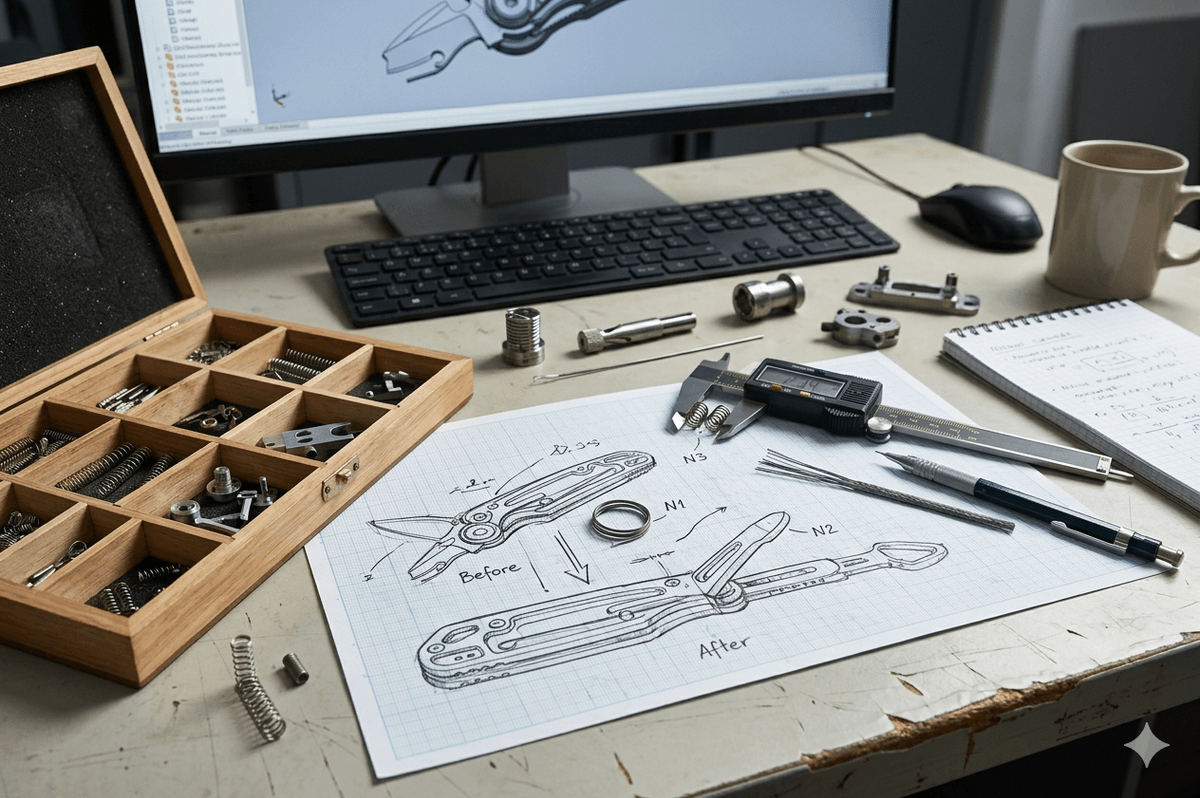
A nitinol knife or cutting-tool component should be tested against its actual use case. For a blade edge, tests may include cutting force, edge retention, wear, corrosion, cleaning, and fracture behavior. For a spring or actuator, tests may include force output, response time, fatigue, temperature cycling, and dimensional recovery. For a medical device component, the test program becomes much broader and must align with the device's regulatory pathway.
Avoid broad claims such as "self-healing blade" or "perfect surgical knife" unless they are supported by validated data. Nitinol is remarkable, but it still follows material limits. The best designs use the alloy where its recoverable deformation and transformation behavior solve a specific problem.
Supplier input is valuable before tooling is built. GEE SMA can help teams discuss whether a concept is better suited to custom nitinol wire forming, actuator wire, spring design, or another shape memory alloy product form. That early alignment reduces the chance of asking the material to do the wrong job.
Three Common Mistakes
The first mistake is assuming that flexibility equals sharpness. A superelastic wire can bend and recover, but a cutting edge needs a different property set. If the design truly needs a blade, the team should compare nitinol against blade steels and other edge materials using the same cutting and wear tests. Nitinol may still be useful elsewhere in the assembly.
The second mistake is ignoring temperature. Shape memory behavior depends on transformation temperature. A tool that activates at the wrong temperature may move too early, too late, or not at all in the intended environment. GEE SMA's product information includes active Af ranges for different alloy families, which is exactly the type of detail that should be discussed before prototypes are ordered.
The third mistake is designing a clever mechanism without a recovery path. Shape memory alloy elements often need bias loads, cooling time, or mechanical stops. Actuator wire can contract, but the system still needs a way to reset. A nitinol spring can deliver force, but the surrounding tool must control travel and prevent overstress. Good SMA tool design is a system problem, not a single-material trick.
Final Answer
A nitinol knife is best understood as a design question, not a single product category. Nitinol may not be the ideal material for every cutting edge, but it can be highly useful in the mechanisms, flexible elements, deployable structures, springs, and actuators around a cutting or surgical tool. The material's value comes from superelastic recovery, shape memory behavior, and compact motion.
For engineering teams exploring a nitinol knife or tool concept, begin with the function of the nitinol component. Then choose the right alloy form, surface condition, transformation temperature, and verification plan. GEE SMA can support that component-level discussion with nitinol wire, actuator wire, springs, and shape memory alloy material expertise.