

The Promise Is Real, But So Is the Trap
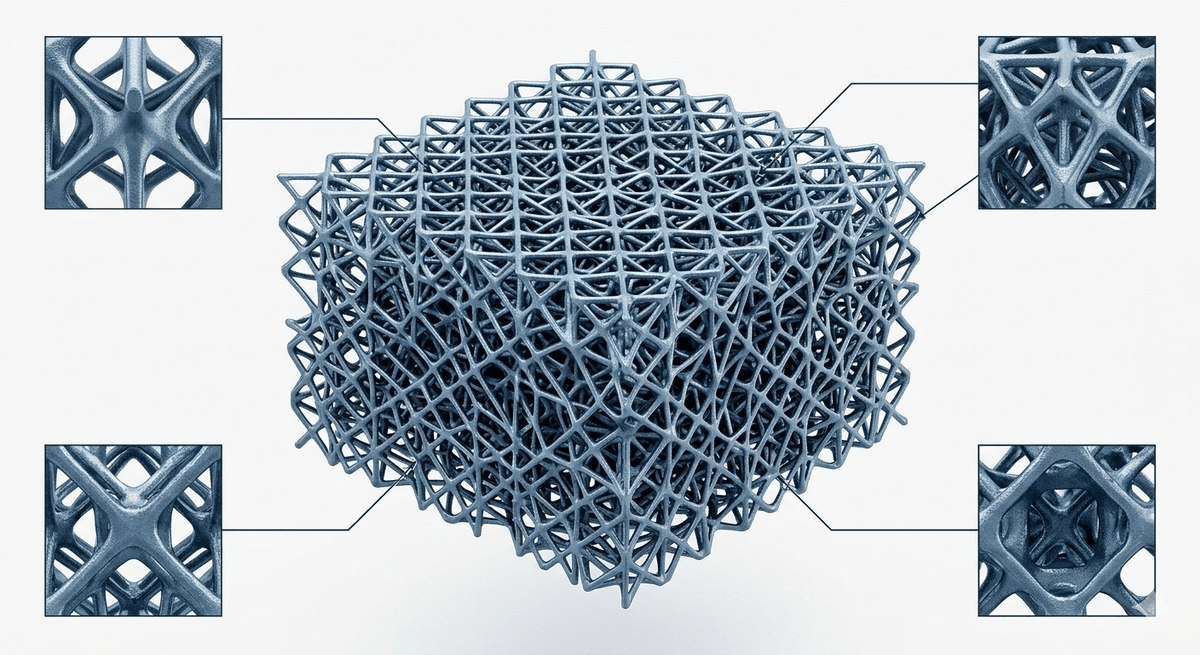
Nitinol 3D printing is one of the most exciting and difficult topics in modern shape memory alloy development. Additive manufacturing promises complex lattice structures, patient-specific geometries, faster design iteration, and forms that are difficult or impossible to make with conventional drawing, rolling, machining, or laser cutting. The trap is assuming that printed shape automatically means reliable nitinol function.
The challenge is that nitinol is not an ordinary metal powder. Its functional behavior depends on composition, oxygen and impurity control, microstructure, transformation temperature, heat treatment, surface finish, and fatigue performance. A printed part that looks dimensionally correct may not behave like drawn nitinol wire, laser-cut tube, or shape-set component. This makes nitinol additive manufacturing a powerful development area, but not a shortcut around material science.
GEE SMA focuses on nitinol materials, nitinol wire, actuator wires, springs, tubes, sheets, and shape memory alloy products. For teams exploring nitinol 3D printing, a supplier like GEE SMA can help clarify when additive manufacturing is appropriate and when established nitinol forms may offer a more controlled path.
Use Printing When Geometry Is the Bottleneck
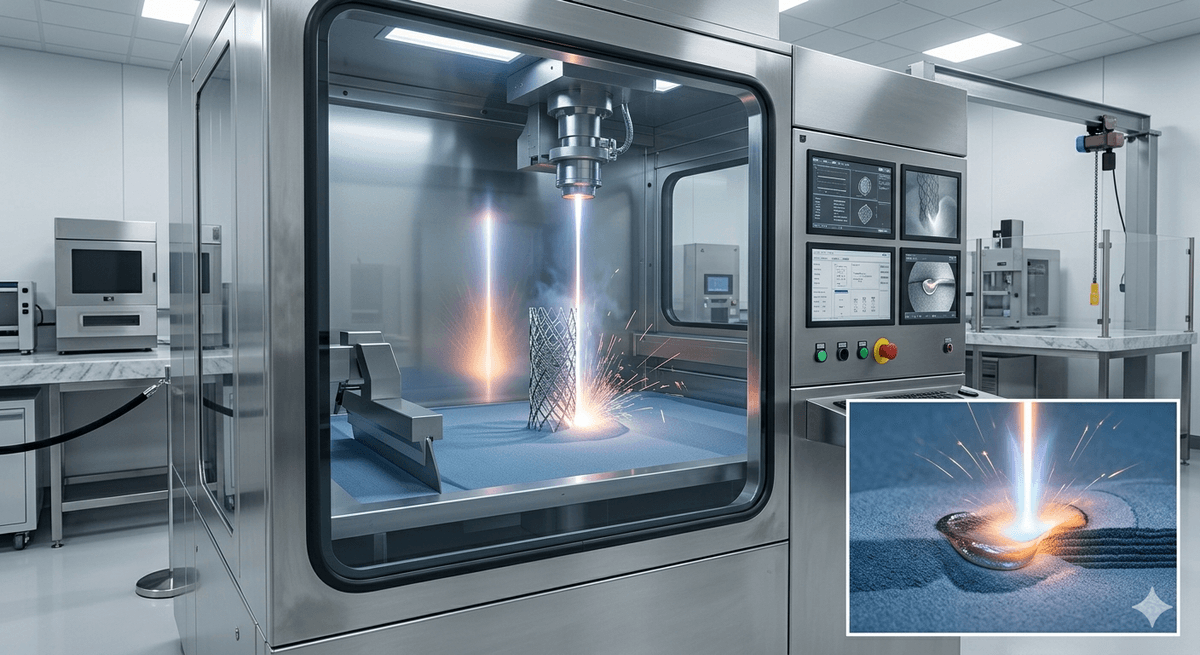
Traditional nitinol processing is powerful but geometry-limited. Fine wire can be drawn to very small diameters. Tube can be laser cut into stent-like structures. Sheet can be cut and formed. Springs can be wound and heat set. These methods are proven, but they may not easily create porous structures, integrated hinges, complex internal channels, or patient-specific architectures.
Additive manufacturing offers a different design space. A printed nitinol part could integrate support, flexibility, and deployment geometry into a single structure. Lattice designs may tune stiffness. Porous structures may support certain orthopedic or research concepts. Complex fixtures can accelerate shape-setting and prototyping. In some cases, 3D printing may be used not for the final implant, but for tooling, molds, fixtures, or rapid prototyping around nitinol components.
Public literature on additive manufacturing of NiTi shape memory alloys highlights both opportunity and difficulty. Researchers describe powder bed fusion, directed energy deposition, and other approaches, but they also emphasize the need to control composition and post-processing. The FDA's additive manufactured medical device guidance also reminds manufacturers that printed medical devices require careful process validation, design controls, and risk management.
Decision Point 1: Preserve the Nitinol Function
Nitinol's value comes from function, not just shape. A medical device team may need superelastic recovery at body temperature, a specific active Af, controlled hysteresis, fatigue resistance, corrosion resistance, or shape memory response. These properties depend on very small differences in nickel-titanium composition and thermal history. Printing can alter those variables through powder chemistry, laser energy, cooling rate, melt pool behavior, porosity, oxygen pickup, and post-build heat treatment.
That means a printed nitinol component must be evaluated as a new manufacturing process, not as a simple alternative to machining. The team should test transformation temperatures, mechanical response, fatigue, corrosion, surface condition, dimensional variation, and cleaning. If the device is patient-contacting or implantable, biocompatibility and surface finishing become even more important.
GEE SMA's technical information describes how conventional nitinol products move from raw materials through melting, forging, drawing or rolling, straight annealing or cold condition, testing, and shipping. Additive manufacturing changes that flow, but it does not remove the need for process control. In many cases, it adds more variables to control.
Decision Point 2: Compare Against Wire, Tube, and Sheet
For many medical devices, drawn wire, laser-cut tube, formed sheet, or wound spring remains the better choice. GEE SMA's wire page lists fine wire sizes, custom profiles, straight lengths, spooled supply, black oxide surfaces, mechanically polished surfaces, and alloy families for superelastic, low-superelastic, and shape memory applications. These products are useful when the design needs predictable wire behavior rather than a complex printed geometry.
Guidewires, snares, baskets, orthodontic wires, actuator wires, and many catheter subassemblies often depend on long, slender, high-consistency material forms. A printed part may not improve these designs. It may introduce roughness, porosity, or fatigue concerns that drawn wire avoids. GEE SMA's guidewire technology article shows why kink resistance and bending recovery are central to wire-based devices.
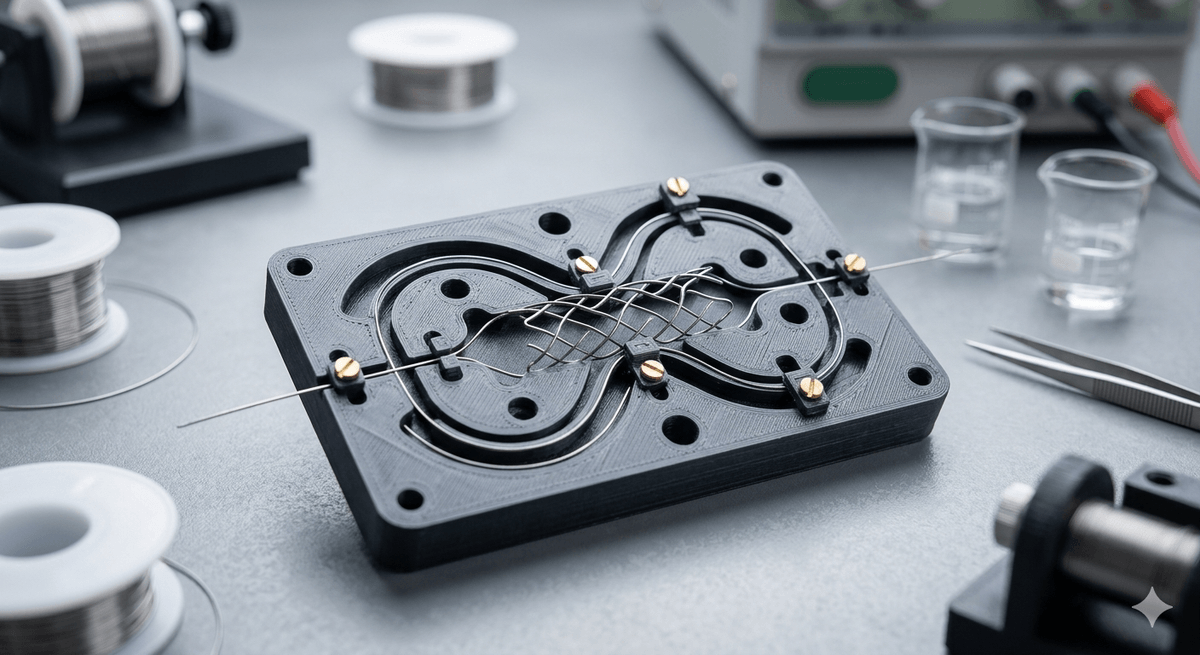
Conventional forms can also be combined with additive tooling. For example, a team might 3D print shape-setting fixtures, prototype holders, inspection aids, or test rigs while using drawn nitinol wire for the final functional element. This hybrid approach often gives engineers the speed of additive manufacturing without risking the functional uncertainty of a printed implantable component.
Decision Point 3: Identify the Real Additive Use Case
Nitinol 3D printing is most compelling when geometry is the main barrier. Orthopedic structures, porous implants, custom lattice supports, research stents, and patient-specific concepts are common areas of exploration. Additive manufacturing may also make sense for low-volume development where design iteration matters more than immediate production scale.
Another useful area is fixture and tooling development. A medical device team may need a ceramic or metal fixture for heat setting a complex nitinol wire form. Additive manufacturing can shorten the path from CAD to physical fixture. An ASME paper on rapid shaping of nitinol for medical device prototyping describes an approach where 3D printed molds and heat setting support fast iteration. This kind of use does not necessarily require the nitinol itself to be printed.
For final medical components, the business case must include more than design freedom. The team should evaluate powder supply, build repeatability, post-processing, inspection, surface finishing, sterilization, validation, and cost. A beautiful printed geometry is not enough if the process cannot consistently deliver the required transformation temperature and fatigue performance.
A Pre-Print Checklist
Before selecting nitinol 3D printing, engineers should define the functional reason for printing. Is the design impossible with wire, tube, sheet, or laser cutting? Does the printed geometry reduce assembly steps? Does it improve performance in a way that can be measured? If the answer is mainly that printing sounds innovative, the project may be adding risk without enough benefit.
Next, define the property targets. These may include active Af, superelastic plateau behavior, recoverable strain, fatigue life, radial force, stiffness, corrosion behavior, surface roughness, dimensional tolerance, and biocompatibility. The team should then link each property to process controls and verification tests.
Finally, compare against established alternatives. A GEE SMA shape memory alloy product such as wire, tube, spring, sheet, or actuator wire may satisfy the same design need with a more familiar manufacturing route. Additive manufacturing should win because it solves a real engineering problem, not because it is fashionable.
Build the Supplier Stack
A practical nitinol 3D printing strategy often includes both additive and conventional suppliers. The additive partner may provide printing, powder process knowledge, and post-processing support. A nitinol material specialist can help the engineering team understand transformation behavior, wire and tube alternatives, surface finish options, and component-level requirements.
GEE SMA can support discussion around actuator wires, superelastic wire, springs, custom profiles, and nitinol material choices. If an OEM team is unsure whether a feature should be printed, wound, laser cut, or wire formed, that early conversation can narrow the path before expensive validation work begins.
For regulated devices, the OEM must still own design controls, process validation, regulatory strategy, and clinical claims. Additive manufacturing does not reduce those obligations. In many cases, it increases the need for disciplined documentation because the manufacturing process directly controls material properties.
Inspection Comes Before Confidence
Printed nitinol parts usually require more than a dimensional check. Porosity, unmelted powder, rough surfaces, residual stress, and local chemistry variation can all influence performance. Engineers should plan for microscopy, computed tomography when appropriate, surface roughness measurement, transformation temperature testing, and mechanical testing. If the component has a lattice or internal channel, inspection access can become a design constraint.
Post-processing can be just as important as printing. Heat treatment may be needed to tune transformation behavior. Surface finishing may be needed to reduce roughness and improve fatigue performance. Cleaning may be difficult if powder remains trapped in small features. For medical devices, every post-processing step must be controlled and documented because it can change the biological and mechanical risk profile.
This is why many teams begin with additive manufacturing for fixtures or prototypes before moving toward printed functional components. The approach lets them learn geometry and assembly behavior while keeping the final nitinol function in a more established wire, tube, or formed product. When printing is truly needed, the team enters that work with a clearer understanding of what must be measured.
Final Decision
Nitinol 3D printing expands what engineers can imagine, but it also raises the bar for material control. It may be valuable for complex geometries, research structures, patient-specific concepts, and rapid tooling. For many wire-based medical devices, conventional nitinol forms remain more predictable and easier to specify.
The best approach is not to choose printing or conventional processing by default. Start with the device function, then select the manufacturing route that delivers the required geometry, transformation behavior, surface quality, fatigue performance, and documentation. GEE SMA can support that decision by helping teams evaluate nitinol forms and component-level requirements before the design path is locked.