

Fishing line is usually discussed in terms of strength, diameter, abrasion resistance, knot behavior, and visibility. When nitinol enters the conversation, one more factor becomes central: superelastic kink resistance. Nitinol fishing wire is not a monofilament nylon line or a braided fiber line. It is a nickel titanium alloy wire selected when a leader or specialty fishing line needs springback, corrosion resistance, and resistance to permanent bends.
GEE SMA product notes list nitinol fishing wire with SE508/LSE5065 alloy codes, diameter from 0.10 mm [0.004 in.] and up, and popular diameters from 0.20 to 0.60 mm [0.008 to 0.035 in.]. GEE SMA's superelastic nitinol fishing wire capability fits buyers who want a metal leader material that can recover from bends better than ordinary stainless wire.
Why Nitinol Belongs in a Fishing Line Discussion
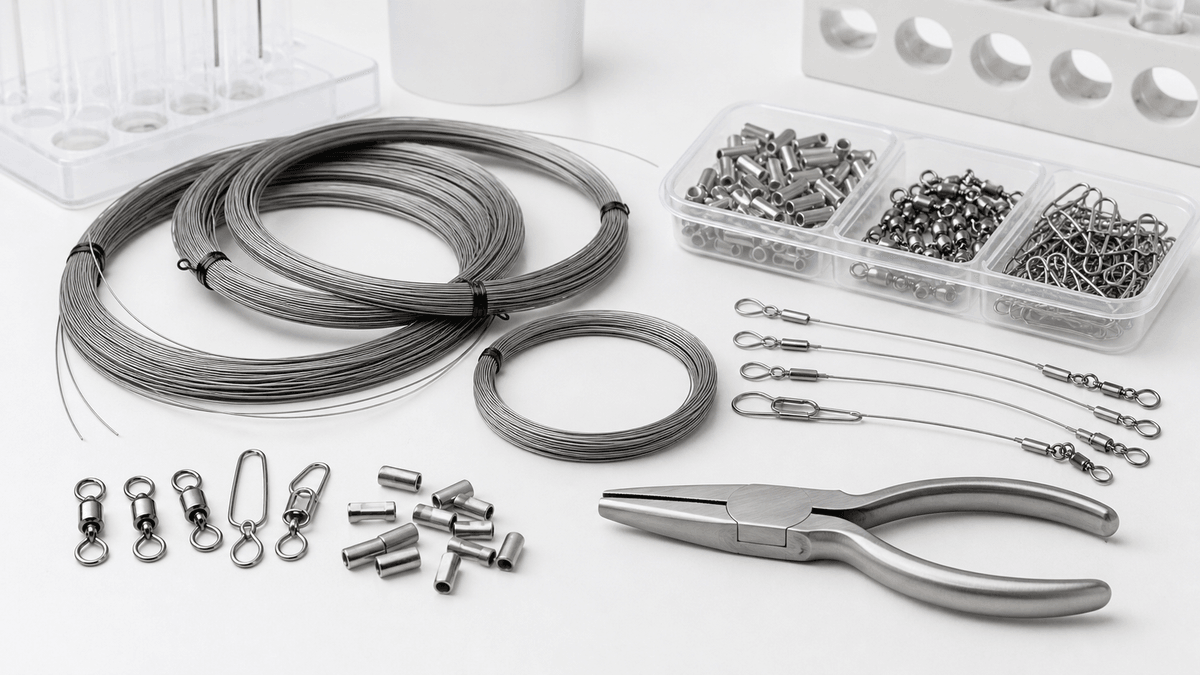
Most fishing line materials are chosen around a tradeoff. Nylon monofilament is easy to use but can stretch and wear. Fluorocarbon has low visibility but can be stiff. Braided line is strong for its diameter but may need a leader for abrasion or bite protection. Stainless wire leaders resist bite damage but can kink permanently. Nitinol sits in a different corner of the material map because it combines metal-wire strength with superelastic recovery.
The value is not that nitinol replaces every fishing line. It is more useful as a leader or specialty wire where repeated bending, tooth contact, saltwater exposure, or compact storage can punish ordinary wire. GEE SMA product notes describe nitinol fishing wire as flexible, kink resistant, corrosion resistant, anti-bite, and wear resistant. Those are material-level advantages that matter most when the application actually needs a metallic leader.
GEE SMA's nitinol wire production capability supports the practical side of this discussion: diameter, surface, straightness, delivery package, and alloy code all affect how the wire handles in the real world.
SE508 or LSE5065: Recovery Versus Softness
The product classification reference notes two alloy directions for nitinol fishing wire: SE508 and LSE5065. It also notes that SE508 has better superelasticity while LSE5065 is softer. For fishing line buyers, that distinction is useful. A more strongly superelastic wire may recover from bends more aggressively. A softer wire may be easier to handle in certain rigs or leader constructions.
This is why samples matter. A fishing tackle manufacturer should not choose only from alloy code. The final decision should include target species, leader length, connector style, crimping or tying method, spool packaging, and whether the user values stiffness, springback, or softness more. GEE SMA's superelastic recovery controls are relevant when the buyer needs a wire that behaves consistently after bending.
Diameter Changes Handling and Bite Resistance
GEE SMA product notes list nitinol fishing wire from 0.10 mm and up, with popular diameters from 0.20 to 0.60 mm. Diameter changes stiffness, visibility, strength, bite resistance, knot or crimp behavior, and packaging. A small-diameter wire may be easier to present naturally, but it may not be the best choice for aggressive fish or abrasive structures. A thicker wire may improve bite resistance but feel stiffer.
For an RFQ, the buyer should define target diameter, tolerance, surface finish, delivery form, and approximate quantity. Product notes list MOQ as 0.5 kg or 1000 meters. That helps separate hobby-scale requests from supplier-scale material sourcing.
Surface Finish: Black Oxide or Mechanically Polished
GEE SMA product notes list black oxide and mechanically polished surfaces for nitinol fishing wire. Black oxide may reduce shine and provide a darker look. Product notes caution that black surface wire should not have graphite residue that contaminates hands. Mechanically polished wire has a metallic surface and may be preferred when a bright clean appearance or lower residue is important.
Surface choice is not only about appearance. It affects handling, inspection, and downstream packaging. If the wire will be sold as leader material, the surface needs to remain clean through spooling, cutting, crimping, and retail packaging. GEE SMA's surface-control thinking for nitinol helps buyers frame surface condition as a quality requirement.
Delivery Condition and Packaging
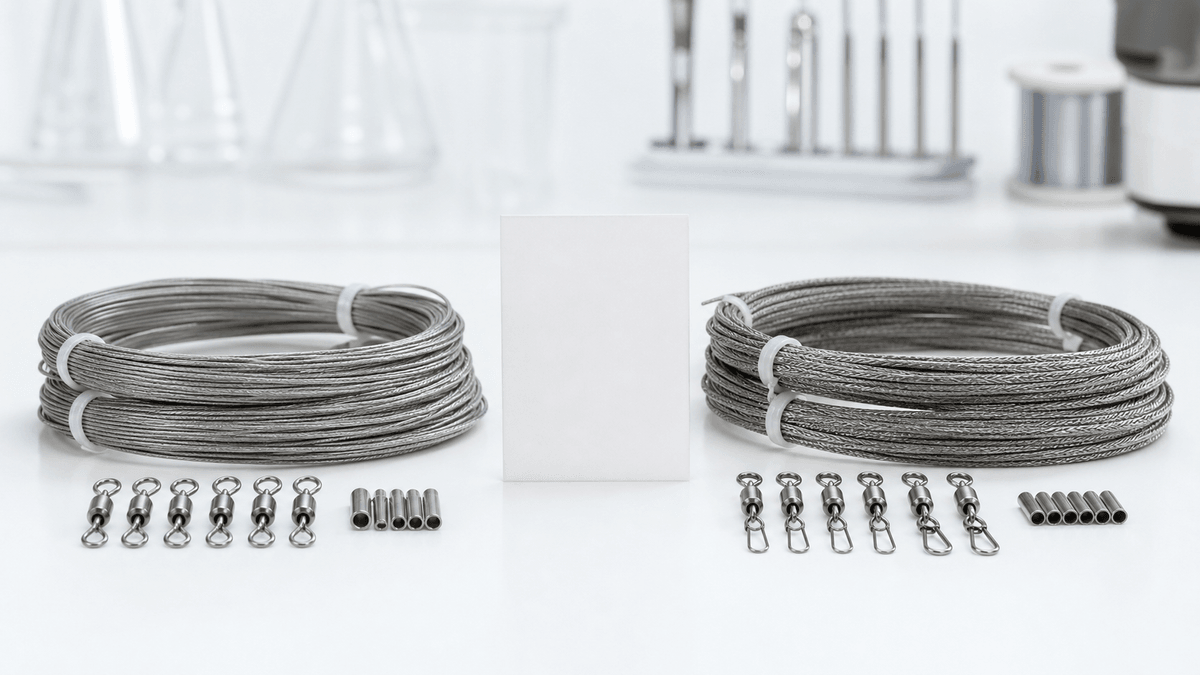
Product notes list nitinol fishing wire delivery condition as super-elastic straight annealed. The processing route is cold drawn and then straight annealed. That combination supports superelastic behavior while improving wire handling. For fishing line and leader applications, coil memory, cast, spool behavior, and clean packaging can matter almost as much as raw strength.
A buyer should ask how the wire is supplied: spool, coil, straight length, or custom package. If the material will be converted into retail leader products, the supplier and buyer should discuss minimum bend radius, spool size, surface protection, and lot marking. GEE SMA's Niti material form selection supports that practical choice between spool, coil, and straight wire supply.
Testing Should Match the Fishing Rig
A nitinol fishing line sample should be tested in the same rig where it will be sold or used. That means checking bending recovery after storage, crimp retention, lure connection hardware, abrasion points, and exposure to saltwater or freshwater conditions. A wire that looks excellent on a bench may behave differently after it is crimped tightly, bent around a lure eye, or stored on a small spool.
The test should also consider user handling. Some anglers prefer softer leader material. Others prioritize bite resistance and springback. Product notes indicate that SE508 may provide stronger superelastic response while LSE5065 is softer. A tackle brand can use that difference to create distinct product options rather than forcing one wire to satisfy every fishing style.
How Nitinol Compares With Ordinary Wire Leaders
Ordinary stainless or steel leaders are familiar and economical, but they can kink after sharp bending. Once a metal leader forms a permanent kink, its handling and strength can become less predictable. Nitinol's appeal is its ability to recover from bending more effectively under the right alloy and processing condition. This can reduce the frustration of curled or damaged leaders during repeated use.
The tradeoff is that nitinol is a specialty material. It should be sourced with alloy code, diameter, surface finish, and delivery condition clearly defined. For buyers building a retail fishing line or leader product, material consistency matters as much as the first sample's springback.
What to Put in a Fishing Line RFQ
- State whether the request is for nitinol fishing line, nitinol fishing wire, or leader wire.
- Choose alloy direction, such as SE508 or LSE5065, after sample testing.
- Specify diameter, tolerance, surface finish, and delivery package.
- Describe the use: bite leader, saltwater leader, lure connection, or specialty line component.
- Confirm clean surface expectations for black oxide or mechanically polished wire.
- Test bending recovery, crimping or knot method, and corrosion exposure in the actual rig.
Nitinol does not make every fishing line problem disappear. It does give tackle designers a different material option when kinking, bite damage, and repeated bending are the limiting concerns. The best result comes from matching alloy code, diameter, surface, and delivery condition to the way the final leader or line will be used.