

Use the Guidance as an Engineering Prompt
FDA nitinol guidance is useful because it pushes medical device teams to think beyond the alloy name. Nitinol can be highly valuable in medical devices, but its performance depends on chemistry, processing, surface condition, geometry, fatigue loading, corrosion behavior, nickel release, and the actual clinical use case. The guidance is not a shortcut. It is a prompt for better design evidence.
For OEM teams, that matters early. A product may begin as a sketch for a guidewire, a self-expanding frame, a snare, a basket, a spring, or a minimally invasive tool. At the beginning, "use nitinol" may sound clear. During development, the real questions become more specific: Which alloy condition? Which transformation temperature? Which surface? Which test method? Which documentation? Which worst-case geometry?
GEE SMA supplies nitinol materials and components including nitinol wire, actuator wires, springs, sheets, tubes, and custom forms. That makes the company a relevant material and component partner, while the finished device manufacturer remains responsible for regulatory strategy, verification, validation, and submissions.
Start With Device Function
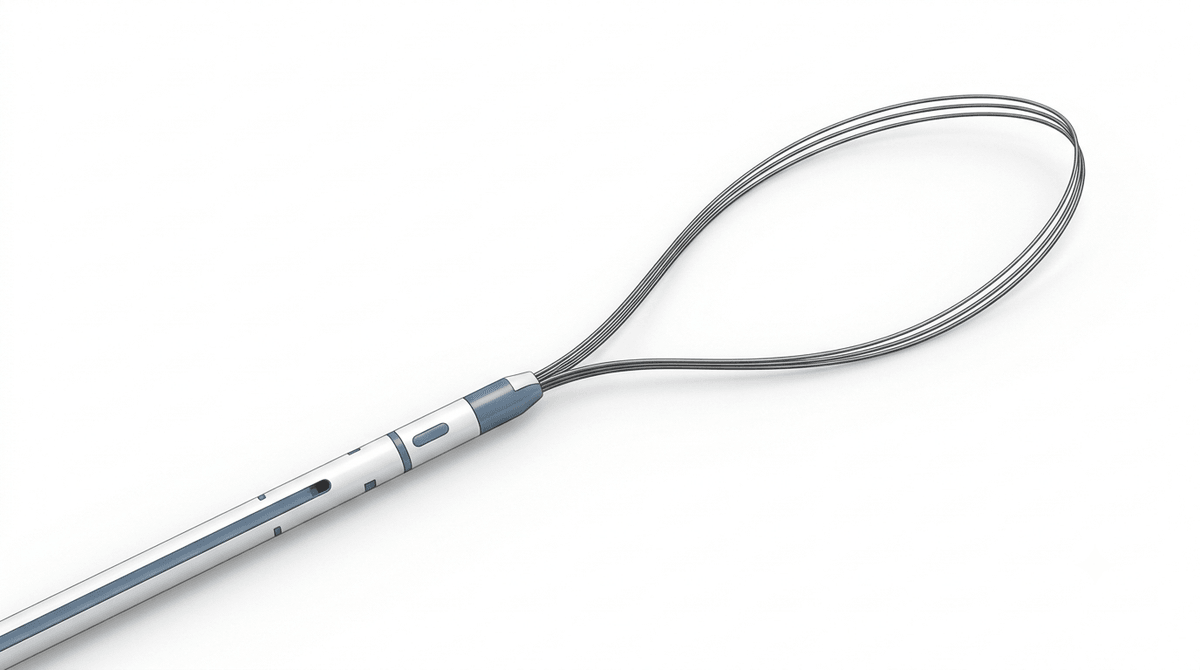
The first practical lesson from FDA-style thinking is to define the function of the nitinol component. A wire that supports catheter navigation has a different risk profile from an implantable frame. A temporary snare has different exposure than a permanent implant. A spring in a handle may not have the same biological risk as a blood-contacting component. A heated actuator wire raises different questions from a passive structural element.
Function determines what evidence matters. For a guidewire-related component, flexibility, kink resistance, torque behavior, coating compatibility, and surface durability may be central. GEE SMA's nitinol guidewire technology article gives useful context for how wire behavior supports navigation through complex pathways. For a self-expanding implant, radial force, fatigue, corrosion, nickel release, and surface finish may dominate.
Before testing begins, the team should write a short component function statement. That statement should explain what the nitinol part does, where it is used, whether it contacts the patient, how long it remains in contact, and what failure would mean. This keeps the test plan tied to real risk instead of generic material curiosity.
Material Composition Is Only One Layer
Nitinol composition matters, but it is not the whole story. Near-equiatomic nickel-titanium alloys can show superelasticity or shape memory behavior depending on processing and transformation temperature. Other NiTi-based alloy families may be used for different transformation ranges or application needs. Even small shifts in chemistry and thermal history can affect behavior.
GEE SMA's shape memory alloy product information describes the phase transformation behind shape memory alloys and the role of superelastic and shape memory behavior. This is exactly why material selection should not stop at "nitinol." The team should define alloy type, product form, transformation temperature expectations, and mechanical condition.
Standards such as ASTM F2063 can support raw material definition when applicable. GEE SMA's ASTM F2063 SE nitinol wire, rod, bar, and tube content is useful background for engineers translating material standards into order requirements. The standard reference belongs beside, not instead of, device-specific risk controls.
Processing History Can Become a Risk
Nitinol is process-sensitive. Melting, working, drawing, rolling, heat treatment, shape setting, grinding, polishing, etching, electropolishing, coating, sterilization, and packaging can all influence the finished device. The FDA's nitinol guidance highlights this process sensitivity because medical device teams cannot evaluate a final product based only on nominal alloy composition.
GEE SMA's technical information page presents a manufacturing flow from raw material through testing and shipping. For development teams, the lesson is that supplier process control and downstream customer processing should be discussed together. A polished wire, a black oxide wire, a laser-cut tube, and a heat-set spring can each require different controls.
Processing history also affects change management. If a supplier changes a heat treatment, surface condition, incoming melt source, drawing route, packaging method, or subcontracted finishing step, the device team may need to assess the impact. In nitinol, a small process change can become a meaningful performance change.
Surface Characterization Deserves Its Own Plan
Surface condition is not cosmetic in nitinol medical devices. It can influence corrosion behavior, nickel ion release, fatigue initiation, coating adhesion, particulate risk, friction, and cleanability. A device with a rough surface, heat-affected zones, embedded debris, or inconsistent oxide condition may behave differently from a polished coupon.
For this reason, FDA-oriented test planning should include surface characterization when surface condition affects risk. The team may need to review roughness, oxide condition, inclusions, defects, residues, heat-affected areas, or coating interfaces. The right methods depend on the device and the risk question.
GEE SMA's nitinol biocompatibility article is useful because it connects surface condition with biological evaluation and nickel release concerns. A supplier can support consistent material and surface options, but the OEM must confirm that the final surface supports the intended use.
Corrosion and Nickel Release Are Device-Specific

Nitinol is often selected for corrosion resistance after appropriate processing, but that does not eliminate the need for testing. Corrosion behavior can depend on surface finish, geometry, crevices, welds, heat-affected zones, cleaning residues, and exposure environment. Nickel release can also be influenced by surface condition and device design.
A straight wire sample may not represent a laser-cut implant with many struts and edges. A flat coupon may not represent a formed loop with tight bends. A component that performs well before sterilization may need review after sterilization or cleaning. The test sample should match the final device configuration or a justified worst case.
For supplier discussions, ask what surface conditions are available, how they are controlled, and what documentation can be supplied. GEE SMA's custom nitinol wire forming content is relevant because geometry and surface processing often interact in custom parts.
Fatigue Testing Must Follow the Use Case
Fatigue is one of the hardest nitinol topics to simplify. Nitinol may tolerate large recoverable strain under the right conditions, but fatigue performance depends on strain amplitude, mean strain, surface finish, inclusions, geometry, environment, temperature, and processing history. A device that flexes once during delivery is different from one that cycles for years.
FDA-style thinking encourages teams to define the real mechanical environment. Does the part bend, twist, compress, expand, vibrate, or rub? How many cycles are expected? What is the worst-case patient anatomy or deployment condition? Does the component experience strain during manufacturing, loading, delivery, deployment, and service?
Testing should not be limited to convenient coupons when the finished geometry creates the risk. A formed wire loop, a spring, a laser-cut frame, or a guidewire core may each need a test setup that reproduces the relevant strain path. The goal is not to prove that nitinol is generally strong. The goal is to prove that this component survives its intended use.
Build a Supplier Brief From the Guidance
The FDA nitinol guidance can be translated into a practical supplier brief. The brief should define device function, material form, dimensions, surface condition, transformation behavior, downstream processing, documentation needs, and known risks. It should also identify whether the requested material is for early feasibility, design verification, process validation, or production.
For wire, specify diameter, tolerance, straightness, spool or straight length, surface condition, transformation temperature, and packaging. For tube, specify OD, ID, wall thickness, surface, and downstream laser cutting or finishing needs. For spring or actuator elements, specify temperature range, force, stroke, duty cycle, and expected life. GEE SMA's actuator wires page can help teams frame electrically or thermally activated concepts.
This brief makes the supplier conversation more useful. Instead of asking for "medical nitinol," the team asks for a controlled material that fits a defined risk profile. That is the spirit of the guidance in practical sourcing form.
What Not to Claim Too Early
Medical device teams should avoid broad claims before evidence exists. Do not claim FDA approval based on raw material supply. Do not claim finished-device biocompatibility from alloy name alone. Do not claim MR safety without device-specific labeling. Do not claim fatigue life without testing the relevant geometry and use condition.
GEE SMA can support material and component discussions, but final claims must remain within the OEM's quality system. That separation protects the development program. It allows the supplier to focus on material consistency, dimensions, surface options, and process knowledge while the device team builds the complete evidence package.
A careful claim is stronger than a broad one. Saying that GEE SMA can support nitinol wire, springs, actuator wire, tubes, sheets, and custom forms for development discussions is more credible than suggesting that a material certificate alone resolves all medical device risks.
Bottom Line
FDA nitinol guidance is most useful when teams turn it into engineering actions. Define the component function. Control material and processing. Characterize the surface. Test corrosion, nickel release, and fatigue according to the finished geometry. Keep documentation aligned with the device risk. Avoid claims that belong to the finished device until the evidence exists.
For OEM teams developing nitinol-containing devices, GEE SMA can be considered as a material and component partner. The strongest programs use supplier input early, then validate the final device through the OEM's formal design and quality system.