

Copper niticr, more correctly written as Copper NiTiCr, is a copper nickel-titanium-chromium shape memory alloy. It belongs to a narrow-hysteresis family of NiTi-based materials and is often discussed in relation to thermal-activated orthodontic wire raw material. The chromium addition helps move transformation behavior into a lower active Af range than many Copper NiTi ternary alloys, which makes Copper NiTiCr an important option for temperature-sensitive wire programs.
For buyers, the key point is simple: Copper NiTiCr is not just "copper nitinol with a small chromium addition." It is a process-controlled alloy family that must be specified by active Af, diameter, surface finish, delivery condition, and downstream use. GEE SMA's Copper NiTi narrow-hysteresis material capability gives sourcing teams a practical starting point for comparing ternary Copper NiTi and quaternary Copper NiTiCr.
What Copper NiTiCr Means in a Material Specification
The name Copper NiTiCr identifies four elemental contributors: copper, nickel, titanium, and chromium. In GEE SMA product notes, Copper NiTiCr is described as a quaternary narrow-hysteresis shape memory alloy suitable for orthodontic arch wire and Cu NiTi arch wire. The same notes list its active Af family from 25 to 45 degrees C, with common orthodontic material targets such as 27 degrees C, 35 degrees C, and 40 degrees C.
This is different from Copper NiTi ternary alloy, which GEE SMA product notes list with an active Af family from 45 to 75 degrees C. Copper NiTi can suit actuators, springs, muscle wire, and some arch wire preparation routes. Copper NiTiCr is often the better discussion when a lower active Af range is needed for thermal-activated orthodontic raw material.
GEE SMA's shape memory alloy product range makes this distinction easier to frame because it lists multiple alloy families and typical uses instead of treating all NiTi materials as interchangeable.
Narrow Hysteresis Is the Core Performance Idea
Hysteresis describes the temperature gap between transformation on heating and transformation on cooling. A narrow-hysteresis alloy changes behavior across a smaller thermal gap than a broad-hysteresis alloy. In practical terms, that can support more predictable response when the working temperature window is narrow or when a design needs repeatable thermal activation.
In orthodontic wire raw material, the buyer may be interested in a temperature-activated feel rather than purely elastic springback. The alloy's transformation behavior, the archwire cross section, and the final manufacturing route all affect the finished product. Copper addition has been reported in technical literature to narrow stress hysteresis and improve cycling stability in NiTiCu orthodontic archwire materials. Copper NiTiCr then adds chromium as part of the lower-temperature alloy design.
GEE SMA's technical information on shape memory behavior is useful here because it ties visible wire response back to phase transformation, cold work, and testing rather than to a trade name alone.
Active Af From 25 to 45 Degrees C
Active Af is one of the most important numbers in a Copper NiTiCr specification. GEE SMA product notes list the Copper NiTiCr active Af family from 25 to 45 degrees C. Within orthodontic raw material discussions, 27 degrees C, 35 degrees C, and 40 degrees C are common targets. The typical tolerance listed in the product notes is +/-2 degrees C, with stricter +/-1 degrees C possible when composition and thermomechanical treatment are controlled together.
That tighter tolerance should be treated as a project requirement, not an assumption. If the buyer needs a narrow Af window, the order may require additional technical discussion, sampling, or confirmation testing. The supplier should understand whether the customer will perform additional forming, heat setting, polishing, or packaging after receiving the wire, because downstream thermal exposure can influence the final response.
GEE SMA's Copper NiTi orthodontic wire material control fits this situation because it emphasizes temperature selection before final product claims.
Diameter, Surface, and Processing Route
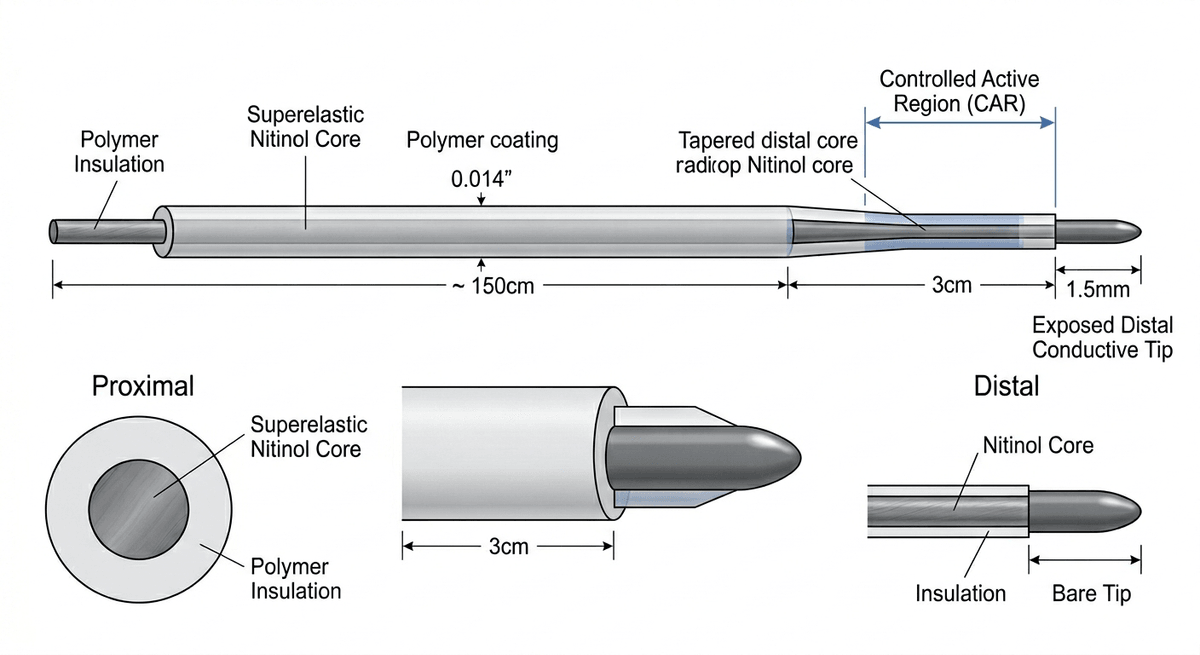
GEE SMA product notes list Copper NiTiCr wire diameter from 0.05 mm and up. That range supports fine wire development as well as raw material supply for downstream drawing or forming. The specified diameter should be tied to the customer's next process. A buyer making round archwire, rectangular wire, or another orthodontic wire format may need different starting stock.
Surface options in the product notes include black oxide for diamond-drawn wire and mechanically polished surfaces. The buyer should specify which surface is required at delivery. For a raw or intermediate wire, oxide may be acceptable if further processing is planned. For material closer to final archwire production, polished surface and careful handling may become more important.
Processing route can include cold drawn material, cold drawn plus straight annealed material, or a condition agreed for downstream thermomechanical treatment. GEE SMA's nitinol wire production capability supports the diameter and surface part of this decision, while the product classification reference adds the Copper NiTiCr-specific Af and application details.
Where Copper NiTiCr Fits Against Other NiTi Families
Copper NiTiCr should not be selected only because it sounds more advanced. It should be selected because its lower active Af range and narrow-hysteresis behavior match the product target. SE508 superelastic NiTi may be a better fit when room-temperature elastic recovery is the main requirement. SM NiTi may be better for high-temperature shape memory actuation. NiTiFe may be relevant for low-temperature mechanical or coupling applications. NiTiNb is often discussed for wide-hysteresis coupling concepts.
The supplier conversation should therefore start with function. Is the material expected to provide thermal activation in a finished archwire? Is it raw material for a customer-controlled drawing route? Is it being compared with Copper NiTi for an actuator or spring? Is the project constrained by ambient temperature, processing temperature, or surface finish? The answers determine whether Copper NiTiCr is the right material family.
GEE SMA's SE508 superelastic selection guidance offers a useful comparison point for buyers who are choosing between low-Af superelastic wire and Copper NiTiCr thermal-activated material.
Do Not Turn Raw Material Into an Unsupported Medical Claim
Copper NiTiCr may be suitable as raw material for thermal-activated orthodontic wire, but raw material suitability is not the same as finished-device approval or finished clinical performance. Orthodontic brands validate their own archwire geometry, labeling, packaging, and intended use. Material suppliers support the alloy foundation, not the entire finished clinical claim.
That distinction is important for responsible marketing and procurement. Public Ormco information describes the behavior of finished Copper Ni-Ti archwires, and PubMed literature discusses copper-nickel-titanium archwires in controlled studies. Those references show why the material family is commercially and technically relevant. They do not remove the need for finished-product validation by the device owner.
GEE SMA's nitinol material-control discipline is the safer foundation: define material, test behavior, document lots, and avoid promises that belong to a finished regulated product.
A Copper NiTiCr Sourcing Checklist
- Use the correct alloy name: Copper NiTiCr, not only copper niticr.
- Define the active Af target within the 25 to 45 degrees C family.
- State the acceptable Af tolerance and any required confirmation method.
- Specify diameter, surface finish, delivery condition, and intended next process.
- Ask whether the lot is cold worked, straight annealed, or prepared for further thermomechanical treatment.
- Confirm packaging, spool handling, lot marking, and required documentation.
- Separate raw material suitability from finished orthodontic product claims.
Copper NiTiCr is useful because it gives orthodontic wire material programs a lower-temperature, narrow-hysteresis alloy path. It still needs careful sourcing. The strongest RFQs define active Af, diameter, surface, delivery condition, and validation responsibilities clearly enough that supplier samples can be compared on real behavior rather than on alloy names alone.