

Copper NiTi wire is useful when an actuator needs a more concentrated transformation window than an ordinary binary NiTi concept can provide. The copper addition can reduce thermal hysteresis and stabilize functional response, but it does not turn temperature control into a single-number exercise. Composition, cold work, heat treatment, load, geometry, and the selected measurement method still determine when useful motion begins and ends.
GEE SMA separates ternary Copper NiTi from quaternary Copper NiTiCr. Its ternary family is positioned for shape memory actuators, springs, and muscle wire with Active Af from roughly 45 to 75°C; the chromium-containing family spans roughly 25 to 45°C and is often selected for orthodontic raw material. This temperature-tuned actuator material range allows the alloy family to follow the thermal job.
Narrow Hysteresis Improves Control, Not Efficiency by Itself
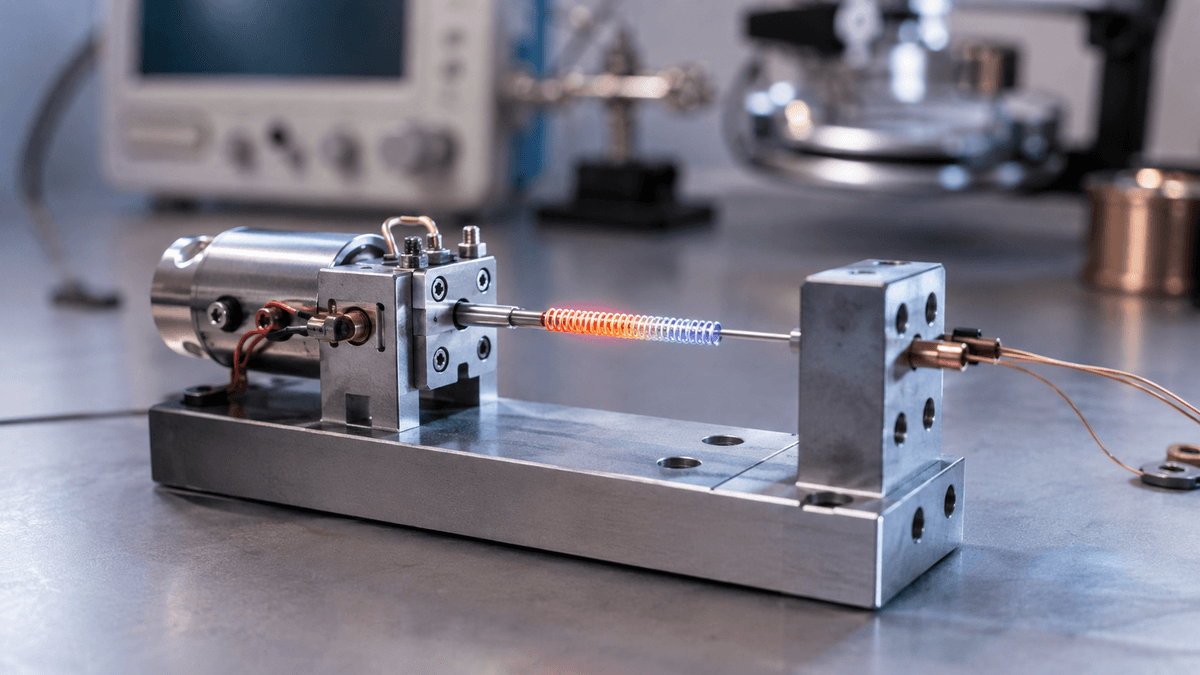
Thermal hysteresis is the separation between forward and reverse transformation behavior. A narrower interval can reduce the temperature swing needed to move between states, supporting faster control and a smaller dead band. GEE SMA product data describes typical As-Ms hysteresis near or below 5°C for its Copper NiTi family, compared with a broader range often seen in binary material.
System efficiency still depends on resistance, heat loss, wire diameter, active length, bias load, cooling path, and controller logic. A narrow material loop cannot compensate for an actuator buried in insulation or driven beyond its allowable stress. GEE SMA's wire-to-thermal-system selection approach keeps the material claim connected to actual heating and cooling conditions.
Active Af Must Be Measured in the Delivered Condition
GEE SMA lists typical Copper NiTi Active Af targets around 60, 65, and 70°C, with other values available across the family. These values are meaningful only with a defined sample condition and method. ASTM F2004 DSC data on fully annealed material describes thermal transformation, while ASTM F2082/F2082M bend and free recovery follows functional shape recovery in an annealed, aged, shape-set, or tempered specimen.
For an actuator, specify the temperature at which the delivered wire must recover under the agreed test condition. Then measure the finished spring or trained wire after the customer's shape-setting process. GEE SMA's Active Af testing and thermomechanical controls support both raw-material verification and a process-development correlation.
Choose Cold-Drawn or Straight-Annealed Intentionally
Cold-drawn Copper NiTi preserves cold work for later thermomechanical treatment. It can arrive with cast and twist and is appropriate when the customer will straighten, coil, form, or shape set the material. Straight-annealed wire has already received a heat treatment to establish a straighter delivered form. Ordering the latter and then applying an uncontrolled high-temperature cycle can erase the behavior that was originally qualified.
The RFQ should describe the complete downstream route, including fixture geometry, shape-setting temperature and time, cooling method, and any aging step. GEE SMA's shape-setting and wire-forming capability is especially relevant when the supplier and customer need to divide responsibility for final geometry and Active Af.
Diameter Connects Electrical Input to Mechanical Output
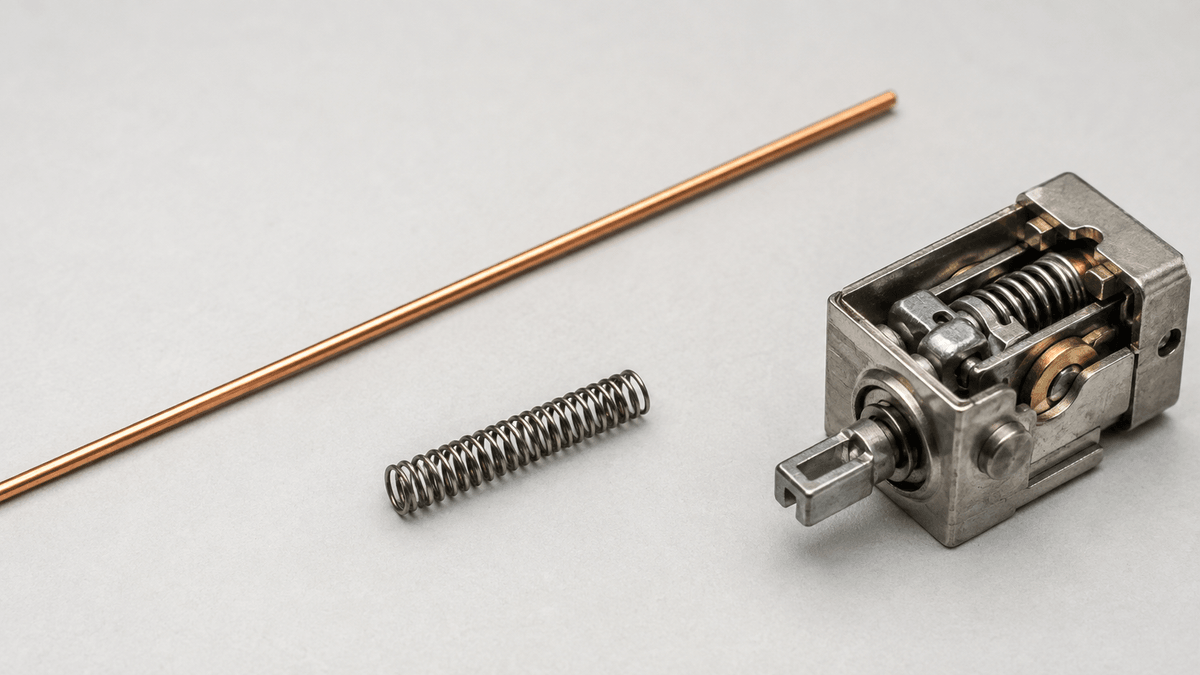
GEE SMA lists Copper NiTi wire from 0.05 mm [0.002 in.] and up. Fine wire heats and cools quickly but produces less force and is more sensitive to surface damage. Larger wire can deliver more force but increases thermal mass and cooling time. Active length determines stroke, while cross-sectional area influences resistance, current demand, stress, and force.
Prototype plans should vary one parameter at a time and record current, voltage, wire temperature, displacement, load, cycle time, and ambient conditions. The broader SMA motion material options help compare straight wire, spring geometry, and other forms before freezing the electrical architecture.
Surface and Connections Can Dominate Early Failures
Available Copper NiTi surfaces include black oxide and mechanically polished conditions. Surface selection affects later cleaning, joining, coating, friction, and fatigue testing. Scratches, tool marks, and sharp fixture contacts can create local strain concentrations that are invisible in a nominal stress calculation.
Electrical terminations also require development. Soldering directly to NiTi is difficult; crimps, mechanical clamps, and specialized joining routes are often more practical. Keep the active heated length away from abrupt stiffness changes and validate contact resistance over life. GEE SMA's custom wire-processing options can reduce handling damage before final assembly.
Write a Control-Oriented Copper NiTi Specification
- Identify ternary Copper NiTi or quaternary Copper NiTiCr and the intended function.
- State operating environment, activation target, cooling target, load, stroke, and cycle time.
- Define Active Af method, specimen condition, target, tolerance, and acceptance sampling.
- Specify diameter, tolerance, active length, delivery condition, surface, coil format, and lot identity.
- Describe downstream forming and heat treatment before selecting final material limits.
- Validate force, stroke, temperature, electrical input, terminations, and life in the assembled geometry.
Copper NiTi wire earns its place through a controlled transformation loop. When the narrower hysteresis is matched to thermal architecture, processing state, and a measured Active Af, it becomes a predictable actuator material rather than a wire that merely moves when heated.