

ASTM F2063 is often placed on a nitinol drawing as though it were a universal certificate for every medical wire, tube, sheet, and finished implant. That shorthand hides two important questions: which edition is being invoked, and does the ordered product form fall within its stated scope? The answers determine whether “compliant with ASTM F2063” is a meaningful requirement or an incomplete note.
As of 2026, ASTM lists F2063-26 as the active edition. It addresses chemical, physical, mechanical, and metallurgical requirements for specified wrought binary nickel-titanium mill products used to manufacture medical devices and surgical implants. A buyer using GEE SMA's binary nitinol material range should name the applicable edition and then define every requirement that lies outside that base specification.
Read the Scope Before Writing the Purchase Order
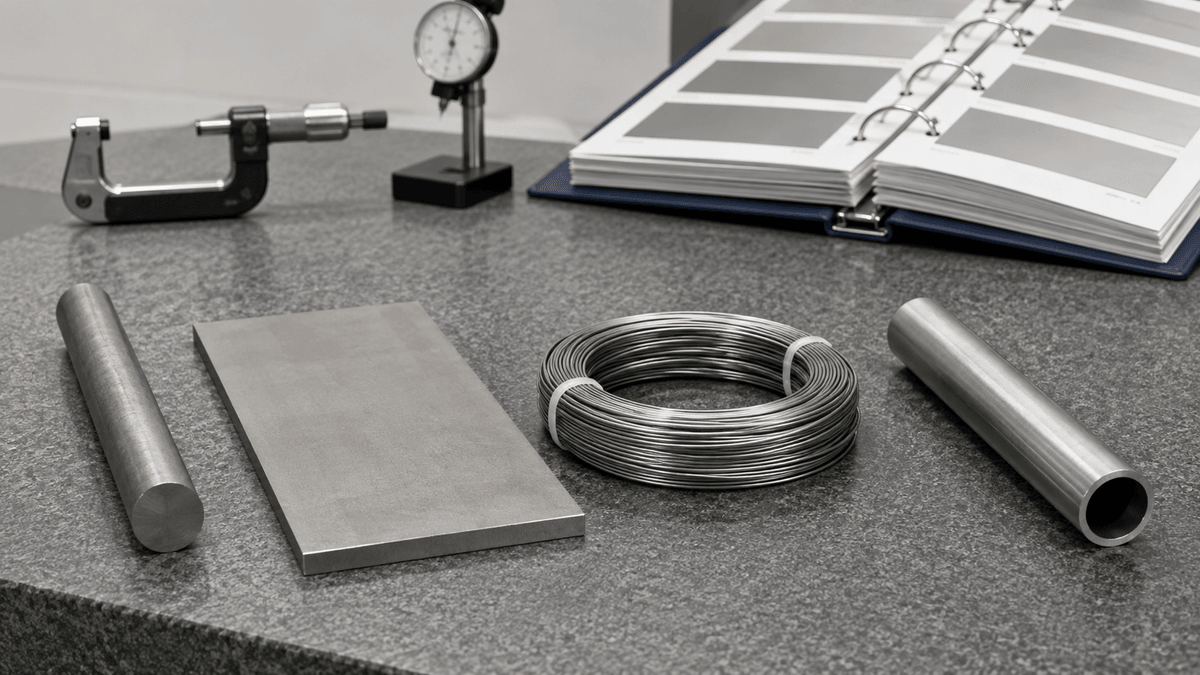
The current scope describes bar, plate, coil, and hollow product within defined dimensions. It also directs finished NiTi tube users to ASTM F2633. The standard states that mill product is not intended to possess the final shape, final surface, or final properties of a medical device or its components. Those sentences are procurement controls: they prevent a raw-material standard from being stretched into a claim about a processed implant.
Fine wire may still be ordered with chemistry and test requirements informed by F2063, but the buyer and supplier must clearly agree on the product-specific controls. GEE SMA's wire supply from 0.05 mm and up is most effectively qualified with a dedicated wire specification covering diameter, condition, surface, straightness, transformation behavior, and certificate content.
F2063 Controls More Than Nickel Percentage
The standard addresses nominal nickel content, interstitial limits, melting practice, transformation temperature assurance, mechanical properties, microstructure-related requirements, dimensions, surface condition, and certification. Vacuum or inert-atmosphere melting is used to control chemistry and cleanliness. Carbon, hydrogen, nitrogen, and oxygen matter because interstitials and inclusions can affect workability and fatigue-sensitive performance.
For buyers, the practical lesson is to request actual lot results where needed rather than a one-line declaration. GEE SMA identifies SE508 and SE508 ELI chemistry separately; its medical material control set can include chemistry, dimensions, tensile or superelastic data, DSC evidence, and Active Af according to the agreed product condition.
Transformation Temperature Cannot Be Calculated From Chemistry Alone
Small changes in composition and thermomechanical history can shift NiTi transformation behavior. ASTM F2063 therefore recognizes calorimetry or an equivalent thermomechanical method as necessary to assure alloy formulation in functional terms. This is why an alloy code and nickel percentage cannot replace measured transformation data.
The test method must match the question. ASTM F2004 thermal analysis identifies transformation features in a controlled sample. ASTM F2082/F2082M uses bend and free recovery and may be applied to wire, tube, strip, or specimens extracted from components. GEE SMA's Active Af and DSC controls allow the order to distinguish fully annealed alloy data from processed-product behavior.
Mechanical Conformance Is Condition-Specific
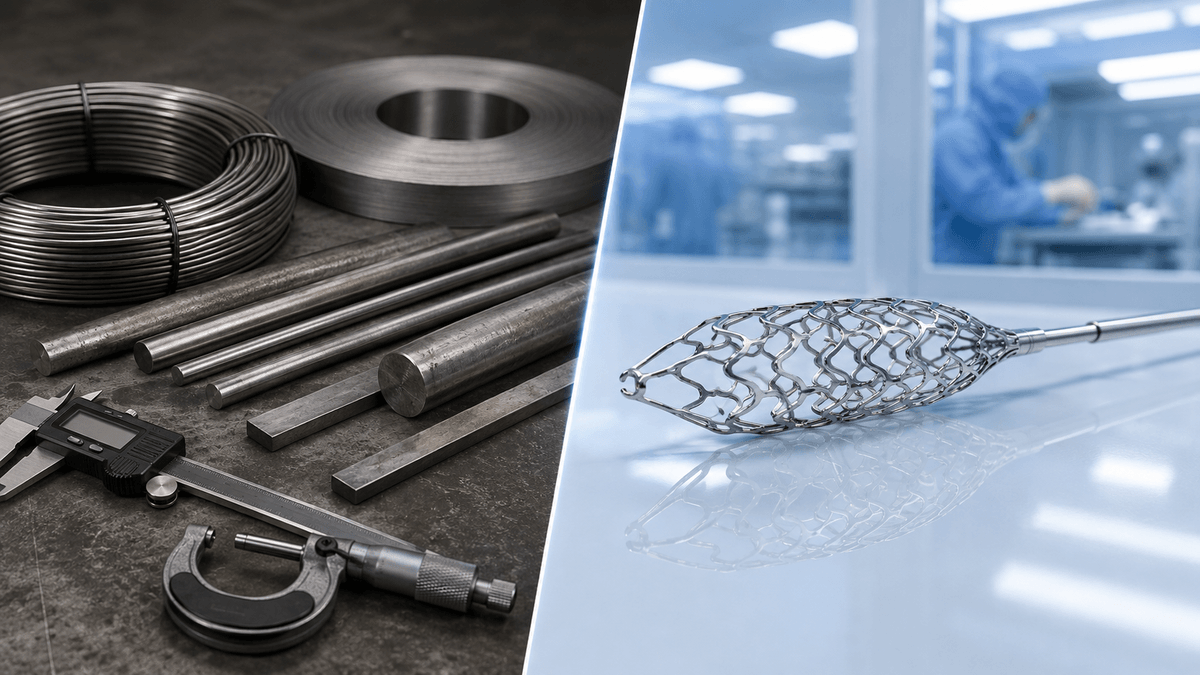
Annealed mill-product tensile properties answer a different question from the plateau response of straight-annealed superelastic wire. ASTM F2516 is designed to measure upper plateau strength, lower plateau strength, residual elongation, tensile strength, and elongation in superelastic NiTi at a declared temperature. A complete specification tells the laboratory whether it is testing annealed stock, cold-drawn feedstock, or finished superelastic wire.
This distinction is especially important for SE508, SE508 ELI, SE510, and warmer LSE grades. Cold work and heat treatment alter both strength and transformation response. GEE SMA's temperature-linked tensile controls give the test report engineering meaning beyond a pass/fail statement.
Surface Options Are Not Final Surface Validation
F2063 recognizes multiple mill-product surface conditions, including oxidized, descaled, pickled, ground, mechanically polished, and electropolished states. Yet a purchased surface name does not establish the corrosion, nickel release, cleanliness, particulate, or fatigue performance of a finished device. Drawing, laser cutting, welding, grinding, shape setting, electropolishing, passivation, cleaning, and sterilization can all change the surface.
Specify the incoming surface as a process input, then validate the final surface after all manufacturing steps. GEE SMA offers black oxide, light oxide, and mechanically polished wire; its oxide and polished-surface controls can be matched to the customer's subsequent removal or finishing route.
FDA Guidance Shows What Remains at Device Level
FDA's nitinol guidance discusses the unique processing sensitivity and thermomechanical behavior of devices containing NiTi. Depending on the intended use, device development may need characterization of transformation temperatures, mechanical response, fatigue and durability, corrosion behavior, nickel release, surface composition, and processing history. These activities are not replaced by a material certificate.
A compliant starting alloy can still become an unsuitable component through excessive strain, poor shape setting, damaged surface, uncontrolled joining, or an unrepresentative fatigue test. GEE SMA's forming and shape-setting process options should therefore be documented as part of the finished manufacturer's validated route.
Convert the Standard Into an Auditable Requirement
- Name ASTM F2063 and the edition required by the project.
- Confirm that the ordered form and dimensions are within scope; identify companion standards where needed.
- State alloy code, melt identity, chemistry reporting, inclusion or cleanliness expectations, and delivery condition.
- Define transformation test method, specimen state, target range, and whether Active Af is required.
- Specify dimensional, surface, visual, mechanical, and superelastic acceptance separately.
- Reserve device-level claims for evidence generated on the final component and manufacturing route.
ASTM F2063 is valuable because it creates a common foundation. It becomes much stronger when buyers respect its boundary, select the correct test methods, and build a product-specific specification on top of it.