

Shape Memory Wire Is Not the Same as Superelastic Wire
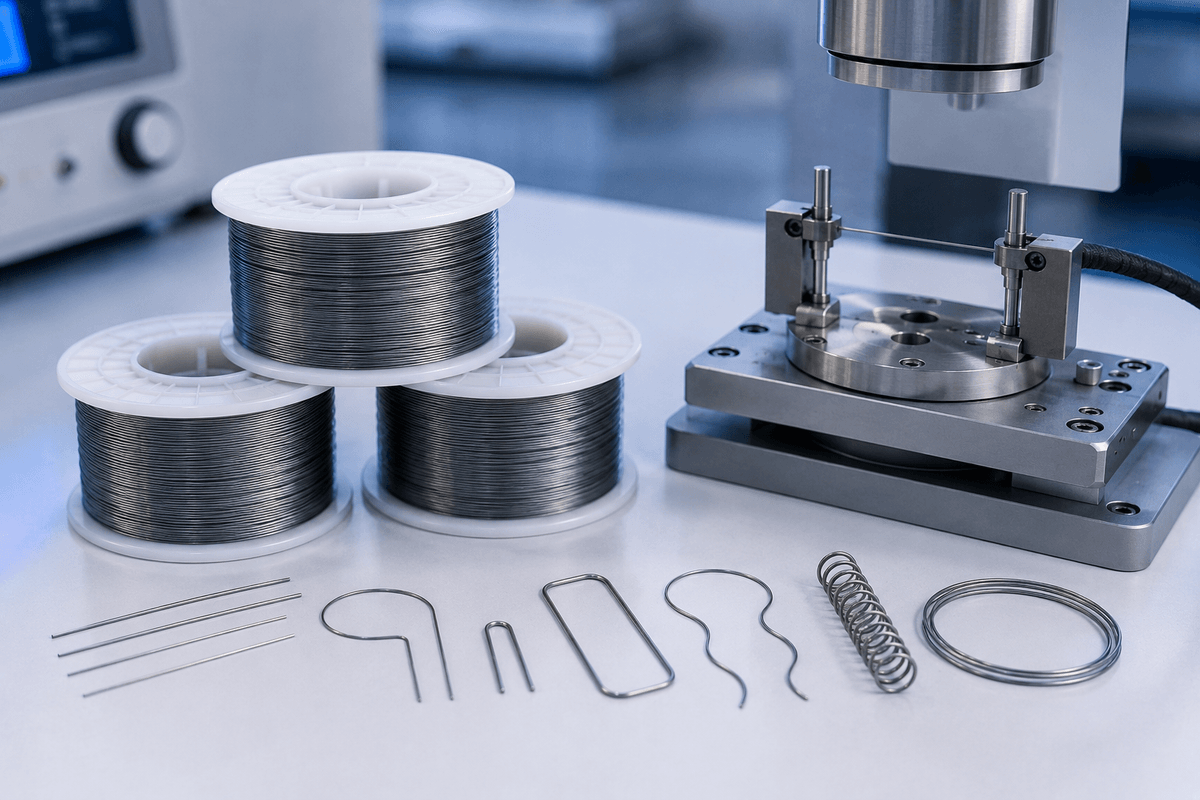
Nitinol shape memory wire is often confused with superelastic nitinol wire because both come from nickel-titanium shape memory alloy. The difference is how the material is expected to work in the final design. Superelastic wire is usually selected for large recoverable deformation at an operating temperature above its transformation range. Shape memory wire is selected because it can be deformed in one state and recover a trained shape when heated through its transformation temperature.
For buyers, that distinction changes the sourcing conversation. A request for nitinol wire is too broad if the application depends on thermal movement. The supplier needs to know whether the wire must recover shape when exposed to hot water, electrical heating, ambient temperature change, an industrial process temperature, or a controlled test fixture.
GEE SMA product notes list nitinol shape memory wire as a distinct product family from superelastic wire. The notes describe binary NiTi shape memory alloy options and Copper NiTi-based options, with delivery conditions such as cold drawn, cold worked, and straight annealed. That gives buyers room to tune temperature response, formability, and downstream processing.
Active Af Is the Center of the Specification
The most important number in a nitinol shape memory wire order is often Active Af, the temperature point associated with completion of the active recovery response under the specified test condition. GEE SMA product notes list shape memory wire Active Af from about 20 to 110 degrees C, with product notes describing +/-2 degrees C control and tighter control as a possible project discussion when strict requirements apply.
This is not a decorative material value. If the Active Af is too low, the wire may begin to recover before the product is supposed to move. If it is too high, the wire may require more heat than the design can safely or efficiently provide. A thermal actuator, lock, latch, valve, consumer mechanism, or demonstration device can fail simply because the transformation range does not match the real environment.
For broader background on phase transformation, GEE SMA's shape memory alloy products page is a useful starting point. The key buyer lesson is simple: define the motion temperature first, then build the wire specification around it.
Alloy Family Changes the Temperature Window
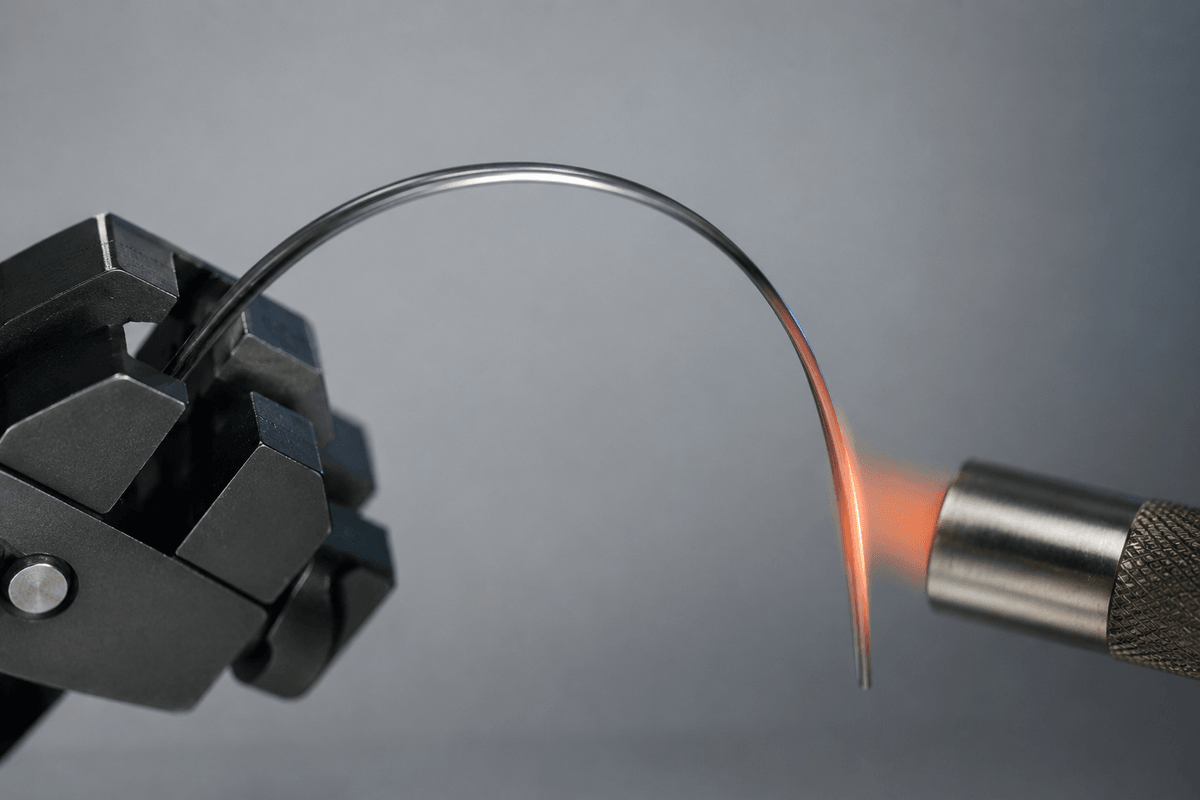
GEE SMA product notes describe two main shape memory wire routes. One route is Ti-rich binary NiTi shape memory alloy wire, including SM498 to SM505-type alloy codes. The other route is Copper NiTi-based wire, including Copper NiTi and Copper NiTiCr options. These families are relevant because they support different transformation temperature ranges and different response behavior.
The product notes place SM498 to SM505 in a higher shape memory temperature range, while Copper NiTi and Copper NiTiCr can be relevant when narrower hysteresis or more specific thermal response is needed. For example, previous GEE SMA Copper NiTi notes describe Active Af ranges for Copper NiTi and Copper NiTiCr that can support actuator, spring, and orthodontic raw material conversations.
Buyers should not choose the alloy code by name alone. They should share the required movement, heating source, reset condition, expected cycle count, wire diameter, and environment. A shape memory wire for a small switch is not specified the same way as a wire for a thermal safety mechanism or aerospace test part.
Diameter, Delivery Condition, and Surface
GEE SMA product notes list shape memory wire diameters from very fine sizes and up. In practical sourcing, diameter affects more than size. It changes heating speed, cooling speed, available force, bend radius, fatigue risk, and how easily the wire can be assembled into a product. Fine wire can respond quickly but may need careful handling. Larger wire can provide more force but may require more heat and more cooling time.
Delivery condition is just as important. Cold worked wire may be ordered when the customer will perform further thermomechanical treatment. Straight annealed material may be more appropriate when straightness and a stable supplied condition are needed. GEE SMA's technical information content helps place these decisions inside the broader nitinol manufacturing route.
Surface finish should also be named. GEE SMA product notes list black oxide and mechanically polished surfaces for shape memory wire-related products. A black oxide surface may be acceptable for industrial parts or later processing. A polished surface may be easier to inspect or handle in some assembly environments. The correct surface depends on the finished product route.
Where Shape Memory Wire Creates Value

Nitinol shape memory wire is useful when a compact component needs movement from heat rather than a motor, solenoid, or bulky spring system. Product examples can include locks, latches, valves, switches, camera mechanisms, robotics, automotive thermal devices, aerospace mechanisms, educational devices, and engineered products that need small, quiet movement.
The value is not only that the wire moves. The value is that the wire can combine sensing and actuation in a very small material form. When the temperature crosses the designed range, the wire can recover toward a trained shape and produce force or displacement. That is why shape memory wire appears in discussions around actuator wires, shape memory springs, and compact mechanisms.
For more complex shapes, buyers should also review GEE SMA's custom nitinol wire forming article. A wire may start as round stock, but the useful part may be a trained bend, loop, spring, hook, or formed actuator element.
Design Details Buyers Should Provide
- Target recovery temperature or Active Af range.
- Heating method, such as ambient heat, hot liquid, electrical current, or process heat.
- Required stroke, recovery force, preload, and reset method.
- Wire diameter, length, surface finish, and package form.
- Whether the wire will be straight, coiled, formed, crimped, welded, or trained into a shape.
- Expected cycle count and allowable strain range.
These details help the supplier avoid guessing. They also help the buyer avoid the common mistake of ordering a material by name without defining the thermal motion it must deliver.
Testing Should Match the Real Product
Shape memory wire testing should reflect how the wire will actually be used. If the wire will be powered electrically, the test should consider current, voltage, wire length, heat sinking, and cooling environment. If the wire will respond to hot liquid, the test should consider liquid temperature, immersion time, and reset cooling. If the wire will be used as a spring or formed part, the final shape should be tested instead of relying only on straight wire data.
Related standards such as ASTM F2004 and ASTM F2082 are often used in nitinol transformation-temperature discussions. For medical material discussions, ASTM F2063 and ASTM F2516 may also appear. The practical point is that a specification should name the test method, sample condition, and acceptance range rather than using transformation temperature as a vague phrase.
For buyers comparing shape memory and superelastic routes, GEE SMA's super elastic wire selection article can help clarify when recovery by unloading is more important than recovery by heating.
Bottom Line
Nitinol shape memory wire should be specified around motion, temperature, and processing. Active Af, alloy family, diameter, surface finish, delivery condition, and test method all shape the final behavior. A useful purchase request does not simply say "nitinol shape memory wire." It describes what the wire must do, when it must move, and how it will be processed.
For OEM and engineering buyers, GEE SMA can support material-level discussions around shape memory wire, Copper NiTi wire, actuator wire, superelastic wire, and custom wire forming. The strongest starting point is a clear temperature and function requirement.