

NiTiCuCr wire is a compact search term, but it can create confusion in a quotation if the buyer and supplier do not normalize the alloy name first. In most sourcing conversations, the clearer commercial term is Copper NiTiCr wire: a copper-nickel-titanium-chromium alloy family used when lower active Af and narrow-hysteresis behavior are needed. The shorthand may appear as NiTiCuCr, CuNiTiCr, Cu NiTiCr, Copper NiTiCr, or copper niticr wire, but the specification should not leave the supplier guessing.
GEE SMA product notes list Copper NiTiCr as a quaternary narrow-hysteresis alloy suitable for orthodontic arch wire and Cu NiTi arch wire raw material. They list active Af for the Copper NiTiCr family from 25 to 45 degrees C, diameter from 0.05 mm [0.002 in.] and up, black oxide or mechanically polished surface options, and cold worked or straight annealed delivery conditions. GEE SMA's CuNiTiCr naming discipline is useful because it keeps the alloy family, spelling, and performance expectation aligned before the RFQ becomes a purchase order.
NiTiCuCr, CuNiTiCr, and Copper NiTiCr
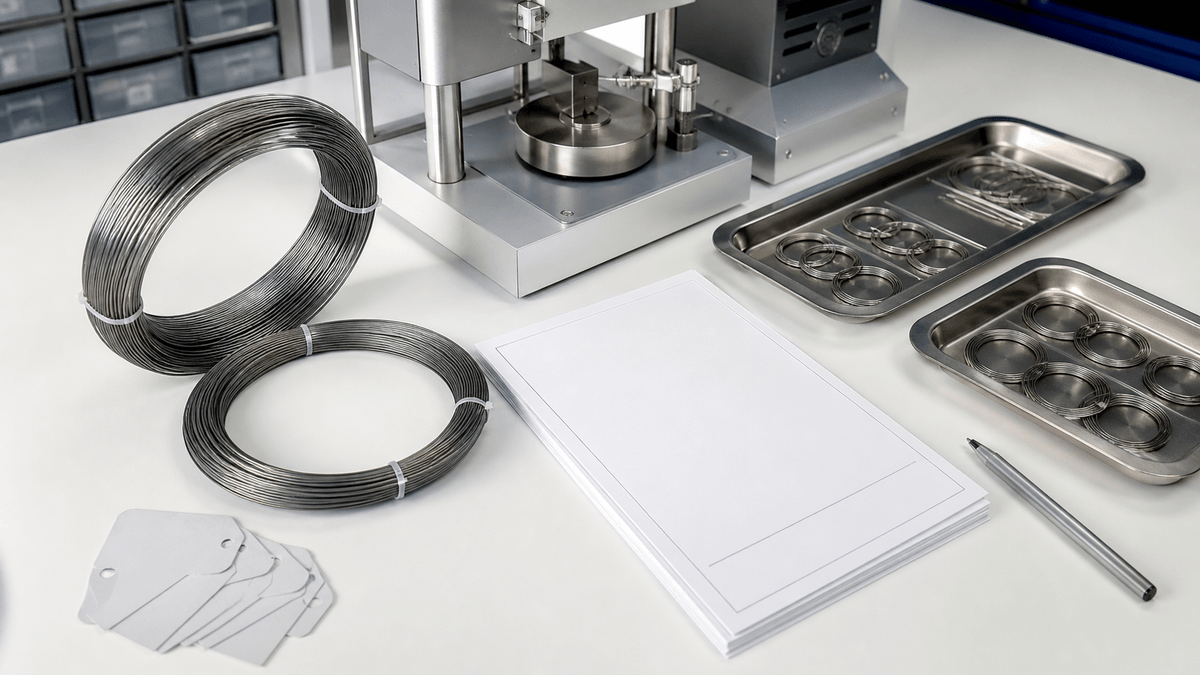
The sequence of element symbols in a keyword is not always the same as the name a supplier uses in production records. NiTiCuCr puts nickel and titanium first. CuNiTiCr puts copper first. Copper NiTiCr states the commercial family more clearly. These terms may point to the same buyer intent, but they should be clarified before price, lead time, or sample preparation is discussed.
That clarification matters because Copper NiTi and Copper NiTiCr are related but not identical. GEE SMA product notes describe Copper NiTi as a ternary narrow-hysteresis shape memory alloy with active Af from 45 to 75 degrees C. Copper NiTiCr adds chromium and is listed with active Af from 25 to 45 degrees C. If the buyer wants a lower-temperature raw material for thermal activated arch wire, a quote for the wrong copper-based family can miss the design window.
GEE SMA's traceable Copper NiTiCr wire controls reinforce this point: name normalization, active Af target, surface condition, and lot identity are not separate paperwork details. Together, they define what material is actually being shipped.
Active Af Is the First Functional Number
For NiTiCuCr wire, active Af is usually the first functional number to confirm. It describes the temperature point, under a defined method and condition, where austenite finish is measured for the active material state. In orthodontic raw material and other thermally responsive designs, this number helps decide whether the wire will behave in the expected temperature window.
GEE SMA product notes list common Copper NiTiCr active Af targets such as 27, 35, and 40 degrees C, with typical tolerance around +/-2 degrees C. The same notes indicate that tighter control may require dual control of composition and thermomechanical treatment. That is a useful warning for sourcing teams. A tight Af request should be treated as a process-control requirement, not only as a line in an email.
GEE SMA's low-Af Cu NiTiCr temperature window helps buyers connect the alloy choice to the activation target. It is especially relevant when the buyer is comparing Copper NiTiCr with Copper NiTi, SE508, or ordinary binary NiTi wire.
Diameter and Surface Are Not Cosmetic
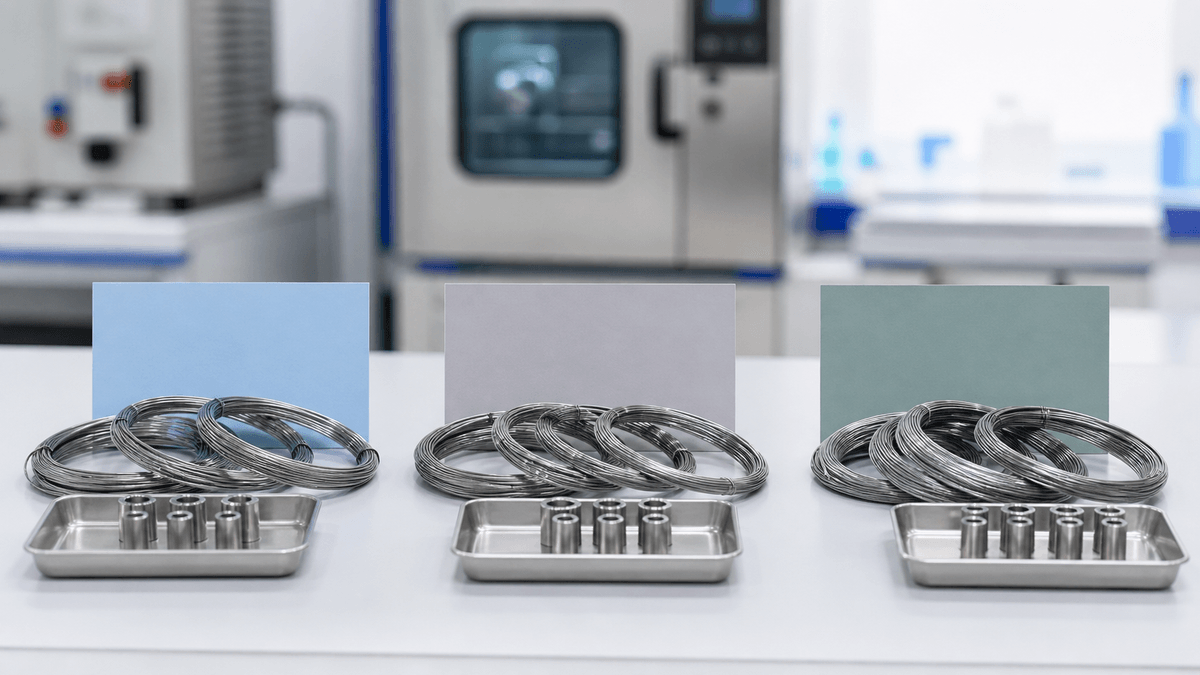
Diameter controls force, flexibility, forming response, packaging risk, and downstream processing. A small-diameter NiTiCuCr wire may be useful for fine arch wire raw material or other compact shape memory applications, but the buyer still needs to define tolerance, roundness, straightness, coil form, or straight-length form. GEE SMA product notes list Copper NiTiCr wire from 0.05 mm [0.002 in.] and up, which is a starting range rather than a complete drawing.
Surface finish also affects the practical result. Product notes list black oxide and mechanically polished surfaces for Copper NiTiCr wire. Black oxide can be an as-drawn surface route. Mechanically polished wire gives a brighter metallic appearance and may be preferred when the next processing step needs a cleaner starting surface. The right choice depends on whether the customer will perform further drawing, straight annealing, polishing, electropolishing, coating, or forming.
GEE SMA's Copper NiTiCr surface specification controls matter because surface, active Af, and delivery condition can interact. A polished sample with the wrong Af is not useful. A correct Af sample with an unacceptable surface may still fail downstream processing.
Delivery Condition Tells the Next Process
NiTiCuCr wire can be requested in cold worked or straight annealed condition, depending on what the customer will do next. Cold worked material may be appropriate when the customer controls the final thermomechanical treatment. Straight annealed wire may be better when straightness and handling are already expected from the supplier's process. Neither condition is automatically better; the right condition depends on whether the wire is raw material, near-final stock, or a sample for a controlled forming route.
A supplier should therefore ask what happens after delivery. Will the wire be drawn again, straightened, heat set, formed into arch shapes, polished, packaged into coils, or used in a customer fixture? Those questions are not delays. They prevent the sample from being prepared in a condition that cannot be fairly evaluated.
GEE SMA's arch wire raw material route control fits this stage of discussion because Af selection, cold work, straight annealing, and final forming are linked in copper-modified NiTi materials.
Do Not Overclaim the Final Application
NiTiCuCr wire may be used as raw material for thermal activated arch wire or similar engineered products, but raw material supply is not the same as a finished regulated orthodontic product. The supplier can discuss alloy family, active Af, diameter, surface, delivery condition, inspection, and packaging. Finished-device performance, clinical claims, labeling, and market clearance belong to the company that designs, validates, and sells the final device.
This distinction protects both the buyer and the supplier. It keeps the article-level discussion in the correct B2B lane: material selection and process control. A sourcing team can still ask for lot traceability, certificate content, transformation temperature data, diameter inspection, and surface expectations without turning the supplier conversation into a finished-device claim.
RFQ Checklist for NiTiCuCr Wire
- Normalize the alloy name: NiTiCuCr, CuNiTiCr, or Copper NiTiCr.
- State the intended alloy family and avoid confusion with Copper NiTi or binary NiTi.
- Define active Af target and tolerance, such as 27, 35, or 40 degrees C when appropriate.
- Specify wire diameter, tolerance, coil or straight delivery, and quantity.
- Choose black oxide or mechanically polished surface based on the next process.
- Confirm cold worked or straight annealed delivery condition.
- Ask for lot traceability, package marking, and certificate content before production sampling.
A clear NiTiCuCr wire RFQ does not need to be long, but it needs to remove ambiguity. The best quotation will not come from a shorthand keyword alone. It comes from a controlled alloy name, a functional active Af target, a realistic surface requirement, and a delivery condition that matches the customer's next manufacturing step.