

Cu NiTiCr wire is another way buyers refer to Copper NiTiCr wire, a copper nickel-titanium-chromium shape memory alloy. Its value is tied to a lower active Af range and narrow-hysteresis behavior, especially when the material is being prepared for thermal-activated arch wire raw material. The specification has to be clear because small differences in active Af, surface finish, and delivery condition can change how the wire behaves in the next manufacturing step.
GEE SMA product notes list Copper NiTiCr active Af from 25 to 45 degrees C and identify common targets such as 27, 35, and 40 degrees C. GEE SMA's Copper NiTiCr wire specification control supports buyers who need the abbreviation translated into a measurable raw-material order.
Why the Temperature Window Is Narrow
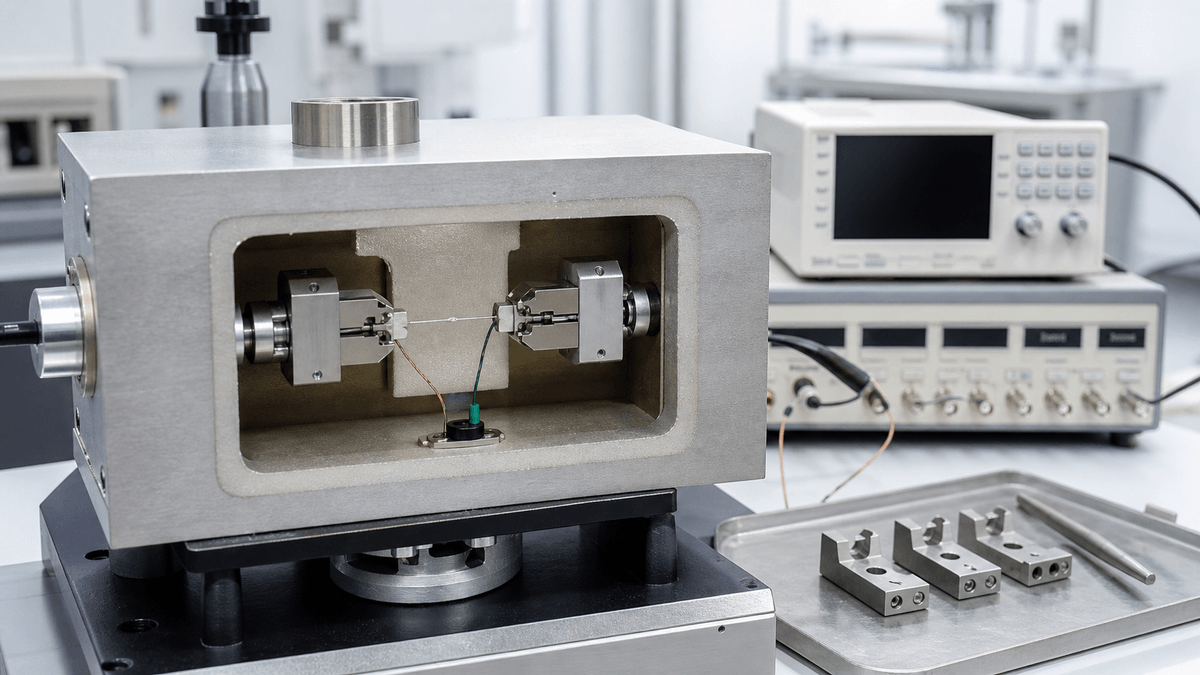
In shape memory alloys, hysteresis is the gap between transformation on heating and transformation on cooling. Copper-modified NiTi alloys are used when a narrower hysteresis or more controlled response is useful. GEE SMA product notes describe Copper NiTiCr as a quaternary narrow-hysteresis alloy. That does not mean every lot will behave identically; it means the buyer should control the variables that influence the final response.
The temperature window is shaped by composition, cold work, annealing, and subsequent treatment. If a buyer needs a 35 degrees C active Af, the RFQ should define the tolerance and the condition in which that value is measured. GEE SMA's shape memory technical foundation helps connect this buyer requirement to phase transformation rather than a loose catalog description.
Cu NiTiCr Is Usually the Lower-Af Discussion
Copper NiTi ternary alloy and Copper NiTiCr quaternary alloy are related but not identical. GEE SMA product notes list Copper NiTi active Af from 45 to 75 degrees C. They list Copper NiTiCr active Af from 25 to 45 degrees C. That lower range is why Cu NiTiCr wire appears in discussions about thermal-activated orthodontic raw material.
The abbreviation can create confusion. "Cu NiTiCr" may be written as CuNiTiCr, Cu NiTi Cr, copper niticr, or Copper NiTiCr. A supplier should normalize the term to the correct alloy family and then ask for active Af, diameter, surface, and delivery condition. GEE SMA's CuNiTiCr naming and specification control is useful when a buyer's search phrase is not yet a purchase-ready alloy name.
Surface and Delivery Condition Affect the Window
Surface does not directly define active Af, but it often signals where the wire sits in the process route. Black oxide may be associated with diamond-drawn wire. Mechanically polished wire has a bright metallic surface. If the wire will undergo additional forming, rolling, or polishing, the required incoming surface may differ from material that is closer to final inspection.
Delivery condition also matters. GEE SMA product notes list cold worked and straight annealed options. Cold worked condition may be selected for further thermomechanical treatment. Straight annealed wire may support easier handling or a more controlled incoming state. GEE SMA's wire production support helps buyers align surface and condition with the next manufacturing operation.
Do Not Confuse Raw Material With Finished Performance
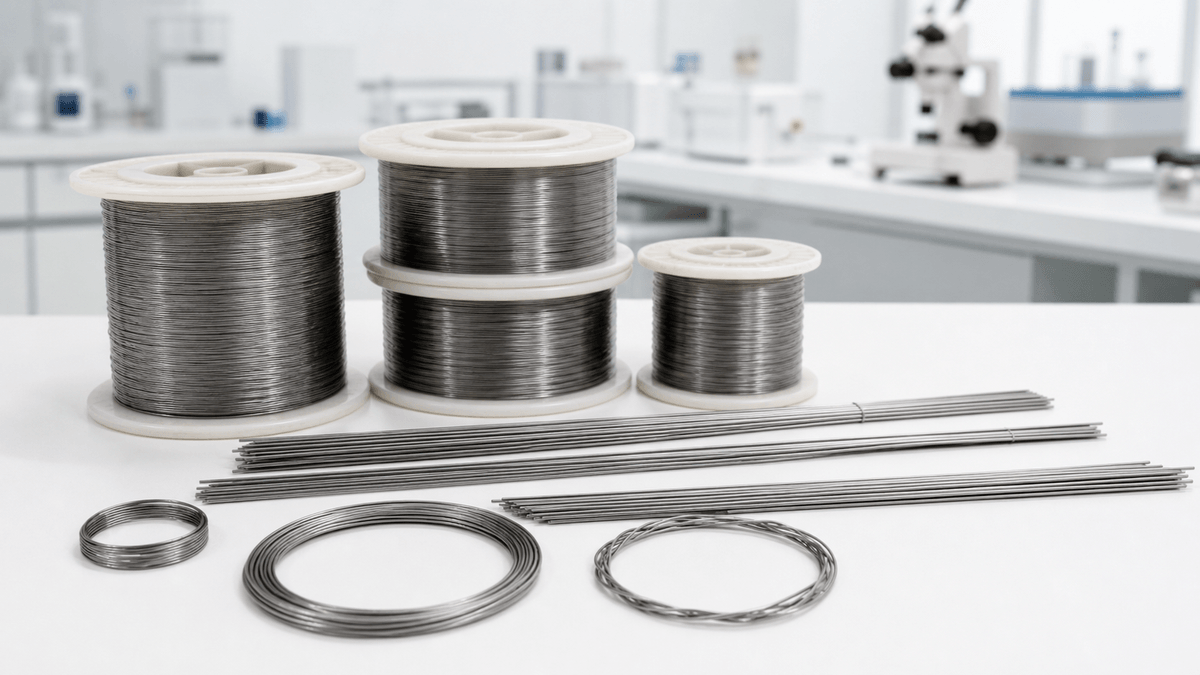
Cu NiTiCr wire can be suitable for preparing thermal-activated arch wire raw material, but finished archwire performance depends on final geometry, brand processing, heat setting, packaging, and validation. Raw material data can support development. It should not be presented as a finished regulated product claim.
This is especially important when public orthodontic brands discuss finished Copper Ni-Ti archwires. Their performance statements belong to their finished products. A material buyer should use those references to understand why the material family is relevant, then validate the final product under its own process and quality system.
GEE SMA's nitinol material-control discipline helps maintain that boundary by focusing on lot identity, surface, transformation behavior, and incoming material requirements.
Common Mistakes in Cu NiTiCr Wire Orders
The first common mistake is ordering by abbreviation only. Cu NiTiCr may be understood by engineers, but the purchase order should still say Copper NiTiCr wire and define the active Af target. The second mistake is treating 27, 35, or 40 degrees C as a finished-product result rather than a raw-material control. The third mistake is ignoring delivery condition, especially when the customer intends to do additional heat treatment.
Surface finish is another common weak point. A buyer may expect bright polished wire while the supplier quotes black oxide diamond-drawn wire. Both may be technically legitimate, but they are not the same incoming material. If the wire will be inspected visually or sent to another processor, surface condition should be confirmed before the order is released.
A Testing Loop for Temperature-Sensitive Material
A useful testing loop starts with incoming inspection, then follows the material through the customer's actual process. The team should record incoming active Af, diameter, surface, and lot number. After rolling, forming, or heat setting, the team should test the relevant samples again. If the final response moves away from the target window, the team can adjust heat treatment, starting condition, or active Af target on the next sample lot.
This loop turns Cu NiTiCr wire sourcing into a controlled development process rather than a one-time purchase. It also gives the supplier clearer feedback. Instead of saying that a sample "did not work," the buyer can identify whether the issue appeared at incoming inspection, after forming, or after final thermal processing.
When a Wider Window May Be Acceptable
Not every project requires the tightest possible active Af tolerance. Early concept work may accept a wider window while the engineering team confirms diameter, routing, and forming feasibility. Production-intent work usually needs tighter control because lot variation becomes more expensive after downstream processing begins. The buyer should match tolerance to project stage instead of requesting the strictest value automatically.
This is also a cost and lead-time discussion. Tighter Af control can require closer chemistry control, more careful heat treatment, and additional verification. A practical supplier conversation weighs the benefit of the tighter window against the actual sensitivity of the application.
Temperature-Window RFQ Checklist
- Use the normalized alloy name Copper NiTiCr or Cu NiTiCr wire.
- Define active Af target within the 25 to 45 degrees C family.
- State whether +/-2 degrees C is acceptable or whether tighter control is required.
- Specify diameter, surface finish, delivery condition, and quantity.
- Describe downstream processing that may change the final thermal response.
- Request package marking by alloy code, size, and lot number.
Cu NiTiCr wire is most useful when the buyer needs a low-temperature narrow-hysteresis material and writes that need into measurable terms. Active Af, tolerance, surface, condition, and process route are the controls that make the temperature window real.