

Cu NiTi archwire selection is often reduced to a temperature number, such as 27, 35, or 40 degrees C. That number matters, but it does not stand alone. The active Af target must be connected to alloy family, cold work, straight annealing, surface finish, wire size, and the customer's downstream manufacturing route. Otherwise, the incoming material may test well but behave differently after drawing, forming, or heat setting.
GEE SMA product notes describe Copper NiTi wire as a raw material for preparing NiTi arch wire, and they note that Copper NiTiCr is frequently used for thermal-activated arch wire material. GEE SMA's Cu NiTi arch wire buying controls are valuable when the buyer wants the specification to follow the actual process route, not just a catalog term.
Af Is Selected for a Process, Not a Label
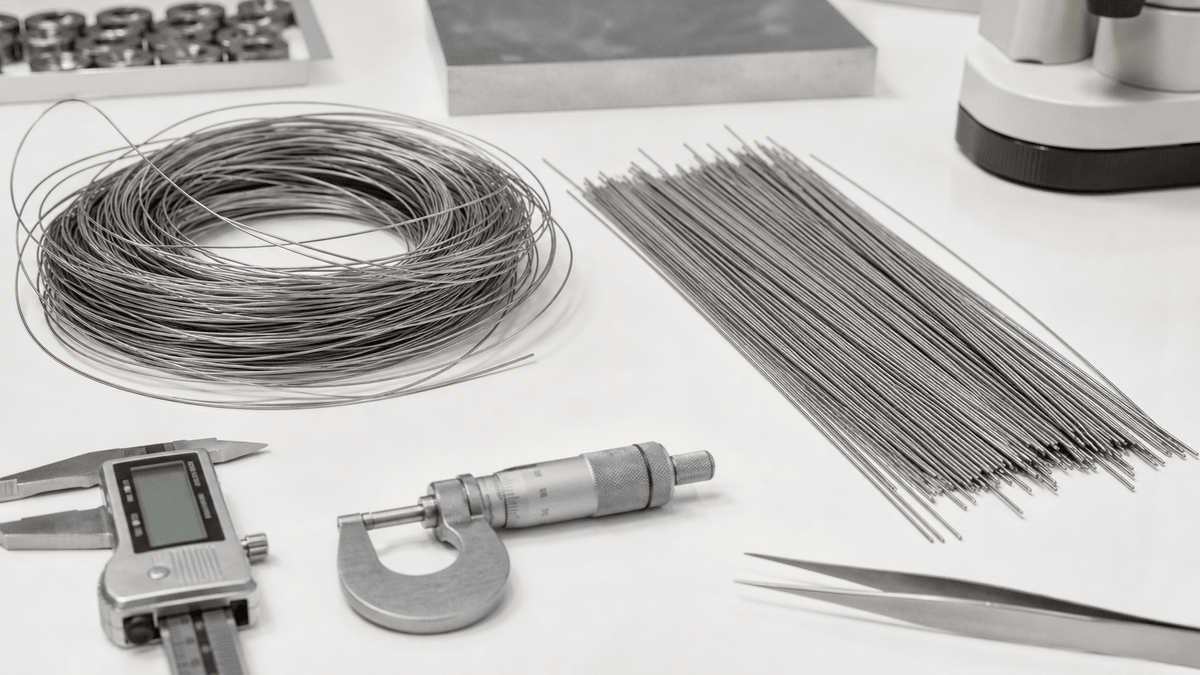
Active Af is the temperature at which the material has completed its austenite transformation under a defined condition. In Cu NiTi archwire material, it helps determine how the wire behaves around the intended thermal window. GEE SMA product notes list Copper NiTiCr active Af mainly at 27 degrees C, 35 degrees C, and 40 degrees C, with typical tolerance of +/-2 degrees C.
The buyer should ask where in the process the Af is being defined. Is it the supplier's incoming wire condition? Is it after customer rolling? Is it after arch forming? Is it after final heat setting? Those answers matter because thermomechanical history influences transformation behavior. A raw-material Af target is a starting control, not a substitute for final product testing.
GEE SMA's technical transformation-temperature support helps frame this correctly: composition, processing, and testing method have to match the material's intended use.
Copper NiTiCr Often Fits Lower Af Targets
GEE SMA product notes separate Copper NiTi from Copper NiTiCr. Copper NiTi is listed as a ternary narrow-hysteresis alloy with active Af from 45 to 75 degrees C. Copper NiTiCr is listed as a quaternary narrow-hysteresis alloy with active Af from 25 to 45 degrees C. That lower range is why Copper NiTiCr often appears in thermal-activated orthodontic raw material specifications.
The name "Cu NiTi archwire" may not tell the supplier which alloy is intended. If the active Af target is 27, 35, or 40 degrees C, the buyer should explicitly discuss Copper NiTiCr. If the design needs a higher-temperature shape memory response, Copper NiTi may be appropriate. GEE SMA's Copper NiTiCr low-temperature alloy capability supports this distinction without turning it into a finished-product promise.
Cold Work and Straight Annealing Change the Starting Point
Cold worked wire is useful when the customer needs a condition ready for additional thermomechanical treatment. Straight annealed wire may be preferred when the receiving team needs improved straightness or a more controlled incoming shape. GEE SMA product notes list cold worked and straight annealed delivery options for Copper NiTi / Copper NiTiCr wire.
The right condition depends on the manufacturing route. If a customer plans to draw and roll the wire into a different cross section, cold worked stock may be appropriate. If the wire needs to be handled, inspected, and fed into a process with less forming, straight annealed material may reduce variation. The order should name the chosen condition, not leave it to supplier interpretation.
GEE SMA's wire processing capability matters because drawn wire, straight annealed wire, and polished wire do not enter the customer's process in the same state.
Surface Finish Must Match the Next Operation
Cu NiTi archwire raw material may be supplied with black oxide or mechanically polished surface. The surface choice should match the next operation. For additional drawing or rolling, the buyer may accept an intermediate surface. For material closer to final inspection, polished surface may be more useful. Surface condition can influence friction, cleaning, visual inspection, and downstream handling.
GEE SMA's surface-control approach for nitinol reinforces this wider point: surface is part of the manufacturing route, not a final decorative decision.
Packaging Preserves Lot Identity
When several active Af targets are evaluated in parallel, packaging and marking become part of engineering control. GEE SMA product notes describe spool packaging for wire below 1.2 mm, protective wrapping, cardboard boxes, and tags containing alloy code, size, and manufacturer lot number. That information helps connect test data with the material lot.
If a development team compares multiple lots, the package should make the differences obvious without relying on memory. The supplier and buyer should agree on labeling, spool quantity, carton limits, and whether any special protection is required for polished surface material.
Build a Small Sample Matrix Before Scaling
For a new Cu NiTi archwire program, a small sample matrix can prevent expensive rework. The matrix may include two or three active Af targets, one or two delivery conditions, and the intended downstream forming route. The team can then compare incoming wire behavior, forming response, surface after processing, and final temperature response. This is more useful than ordering one large lot before the manufacturing route is stable.
The sample matrix should be narrow enough to manage. Too many variables can make the results hard to interpret. A practical first step might compare Copper NiTiCr wire at 35 degrees C and 40 degrees C active Af in the same diameter and surface condition, then test both through the customer's planned heat-setting route. Once the temperature target is clear, the team can refine surface and delivery condition.
The matrix should also include a simple acceptance note for each stage. Incoming material may be accepted for diameter, surface, and supplier Af data. Intermediate material may be accepted for formability and absence of visible damage. Final processed samples may be accepted only after the customer's own functional and temperature testing. This keeps each decision tied to the correct stage instead of forcing one sample to answer every question at once.
Document the Handoff Between Supplier and Buyer
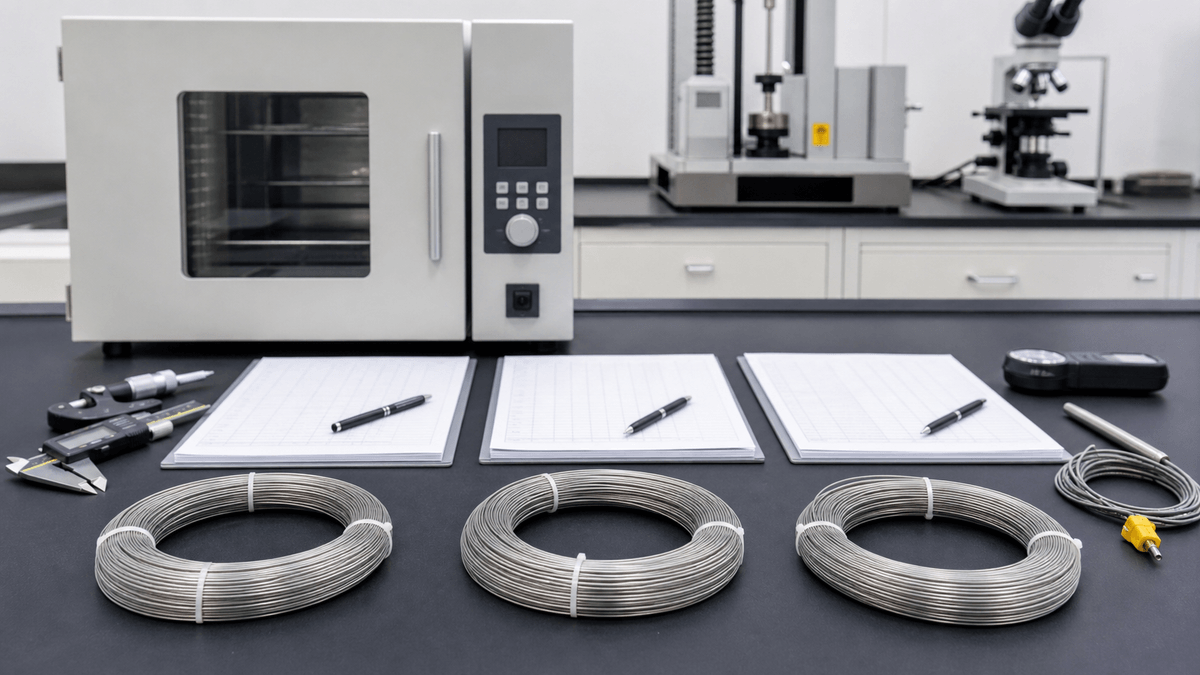
The handoff point should be explicit. If GEE SMA supplies raw or intermediate wire, the buyer should document which processes remain under the buyer's control. Those may include final drawing, rolling, arch forming, heat setting, cleaning, packaging, and finished-product validation. Clear handoff language prevents raw material data from being mistaken for finished-product performance.
This also helps future purchasing. When a development lot works, the team can return to the same alloy family, active Af, diameter, surface, condition, and lot documentation rather than trying to reconstruct the sample from memory.
A Manufacturing-Route RFQ
- State the alloy family: Copper NiTi or Copper NiTiCr.
- Define active Af target and tolerance.
- State where Af will be checked: incoming wire, intermediate material, or final processed form.
- Specify diameter, surface finish, delivery condition, quantity, and packaging.
- Describe downstream drawing, rolling, forming, heat setting, or polishing.
- Separate raw material supply from finished orthodontic product validation.
Cu NiTi archwire material is selected well when the buyer connects temperature to process. Active Af matters most when it is tied to the real manufacturing path that the wire will follow.