

Cu NiTi arch wire is a shorthand phrase that buyers use for copper-modified nickel titanium wire used in orthodontic arch wire programs. The phrase is convenient, but it is not precise enough for purchasing. A supplier still needs to know whether the target is Copper NiTi ternary alloy or Copper NiTiCr quaternary alloy, which active Af is required, what diameter or cross-section route is planned, and how the wire will be processed after delivery.
GEE SMA product notes describe Copper NiTi wire as raw material for preparing NiTi arch wire. The same notes state that both Copper NiTi and Copper NiTiCr wire can be used for this route, with Copper NiTiCr used more frequently in thermal-activated arch wire material. GEE SMA's Copper NiTi arch wire temperature-control capability is relevant when the buyer wants raw material behavior to support a later orthodontic wire program.
The Search Phrase Is Shorter Than the Specification
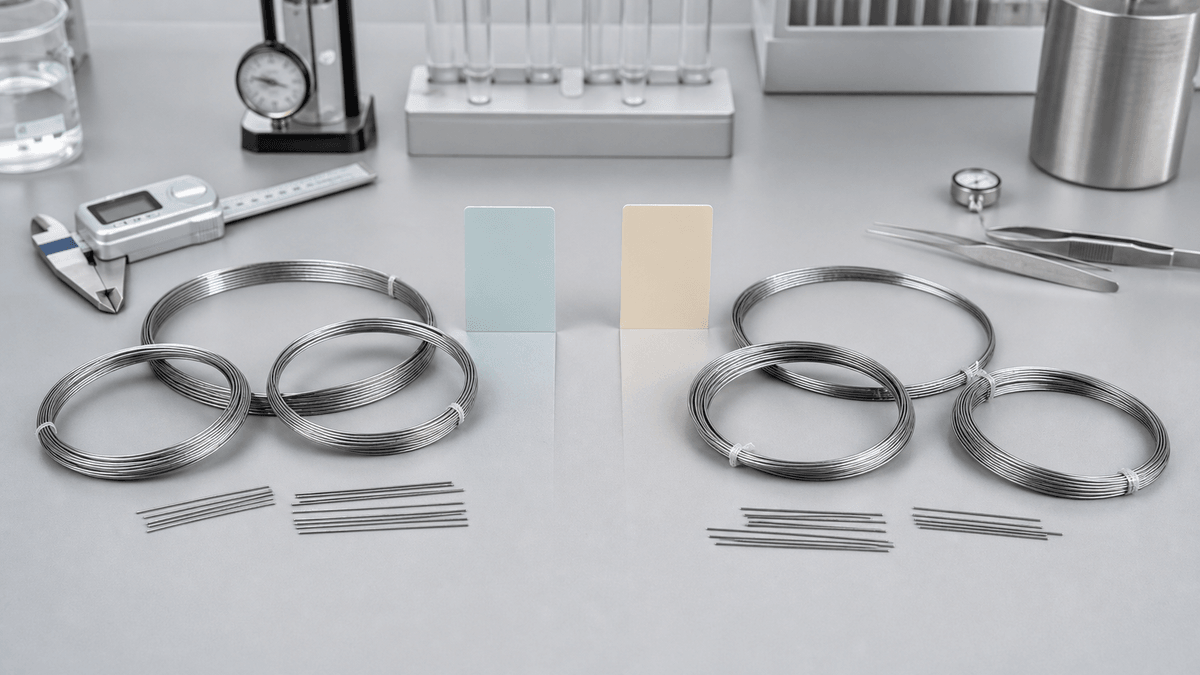
A phrase like "cu niti arch wire" can point to several needs. One buyer may want raw round wire for drawing and rolling. Another may want a specific active Af target for thermal activation. Another may be trying to compare Copper NiTiCr material against standard NiTi. If the RFQ does not separate those needs, price comparisons become weak.
A practical RFQ should start by stating the product level. Is the buyer sourcing raw material, intermediate wire, or a finished orthodontic archwire? GEE SMA should be positioned as a nitinol material and component supplier, so the safest language is raw material or material for preparing arch wire unless the finished product scope has been separately confirmed.
GEE SMA's nitinol wire capability fits the raw-material stage because wire diameter, drawing route, surface, and delivery condition shape what the customer can do next.
Choose Between Copper NiTi and Copper NiTiCr
Copper NiTi is a copper nickel-titanium ternary shape memory alloy. GEE SMA product notes list its active Af family from 45 to 75 degrees C and describe it as suitable for shape memory actuators, springs, muscle wire, and preparation of NiTi arch wires. Copper NiTiCr adds chromium and is described as a quaternary narrow-hysteresis alloy suitable for orthodontic arch wire and Cu NiTi arch wire, with active Af from 25 to 45 degrees C.
This difference is the heart of many Cu NiTi arch wire sourcing decisions. If the project needs lower active Af targets such as 27, 35, or 40 degrees C, Copper NiTiCr is often the better starting conversation. If the design needs higher-temperature shape memory behavior, Copper NiTi may be relevant. The buyer should not expect the abbreviation "Cu NiTi" to decide this automatically.
GEE SMA's Copper NiTiCr wire specification practice supports the alloy-choice step by connecting the material name to active Af, surface, and delivery condition.
Active Af Should Be a Buying Control
For thermal-activated arch wire raw material, active Af is not a laboratory footnote. It is a buying control. GEE SMA product notes list Copper NiTiCr active Af mainly around 27 degrees C, 35 degrees C, and 40 degrees C, with typical tolerance of +/-2 degrees C. If a buyer needs tighter control, the product notes indicate that +/-1 degrees C may require dual control of composition and thermomechanical treatment.
The active Af value should be written into the RFQ together with the intended downstream process. If the wire will be further drawn, formed, or heat set, the incoming material condition may not equal the final finished-product behavior. The receiving team should test the material after its own process steps, not only rely on the supplier's incoming-lot data.
GEE SMA's transformation-temperature knowledge helps buyers keep the discussion technical: alloy chemistry, cold work, heat treatment, and measurement condition all influence the final result.
Surface and Delivery Condition Decide Handling
Surface finish affects more than appearance. GEE SMA product notes list black oxide and mechanically polished Copper NiTi / Copper NiTiCr wire. Black oxide is associated with diamond-drawn wire. Mechanically polished wire has a bright metallic surface. The right surface depends on whether the wire is being supplied for additional processing or closer-to-final material handling.
Delivery condition is equally important. Cold worked material can be selected when the customer intends additional thermomechanical treatment. Straight annealed wire can support easier handling and straightness when the customer needs a more stable incoming condition. GEE SMA's nitinol material-control approach applies well here because surface, condition, lot identity, and testing should move together.
Keep Validation Responsibility Clear
Cu NiTi arch wire material may be used to prepare an orthodontic wire, but raw material supply is not the same as finished-product validation. Orthodontic brands and device owners are responsible for final geometry, packaging, labeling, and intended-use validation. A material supplier can support the alloy foundation and process documentation, but should avoid promises that belong to the finished product.
Public orthodontic brands discuss finished Copper Ni-Ti archwires in terms of heat activation and force behavior. Those references explain why the material family matters. They do not replace incoming inspection, process validation, or finished-product qualification by the buyer.
Incoming Inspection Should Match the Buying Risk
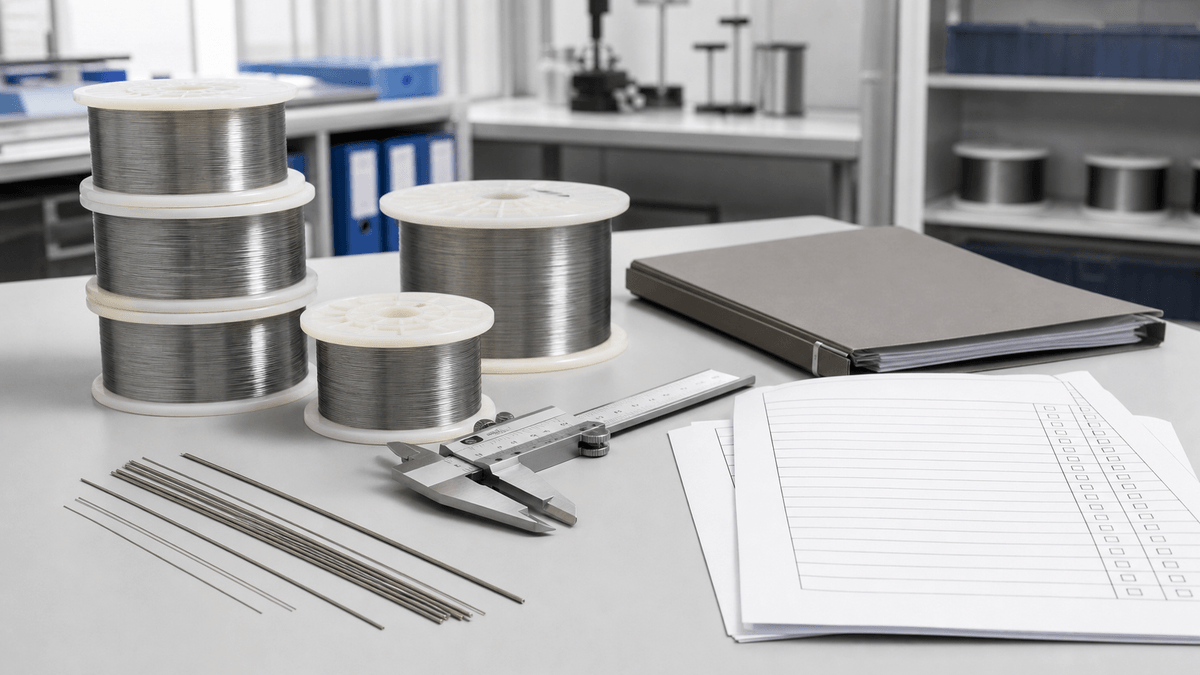
For early engineering samples, incoming inspection may focus on diameter, visible surface condition, package marking, and the supplier's transformation-temperature data. For production planning, the inspection scope usually becomes broader. The receiving team may need to check diameter tolerance, surface consistency, spool condition, wire cast, kinks, contamination, and whether lot identity remains clear after internal handling.
If the material will be used for multiple active Af trials, each spool should be separated and labeled before any internal processing begins. This simple discipline prevents later confusion. A development team may otherwise test a formed sample and lose track of whether it came from the 27 degrees C, 35 degrees C, or 40 degrees C incoming lot.
How to Compare Quotes Without Being Misled
Two Cu NiTi arch wire quotes can look similar while describing different materials. One may include mechanically polished surface, another may quote black oxide. One may provide straight annealed wire, another may provide cold worked material. One may target +/-2 degrees C active Af, while another lists a wider tolerance. The lowest price is not meaningful unless the specification behind the price is the same.
A practical comparison table should include alloy family, active Af target and tolerance, diameter, surface, delivery condition, quantity, package marking, and documentation. It should also show whether the supplier understands the downstream process. GEE SMA's material-focused support is most useful when the buyer shares enough detail for the quote to match the actual raw-material program.
Buying Checklist
- State whether the requested material is Copper NiTi or Copper NiTiCr.
- Define the active Af target and tolerance.
- Specify diameter, cross-section route, surface finish, and delivery condition.
- Clarify whether the order is raw wire, intermediate material, or a finished-product component.
- Request package marking with alloy code, size, and lot number.
- Plan testing after the customer's own forming or heat-setting route.
Cu NiTi arch wire programs are easier to control when the buyer treats the term as a starting point, not a finished specification. The best supplier conversation turns the shorthand into alloy family, active Af, diameter, surface, delivery condition, and traceability.