

Copper NiTi arch wire is usually discussed at the finished orthodontic-wire level, but the performance story starts earlier in the raw material. Before a wire is formed, packaged, and used by a clinical brand, it must be produced as a controlled nickel-titanium-copper or nickel-titanium-copper-chromium alloy with the right active Af, surface finish, diameter, processing route, and repeatability. For material buyers, that upstream control is where sourcing quality begins.
GEE SMA product notes describe Copper NiTi as a copper nickel-titanium ternary shape memory alloy and Copper NiTiCr as a quaternary alloy with copper and chromium. Both belong to narrow-hysteresis SMA families, but their temperature ranges and typical applications differ. GEE SMA's Copper NiTi force-temperature discussion is relevant when an orthodontic-material project must connect alloy selection with thermal activation behavior.
Why Copper Is Added to NiTi for Arch Wire Materials
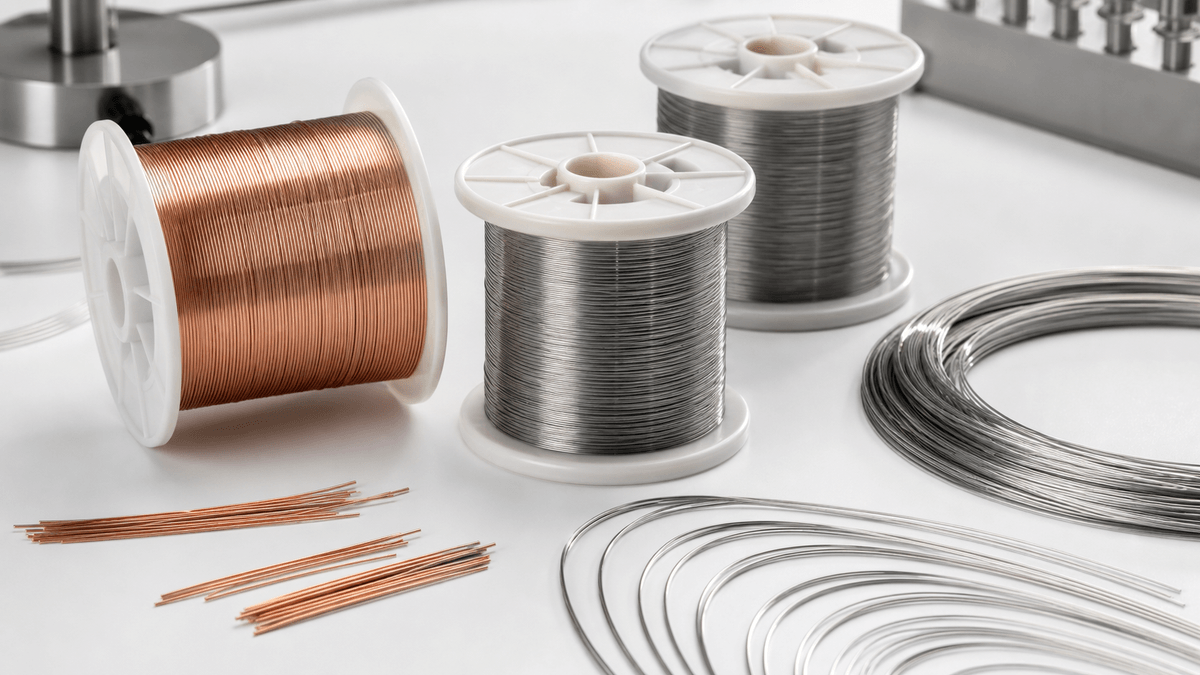
Nickel titanium is valued for springback, superelasticity, and shape memory behavior. Copper-modified NiTi is used when the design benefits from more controlled transformation behavior and narrower hysteresis. In orthodontic research, copper addition has been associated with narrowing stress hysteresis and stabilizing superelastic characteristics against cyclic deformation. That does not mean every Copper NiTi arch wire performs the same way. Composition, cold work, heat treatment, surface condition, and final forming still matter.
For a raw material supplier, copper is not a marketing word. It is part of an alloy system that must be controlled closely enough to produce the requested thermal response. The buyer should ask whether the raw material is Copper NiTi or Copper NiTiCr, which active Af range is being targeted, how the material is delivered, and what tolerance can be supported for the project.
GEE SMA's nitinol wire manufacturing route supports this type of discussion because drawn wire behavior depends on both metallurgy and process history. Diameter, cold work, annealing, and surface finish are not separate from the final force-temperature profile.
Copper NiTi Versus Copper NiTiCr
The product classification reference separates two related alloy families. Copper NiTi is described as a ternary narrow-hysteresis alloy suitable for shape memory actuators, springs, muscle wire, and preparation of NiTi arch wires. Its active Af family is listed from 45 to 75 degrees C. Copper NiTiCr is described as a quaternary narrow-hysteresis alloy suitable for orthodontic arch wire and Cu NiTi arch wire, with active Af family values from 25 to 45 degrees C.
That lower temperature range is one reason Copper NiTiCr appears frequently in thermal-activated orthodontic raw material discussions. In product notes for Copper NiTi wire in orthodontics, GEE SMA lists common active Af targets such as 27 degrees C, 35 degrees C, and 40 degrees C, with a typical tolerance of +/-2 degrees C and tighter control possible through composition and thermomechanical treatment. Buyers should confirm the actual target temperature and test method rather than relying on a product family name alone.
GEE SMA's shape memory alloy product range includes SE, SM, NiTiCu, NiTiCr, NiTiNb, NiTiFe, and other material families. That range matters when a sourcing team is comparing arch wire raw material with actuator wire, spring, or custom component needs inside the same development program.
Active Af Is the Anchor Specification
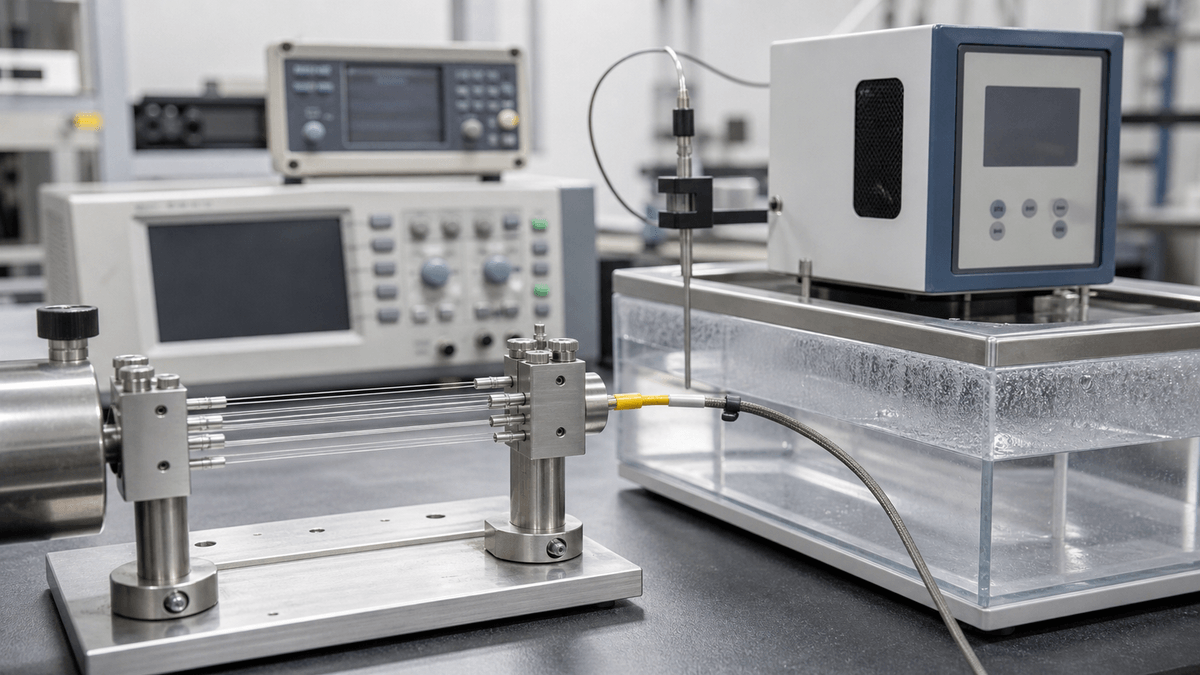
For Copper NiTi arch wire material, active Af is not a small laboratory detail. It helps define the temperature window in which the wire transitions toward its austenitic behavior. In a finished orthodontic product, brand-specific processing, arch form, cross section, packaging, and clinical use all add further variables. At the raw material stage, active Af remains one of the clearest specifications a buyer can define and verify.
A request such as "Copper NiTi arch wire material, 35 degrees C Af" is still incomplete. It should also include diameter or cross-section target, round or rectangular starting form, surface finish, delivery condition, lot quantity, and whether the customer will perform final forming or expects a prepared wire condition. GEE SMA's technical information on transformation temperature supports this buyer-side discipline: temperature behavior must be treated as a controlled material property, not an assumption hidden inside the material name.
For development projects, it is often useful to sample more than one Af target. A wire near 27 degrees C, 35 degrees C, or 40 degrees C may feel different during handling and activation, especially after the customer's own forming or heat-setting steps. The point is not to choose by catalog name. The point is to test the material in the same manufacturing route and environment that the finished product will see.
Diameter, Surface, and Delivery Condition
GEE SMA product notes for Copper NiTi and Copper NiTiCr wire list diameter from 0.05 mm and up. For orthodontic raw material, final cross section may be round or rectangular after additional processing by the buyer or a downstream manufacturer. The initial wire diameter, reduction history, and annealing path can influence how reliably the material reaches final geometry.
Surface options in the product notes include black oxide for diamond-drawn material and mechanically polished surfaces. A polished surface may be requested for friction, visual inspection, or downstream cleaning reasons. Oxide surfaces may be acceptable or preferred at earlier stages where the buyer will do further processing. The right choice depends on whether the supplier is providing raw wire stock, intermediate material, or material closer to the final arch wire route.
Delivery condition should also be written clearly. Cold worked material may be appropriate when the buyer intends to perform additional thermomechanical treatment. Straight annealed material may be preferred when handling and straightness are more important for the next process. GEE SMA's medical nitinol material-control approach is useful here because the same mindset applies: a wire specification needs traceability, surface control, transformation testing, and mechanical consistency.
Avoid Finished-Product Assumptions

It is tempting to import finished-product promises directly into a raw material purchase. That is risky. A raw Copper NiTi or Copper NiTiCr wire may be suitable for preparing orthodontic arch wires, but finished arch wire performance depends on final geometry, heat treatment, packaging, brand validation, and regulatory responsibilities. A material supplier can support the alloy and process foundation; the finished-device owner must validate the final product for its intended use.
Ormco's public Copper Ni-Ti product information describes heat activation and resistance to permanent deformation compared with conventional NiTi in its finished archwire portfolio. PubMed-indexed studies also discuss copper-nickel-titanium archwire behavior in clinical or laboratory contexts. Those references are useful for understanding why the material family is important, but they should not be copied into a raw-material claim without validation.
GEE SMA's narrow-hysteresis Copper NiTi material capability keeps the discussion in the right place: alloy behavior, temperature control, and supplier process capability before the finished product is defined.
What to Put in a Copper NiTi Arch Wire RFQ
- State whether the requested alloy is Copper NiTi or Copper NiTiCr.
- Define the active Af target, such as 27 degrees C, 35 degrees C, or 40 degrees C, and the acceptable tolerance.
- Specify diameter, cross-section route, spool or straight condition, and quantity.
- Confirm surface finish: black oxide, mechanically polished, or another required surface.
- Define delivery condition: cold worked, straight annealed, or a condition agreed for downstream processing.
- Ask for lot traceability, inspection method, and transformation temperature test information.
- Clarify whether the supplier is providing raw material, intermediate stock, or a custom processed form.
A strong Copper NiTi arch wire material specification is specific without overclaiming. It identifies the alloy family, active Af, size, surface, delivery condition, and intended downstream process. It also recognizes that the final orthodontic product will need its own validation. That separation protects both the supplier and the buyer, while giving the engineering team a better chance of building a stable thermal-activated wire program.