

Shape memory nitinol wire is not finished merely because the melt chemistry and incoming diameter are correct. Cold work, fixture geometry, shape-setting temperature, dwell time, atmosphere, restraint, and cooling can all change the functional response. The meaningful qualification point is therefore the condition that will enter the product, not an untouched length cut from the incoming spool.
GEE SMA product notes divide shape-memory wire into binary NiTi grades and copper-containing NiTi grades, with cold-drawn and straight-annealed delivery routes, diameters beginning at 0.05 mm [0.002 in.], and oxide or mechanically polished surfaces. That range of wire forms and transformation-temperature options is useful only when the downstream process is included in the acceptance plan.
The Drawing Should Define the Functional State
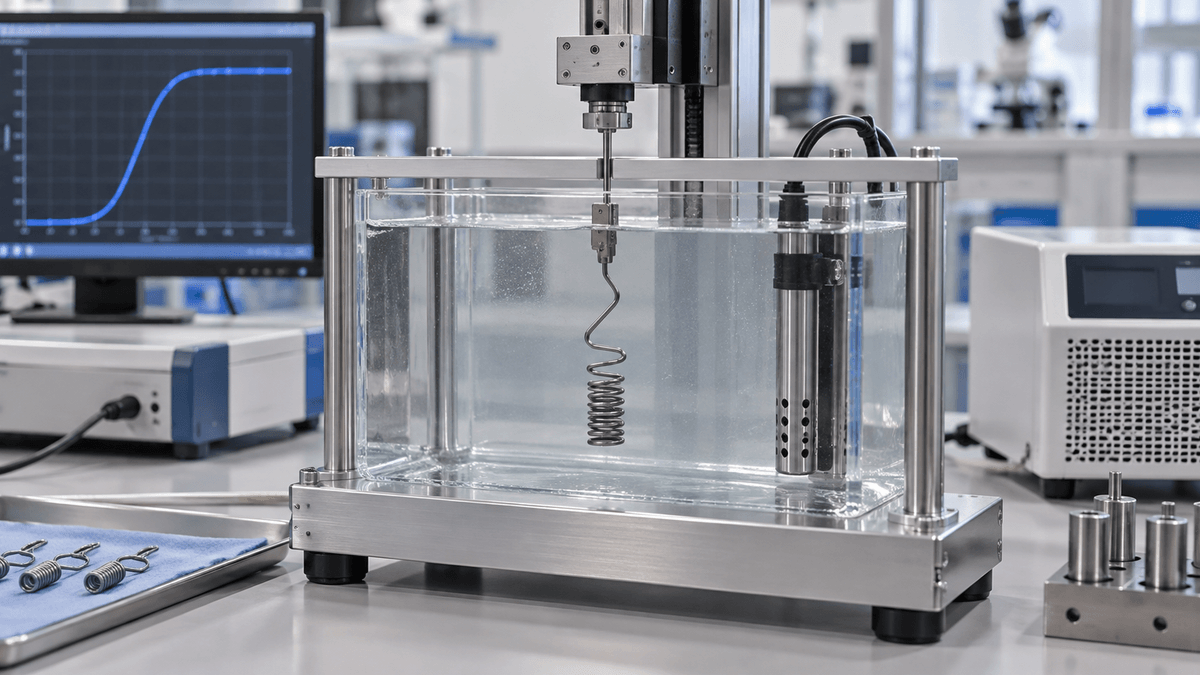
An RFQ often lists alloy, diameter, and an austenite finish temperature, then leaves the shape-setting route implicit. That is risky because the same starting wire can produce different transformation behavior after different thermal cycles. The drawing should identify whether the supplier delivers cold-worked feedstock for customer shape setting, straight-annealed wire ready for assembly, or a fully formed and heat-set component.
It should also state where Active Af is measured: on incoming wire, after supplier heat treatment, after customer forming, or on a witness coupon processed with the component. GEE SMA's eight wire specification decisions give buyers a practical framework for separating material requirements from component requirements.
Active Af Can Move During Processing
Transformation temperature is sensitive to composition, cold work, and heat treatment. A nominal alloy family provides a starting range, not permission to ignore the final thermal history. GEE SMA product notes list binary shape-memory grades across a broad Active Af range and copper-containing options for narrower temperature bands. The selected target must still be checked in the condition that performs the motion.
ASTM F2082/F2082M uses bend and free recovery to measure transformation response in wire, tube, or strip. ASTM F2004 uses differential scanning calorimetry. Those methods do not necessarily return identical values because load, strain, specimen preparation, and the physical quantity being measured differ. The test method, specimen state, heating rate, and acceptance rule belong beside the Af number.
Fixture Design Becomes Part of Material Control
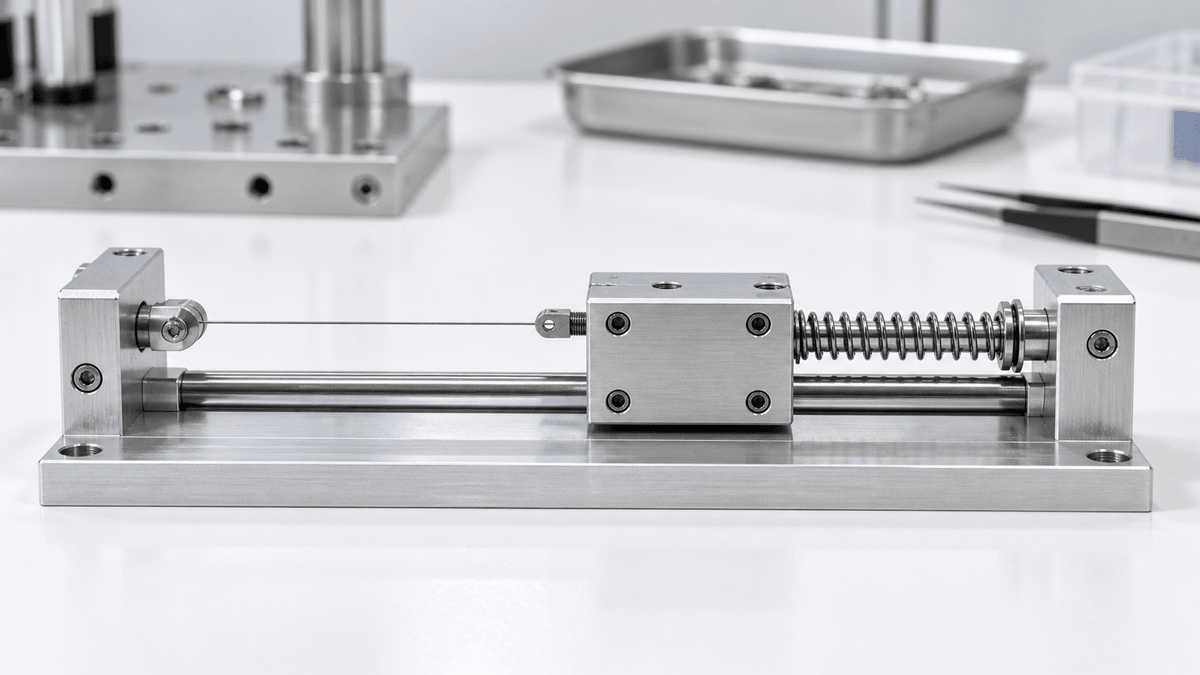
A shape-setting fixture establishes curvature, straightness, coil pitch, end orientation, and local constraint. Uneven contact or thermal mass can create a component that looks correct at room temperature but recovers unevenly. Tight radii also produce larger local strain during both forming and use. Fixture revision should therefore be controlled like a process tool, with traceable dimensions and a defined loading method.
For complex geometries, a representative witness sample should see the same furnace load, atmosphere, time, temperature, and cooling route. GEE SMA's forming and shape-setting capability is most valuable when the fixture, alloy condition, and acceptance test are developed as one package.
Recovery Must Be Tested Against the Real Load
Free recovery confirms that a trained shape returns without an external load. An actuator, latch, valve, textile element, or deployable structure must recover against resistance. Load shifts transformation behavior and can reduce available stroke, so a free-recovery demonstration is not a substitute for a loaded functional test.
Define the starting deformation, preload, travel stop, opposing force curve, heating medium, ambient temperature, and allowable residual set. GEE SMA product notes describe reversible recovery in the approximate 4% to 8% range under suitable conditions, but production strain should be selected from cycle-life evidence rather than treated as a universal allowance.
Surface Condition Changes With the Heat Cycle
Shape setting can grow or alter surface oxide. Subsequent grinding, polishing, pickling, electropolishing, coating, or cleaning can modify dimensions and fatigue-sensitive surfaces. A bright incoming wire does not guarantee a bright final component, and a polished final surface may no longer represent the thermally tested witness if it was tested earlier.
Specify the incoming and final finish separately. Include surface inspection after the last aggressive operation, especially at bends, attachment zones, and contact points. GEE SMA's controlled oxide and polished surface routes can be aligned with the final joining and cleaning sequence instead of selected as a cosmetic afterthought.
Lot Qualification Needs a Process-Matched Sample
A practical lot plan begins with incoming diameter, surface, alloy identity, and transformation behavior. It then adds a process-matched witness for Active Af and recovery, dimensional inspection after fixture release, and loaded cycling on representative components. If the component is safety-critical or fatigue-sensitive, multiple samples and process extremes should be included.
Record furnace identification, fixture revision, load position, programmed and measured temperature, dwell, atmosphere, cooling method, and post-treatment finishing. GEE SMA's focused NiTi material and component portfolio supports this continuity from feedstock selection through formed-part verification.
A Better Purchase Specification
- Exact alloy family or agreed grade, diameter, tolerance, surface, and delivery condition.
- Target Active Af, test method, specimen condition, and acceptance tolerance.
- Shape-set geometry, fixture ownership, thermal cycle, atmosphere, and cooling route.
- Free-recovery and loaded-recovery conditions, including preload, stroke, and travel stops.
- Post-heat-treatment surface process, inspection criteria, and dimensional checks.
- Cycle profile, temperature extremes, sample count, runout, and failure definition.
When shape memory nitinol wire is qualified after its final shape-setting route, the drawing connects material behavior to the mechanism the buyer actually needs. That connection is what turns a promising wire sample into a repeatable component.