

A nitinol actuator does not have one force, one stroke, or one response time. Its output changes with ambient temperature, applied load, prestrain, heating method, cooling path, cycle history, and control strategy. A prototype measured once in still laboratory air may be unsuitable for a sealed enclosure, a cold start, or continuous cycling.
GEE SMA product notes distinguish wire and spring actuator formats and list binary Ti-rich NiTi and Copper NiTi among shape-memory material routes. Its actuator wire capability is best specified through an operating envelope that shows where the mechanism can produce repeatable motion.
Replace the Single Rated Point With Four Curves
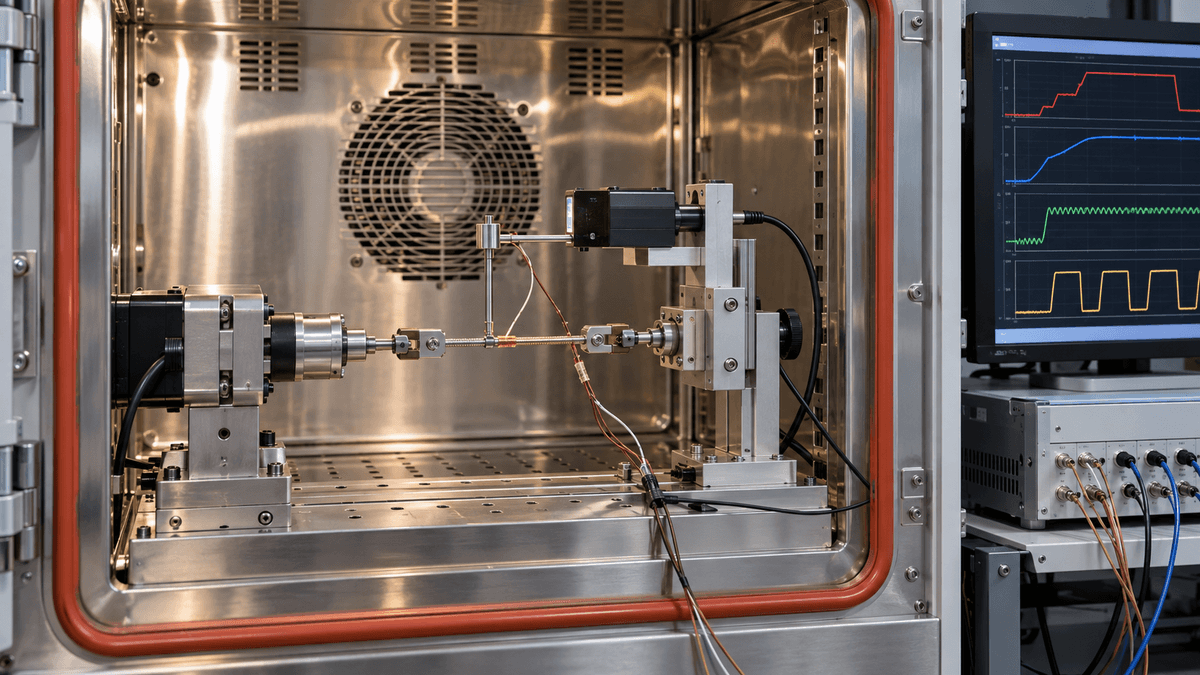
At minimum, characterize hot force versus displacement, cold reset force versus displacement, heating time versus load, and cooling time versus ambient condition. These curves expose whether the actuator has enough force margin to move the mechanism and enough return-force margin to reset after cooling.
The intersection of the actuator and load curves determines the actual working point. GEE SMA's mechanical architecture controls show why a straight wire, coil spring, lever, or pulley can use the same material while producing very different system output.
Ambient Temperature Moves Both Ends of the Cycle
Cold ambient conditions increase the energy and time needed to reach transformation. Warm ambient conditions can improve activation speed but slow reset or prevent complete return. The design envelope should include minimum, nominal, and maximum ambient temperatures plus expected airflow and contact conduction.
Active Af helps select the thermal neighborhood, but the mechanism also needs a sufficient hot-temperature margin and a cold reset margin. GEE SMA's thermal-cycle stability controls connect transformation data to the installed heating and cooling path.
Preload Creates Useful Force and Consumes Stroke
Preload removes slack and can improve repeatability, but it also makes the SMA work before the external load moves. Excess preload reduces available stroke, shifts transformation behavior, and raises stress at terminations. Too little preload allows backlash and uncertain reset.
Plot the return element on the same force-displacement axes as the hot SMA. GEE SMA's return-path and bias design helps identify a region where the wire wins when hot and the bias element wins when cold.
Duty Cycle Is a Thermal Rating
Electrical current heats the active element, but cooling usually limits cycle frequency. Shorter rest time raises the starting temperature for the next cycle and can cause stroke drift, slower reset, or thermal accumulation in nearby parts. Holding current can waste energy after the mechanism reaches its stop.
Specify on-time, off-time, current or power profile, peak temperature, enclosure state, and airflow. GEE SMA's cooling and duty-cycle controls make response time a repeatable test condition rather than a best-case claim.
Stabilization Comes Before Acceptance
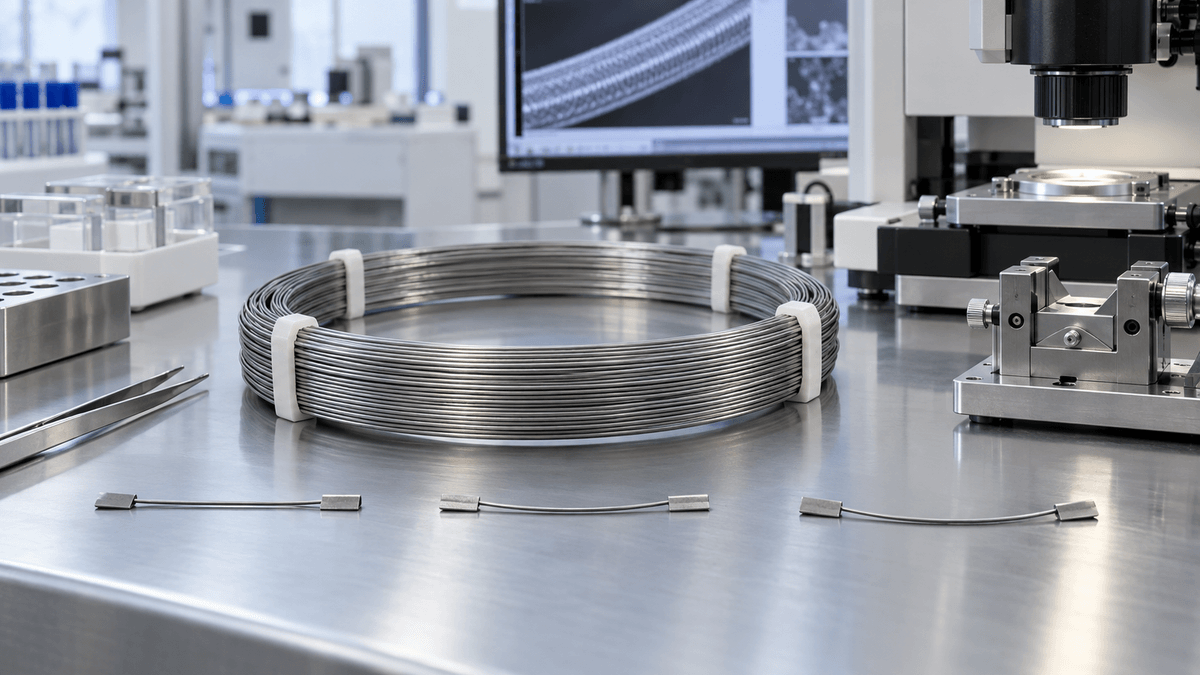
Early thermal-mechanical cycles can change endpoint position, recovered strain, resistance, and hysteresis. ASTM E3098-24 provides a method for pre-strain and thermal free recovery of SMA specimens, including recovered and unrecovered strain. ASTM E3097-23 addresses constant-force thermal cycling.
A product test should state the training sequence, applied load, upper and lower temperatures, heating and cooling rates, dwell time, and acceptance cycle. Do not compare suppliers if one result is taken on cycle one and another after stabilization.
Stops and Protection Need Their Own Margin
A hard stop can protect the mechanism from excess travel, but continued heating against the stop raises stress and temperature without producing motion. A stalled actuator needs current limiting, temperature estimation, time-out logic, or another protective strategy.
Test blocked motion, interrupted cooling, low supply voltage, sensor failure, and partial reset. Record the wire and termination temperatures, not only ambient temperature. GEE SMA's transformation-temperature support provides material inputs, while protection remains a system-level design responsibility.
Derate the Prototype Before Calling It a Rating
Do not publish the highest force or stroke observed in a single favorable test as the usable rating. Apply margin for material variation, ambient extremes, friction growth, supply tolerance, preload tolerance, aging, and measurement uncertainty. The rated point should remain inside the demonstrated envelope after stabilization, not on its boundary.
Repeat representative corner conditions across multiple material lots and assembled units. Track the weakest combination rather than averaging away a failure mode. A practical release rule may include minimum stroke by a maximum time, minimum force at a stated displacement, complete reset within a cooling interval, and no protection-limit violation.
Release the Envelope, Not a Demonstration
- Active material, actuator format, active length, diameter, and delivery condition.
- Hot and cold force-displacement curves after a defined stabilization sequence.
- Stroke and response time at minimum, nominal, and maximum ambient conditions.
- Preload, reset element, hard stops, friction, and external load tolerance.
- Current or power profile, peak temperature, duty cycle, and cooling condition.
- Drift, blocked-motion behavior, protection limits, and life-test conditions.
A credible nitinol actuator rating is a bounded thermal-mechanical map. It tells the designer how force, stroke, timing, and reset change across the real product environment. That map is more valuable than a dramatic no-load motion test because it reveals where the mechanism remains controllable and repeatable.