

A nitinol wire medical program can receive an impressive certificate and still lack the evidence needed for the coil entering production. Nitinol behavior depends on chemistry, cold work, heat treatment, transformation temperature, surface processing, and preconditioning. A release document is useful only when its samples represent the delivered lot and the condition the customer will actually process.
GEE SMA product notes list SE510, SE508, SE508 ELI, LSE5065, and LSE507 ELI among medical-relevant superelastic wire families, with black oxide, light oxide, and mechanically polished surface options. Those nitinol wire choices are starting materials. They do not transfer finished-device approval, biocompatibility, fatigue performance, or clinical suitability to the customer's product.
Start With the Exact Coil and Process State
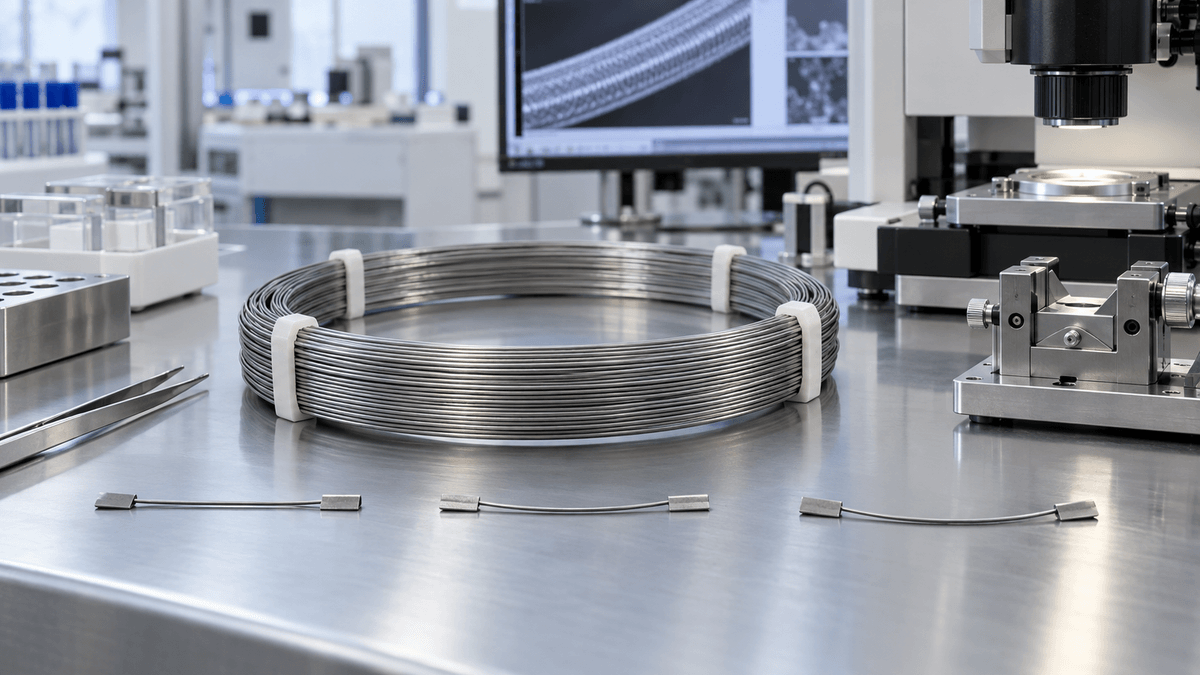
The certificate should identify the heat, processing lot, coil, alloy designation, nominal diameter, delivery condition, and surface. If a production lot contains several coils, define whether test results apply to the combined lot or to each coil. If material is straightened and cut, preserve the link back to the parent coil.
Cold-drawn wire, straight-annealed wire, and functionally heat-treated wire can share chemistry while behaving differently. The order must state which condition is being accepted. GEE SMA's melt-to-surface traceability controls are most useful when every reported result points to the same manufacturing state.
Use ASTM F2063 Within Its Current Scope
ASTM F2063-26 is the current active specification for wrought nickel-titanium shape memory alloy mill products intended for medical devices and surgical implants. Its scope explicitly distinguishes mill product from the final shape, surface, and properties of a device or component. It also directs finished NiTi tube to ASTM F2633.
A purchase order should name the applicable standard edition and then add wire-specific requirements agreed with the supplier. GEE SMA's material-to-device boundary prevents a raw-material conformity statement from being presented as regulatory approval.
Mechanical Results Need a Declared Temperature
Superelastic plateau stress and residual elongation change with temperature. ASTM F2516-22 covers uniaxial tension testing of superelastic NiTi and reports upper and lower plateau strength, residual elongation, tensile strength, and elongation. The test temperature, specimen preparation, strain sequence, rate, and preconditioning belong beside the result.
For a bending-dominated component, tensile data is a material baseline rather than a complete performance test. The device manufacturer should test the finished geometry under representative loading. Incoming inspection can confirm selected attributes without recreating the supplier's full qualification program.
Sample Location Can Reveal Coil Variation
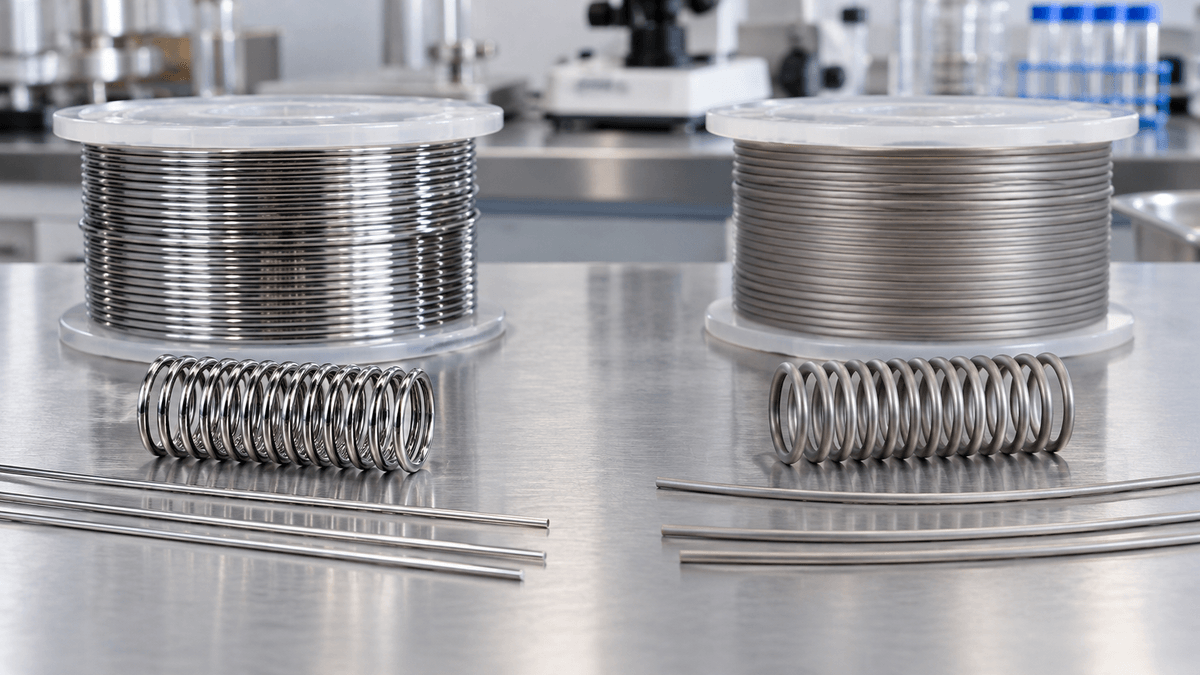
One coupon from one end of a long coil may not represent diameter, straightness, surface, or functional behavior across the usable length. Define beginning, middle, and end sampling when process capability or risk justifies it. Record the location of every retained sample.
GEE SMA's lot-acceptance evidence supports a short release package built around representative dimensions, transformation behavior, mechanical response, and surface inspection. Sampling should be risk-based, not copied mechanically from conventional wire.
Receiving inspection should verify identity before material is separated from its original label and package. Check spool damage, end restraint, visible contamination, coil set, and the agreed dimensional sample. Quarantine any mismatch between the purchase order, certificate, label, and physical condition. When testing consumes wire, record the removed length and preserve enough retained material for investigation. This discipline protects traceability when a downstream forming or surface problem appears weeks after receipt.
Surface Evidence Must Follow the Last Surface Operation
Drawing, heat treatment, oxide removal, polishing, cleaning, coiling, and packaging can each change the final surface. A micrograph taken before the last operation cannot release the shipped condition. Define inspection magnification, field count, defect categories, cleanliness, and acceptance examples.
After the customer forms, heat treats, welds, grinds, or electropolishes the wire, the surface changes again. GEE SMA's forming and surface sequence helps assign inspection after the operation that creates the final condition.
Change Control Should Name the Variables That Matter
Generic notification of a manufacturing change may arrive too late for a regulated program. The quality agreement should identify changes to melt source, alloy designation, cold-work schedule, intermediate anneal, final heat treatment, drawing lubricant, surface route, cleaning chemistry, spool format, test method, and production site.
Not every change requires the same response. The device manufacturer should define review, comparison testing, revalidation, and regulatory assessment based on risk. GEE SMA's technical process capability can support supplier dialogue, while final design control remains with the medical-device manufacturer.
The agreement should also define how deviations are approved. A temporary alternate lubricant, furnace, test fixture, or subcontracted finishing operation can matter even when the drawing dimensions remain unchanged. Document the technical assessment, affected lots, additional verification, and disposition so an exception does not quietly become the new process baseline.
Minimum Evidence for Coil Release
- Heat, lot, coil, alloy code, diameter, delivery condition, and surface identity.
- Applicable standard edition and any customer-specific exceptions.
- Transformation-temperature result with method and specimen condition.
- Mechanical result with test temperature, strain sequence, and sample location.
- Diameter, straightness, spool condition, surface, and cleanliness evidence.
- Traceable retained samples, nonconformance handling, and change notification.
The phrase nitinol wire medical should trigger a controlled evidence chain, not a marketing label. A useful certificate identifies the delivered coil, describes the tested condition, and leaves no ambiguity about which steps belong to the material supplier and which belong to the finished-device manufacturer.