

Nitinol muscle wire can pull an electronic lock’s release linkage when an electrical pulse heats the wire. To evaluate it, measure how far the wire attachment must move under load, how much active wire fits in the housing, and how long the installed mechanism takes to return. Use those three measurements to decide whether a sample is worth testing and what to send to the nitinol muscle wire supplier.
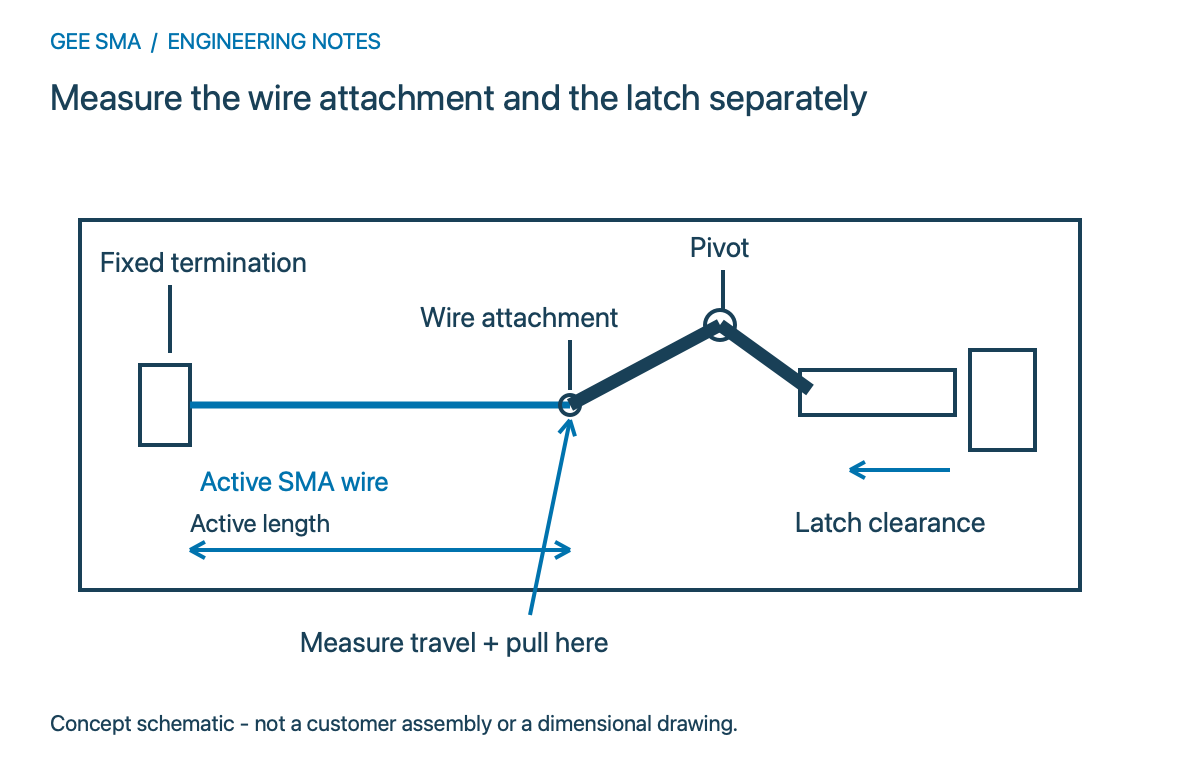
Measure release at the wire attachment
Define what a successful release looks like. For example, a latch may need to clear its mating feature before the linkage reaches its mechanical stop. Mark the position where clearance first occurs and the position that gives enough margin for the tolerances in the assembled lock. Record those positions at the latch and at the wire attachment. A lever can make the travel at one location quite different from the travel at the other.
Measure the required pull along the path. A single force reading at the start can miss a peak from spring preload, friction or a change in linkage angle. Take readings near the start, the point of highest resistance and the intended release point. Where load on the latch varies in normal use, include a representative higher-load condition in the test. Provide the condition with the readings so candidate wire samples can be compared on the same basis.
Check usable wire length and routing
A nitinol muscle wire design starts with the length that can actively shorten. On a sketch, mark both attachment points, bends or guides and the section expected to heat and contribute to the pull. Leave room for the attachments and tolerances. If a guide changes the direction of the pull, look at the load at that guide and whether the wire maintains its intended path as the mechanism moves.
A short nitinol muscle wire route can increase the working strain required to produce a given movement. Before committing to a compact housing, estimate the movement required from the active length and ask the supplier what working strain is appropriate for the proposed wire and expected duty. If there is little margin, revisit the linkage geometry and measure the resulting pull requirement again. A linkage change that reduces wire travel can increase the force it must deliver.
Give the supplier the electrical operating limits
State the available voltage or current, the planned pulse duration and the source of power. For a battery-powered lock, document the electrical conditions the development team expects at the end of the intended battery operating range. Record the limits at the installed nitinol muscle wire where possible. Connectors, wiring and driver behavior can change the pulse that actually reaches the sample.
The GEE SMA actuator wire specifications list example resistance, pull-force and current values for different sizes. Use those values to identify candidates for discussion and confirm the test conditions and units for the specific sample. A useful bench record pairs the actual current and pulse duration with the movement and load measured in the same test. This gives the supplier a basis for reviewing wire size and temperature behavior.
Test return inside the lock housing
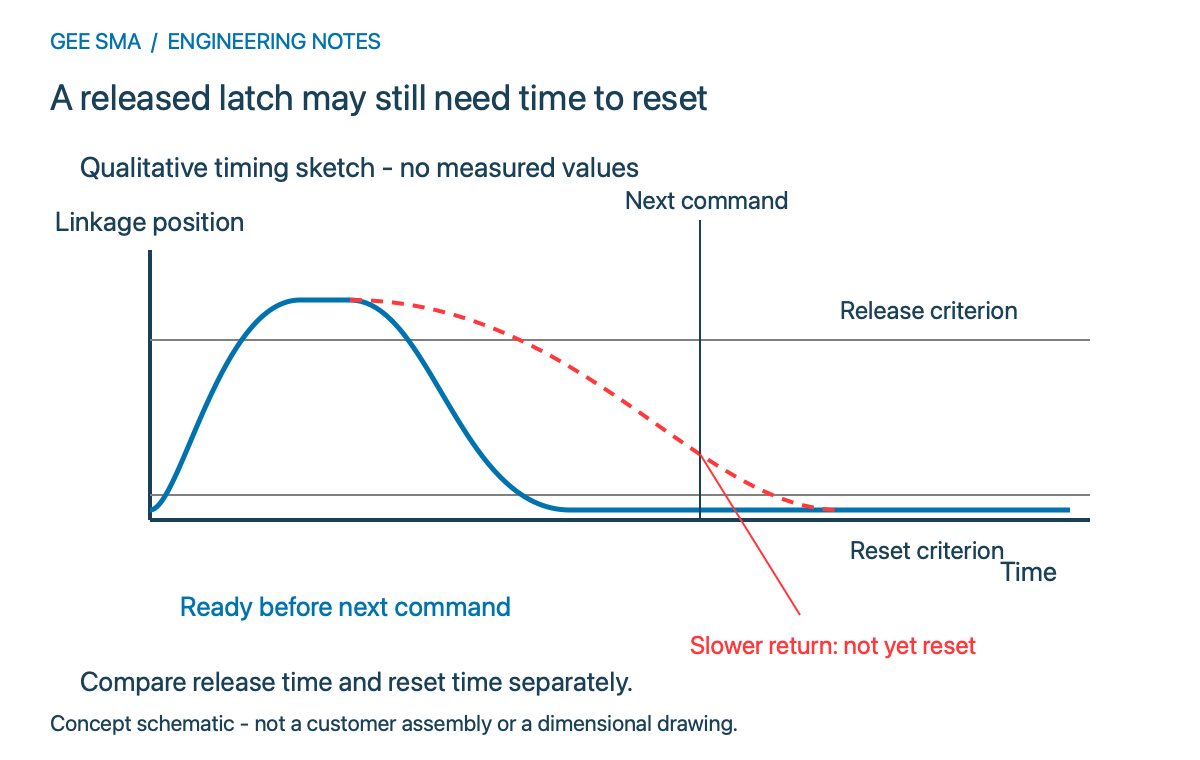
Write a separate pass condition for return. The linkage must reach the position required for the next operation before the next command arrives. Check that the intended return force can move the cold mechanism through its full path. Where the design uses a spring, state its preload and how its force changes during movement. Confirm the return arrangement for the particular wire and mounting configuration.
Run the initial checks in an open fixture, then repeat them with the mechanism mounted inside the lock housing. Keep the nitinol muscle wire sample, command and mechanical load the same where practical. Record actuation time and return time separately. If return slows after installation, check contact with nearby parts, changes in routing, friction and the room available for cooling. The enclosure can change several of these conditions at once, so isolate changes before selecting another sample.
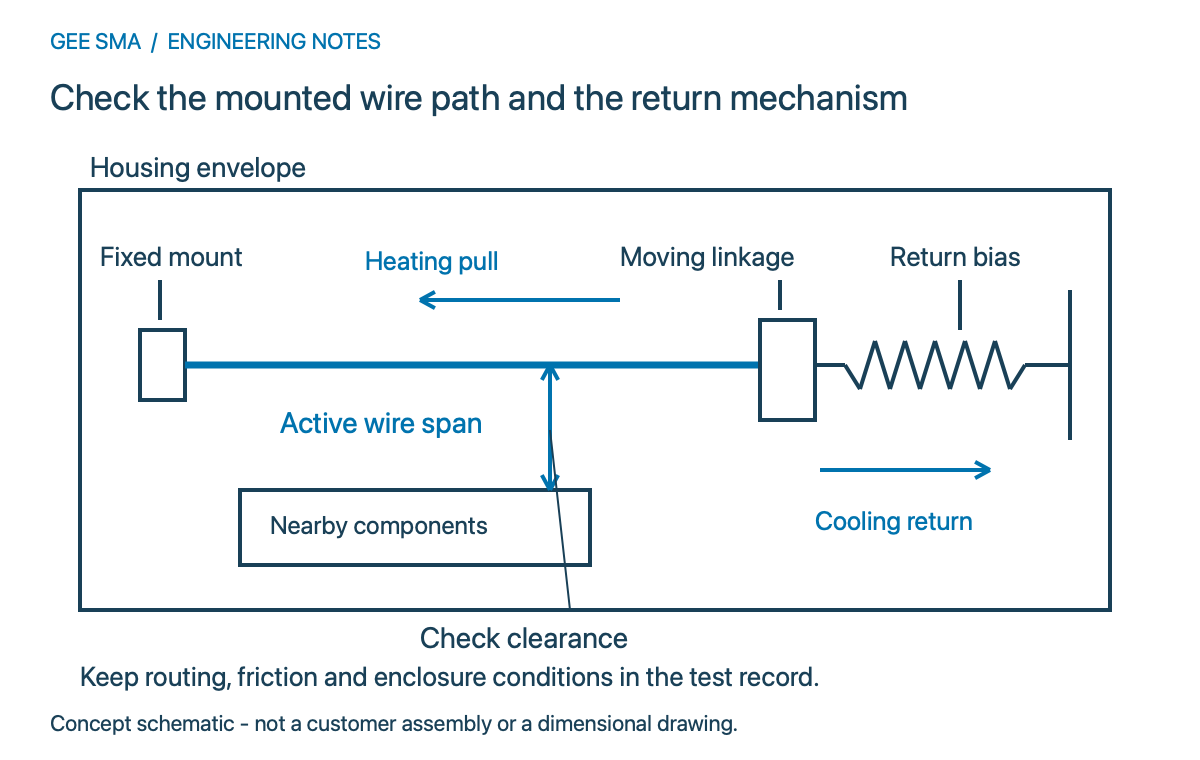
Compare more than the first successful release
Test repeated commands at the interval expected in service. Start with the mechanism at a known temperature, record the first cycle and continue long enough to observe how the return position changes over consecutive cycles. Repeat the check at relevant operating-temperature limits. Note the number of cycles, the interval and the load, alongside any change in travel or return time.
Use the findings to decide what to examine next. If the latch releases at the expected time and return runs late, focus the next trial on reset and cooling. If it fails to clear the latch despite an adequate return interval, compare the available pull and travel with the loaded mechanism measurements. Keep the sample identity and test fixture revision with the record. That matters when a later result must be reproduced in another housing or on a revised linkage.
What to put in a nitinol muscle wire sample request
Send the drawing or sketch, active wire length, force and travel at the attachment, the power limits and the reset arrangement. Include the intended cycle frequency, ambient range and the enclosure material or nearby parts that may affect cooling. State whether the sample is for a first motion check or for repeated tests on an existing prototype. For a project that is still deciding between formats, use the wire and spring selection guide to compare the inputs needed for each route.
Give each sample option an acceptance question. One trial may ask whether the lock releases under the higher expected load. Another may ask whether the same setup resets in time inside the assembled housing. A clear question helps engineering and purchasing compare samples using the same evidence. Ask GEE SMA to identify the wire condition and lot so the project can match the tested sample when continuing the evaluation.
For a revised nitinol muscle wire request, include the measured change from the original trial. Explain whether the new housing reduced the active length, whether the latch load increased or whether the interval between commands became shorter. If two factors changed together, describe the test that will isolate them. GEE SMA can then discuss the nitinol muscle wire sample against the revised design input and the result you need to verify.
Worked example: Check release and reset separately
Suppose a prototype releases cleanly on a workbench, but misses an immediately repeated command once the lid is fitted. Begin by checking whether the latch has physically reached its reset position before the second pulse. Record the starting position at each of several command intervals. If the starting position shifts while the electrical pulse remains consistent, run the same test with the housing open and compare the return trace. This gives the design team a way to check whether a nitinol muscle wire sample is being evaluated under comparable conditions.
Next, measure the return action with power disconnected. If the linkage binds at the same point, inspect the guide and attachment clearances before repeating the powered test. If the mechanical return is smooth, record the enclosure conditions and share the time traces with the supplier. A nitinol muscle wire sample comparison is most useful when it includes an explicit release criterion and an independent reset criterion for each installation.
Frequently asked questions
What should I measure first on an electronic latch?
Measure the required travel and force at the wire attachment while the latch is under a representative load. Record how the two relate to the clearance needed at the latch. These measurements let you assess wire length and linkage geometry together.
Can I size the wire from the available voltage alone?
Include the current or power limit, pulse duration and the behavior of the mounted mechanism. Voltage by itself says little about the heating of a wire with a given length and resistance, and it leaves out the time required for cooling and return.
How do I compare two nitinol muscle wire samples?
Use the same linkage, load, enclosure and command protocol wherever possible. Record wire identity, the current delivered, the loaded stroke and time to release and reset. Compare the results against the same clearance and return requirements.
When should I test at the temperature limits?
Use the anticipated extremes once the basic motion works. Record the starting temperature and test the planned sequence of commands at each condition. This shows whether cold starts and warm enclosures lead to different release or reset margins.