

A nitinol guidewire may begin with superelastic wire, but finished performance comes from a system. Core diameter, taper, distal construction, coatings, joints, surface condition, and test temperature all influence how the device advances, bends, transmits rotation, supports another component, and resists permanent kinking. Buying a suitable raw wire is necessary; it is not the same as qualifying a finished guidewire.
Start With Functional Zones
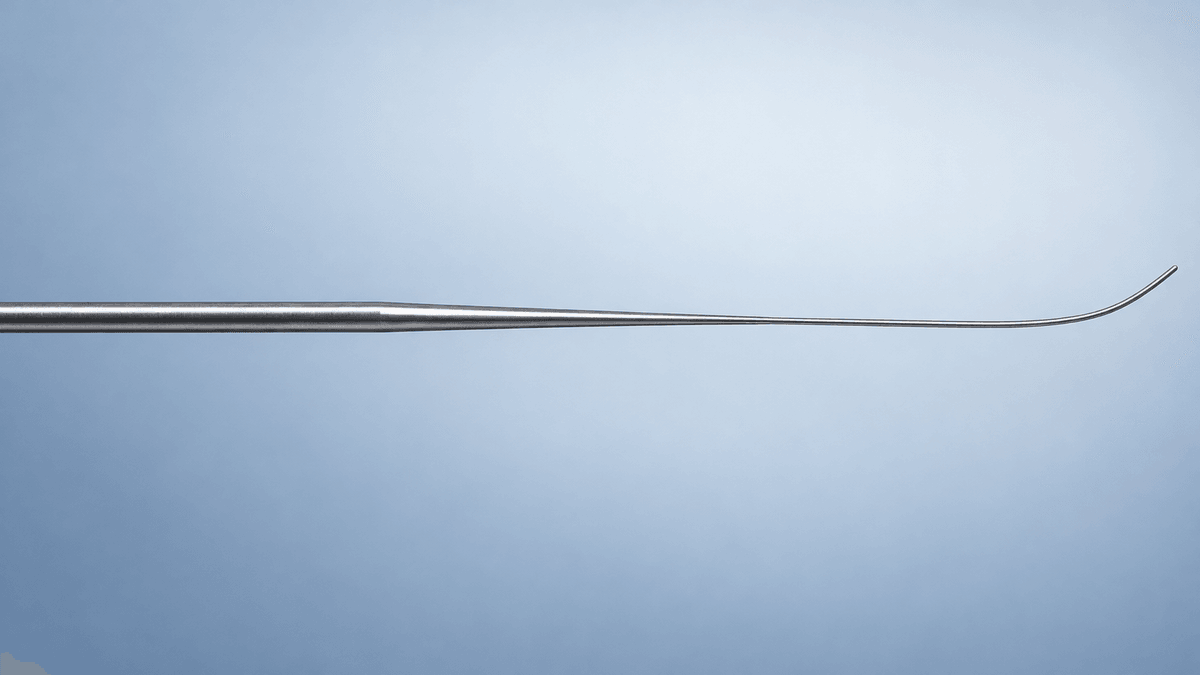
A guidewire does not need one uniform stiffness from end to end. The proximal region may prioritize handling and support. A transition region manages the change in bending stiffness. The distal region may prioritize flexibility and shape retention. Defining these zones first gives the material specification a mechanical purpose.
Published guidewire literature shows that core material, core diameter, taper, coil or cover, coating, and tip design work together. GEE SMA's core-diameter control is therefore most useful when linked to target performance along the finished length.
Nitinol Solves Kink Problems, Not Every Guidewire Problem
Superelastic nitinol can recover from bending that would permanently deform many conventional wires. This supports tortuous paths and repeated handling. The tradeoff is that a highly flexible nitinol core may provide less column support or different torque response than a stiffer architecture. Hybrid designs can combine materials or construction features to balance these needs.
GEE SMA's superelastic wire capability supplies a material starting point. Device designers remain responsible for converting that wire into an architecture suited to the intended procedure and accessories.
Taper Geometry Controls the Transition
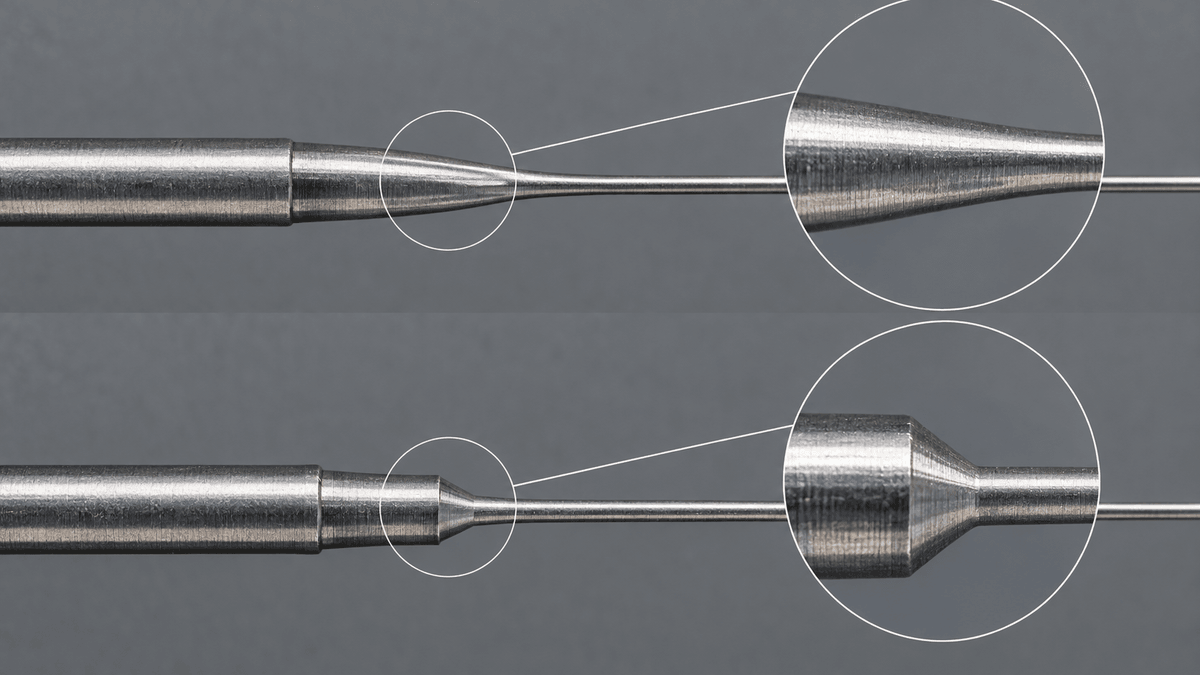
Bending stiffness changes strongly with section geometry, so small diameter changes can create a large mechanical effect. A long gradual taper may distribute the transition; a short abrupt taper can localize bending and stress. Grinding quality, blend radius, and surface condition at the transition deserve separate controls.
The RFQ should define the raw diameter, finished profile, straightness, transition length, allowable surface marks, and inspection method. GEE SMA product notes list cold-drawn and straight-annealed delivery conditions as well as black oxide, light oxide, and mechanically polished surfaces for guidewire-oriented material. The downstream route should determine which state is appropriate.
The Distal Assembly Can Reverse a Good Material Decision
Coils, polymer jackets, radiopaque markers, soldered or welded joints, adhesives, and formed tips change stiffness and local strain. A joint that is strong in a straight pull can still create a bending discontinuity. A coating that improves lubricity can hide surface damage or change dimensional clearance. Each interface needs a defined function and an inspection method.
GEE SMA's shape-setting and surface controls help identify which evidence belongs to raw material, which belongs after forming, and which must be repeated after assembly.
Temperature and Conditioning Belong in Mechanical Tests
Superelastic response depends on the relationship between test temperature and Af. Bench data at room temperature may not represent a device used near body temperature. Repeated preconditioning can also change the first-cycle response. Test records should state temperature, soak time, loading rate, cycle history, fixture geometry, and sample condition.
GEE SMA's active Af and tensile data illustrate why transformation behavior and mechanical response must be tied to a defined condition rather than an alloy name alone.
Translate Performance Words Into Testable Outputs
Terms such as flexible, supportive, torqueable, kink resistant, or atraumatic are useful design goals, but they are not complete acceptance criteria. Each term should be linked to a specimen, fixture, location, environmental condition, and numerical output. Otherwise, two teams can use the same word while measuring different behavior.
| Design word | Possible engineering evidence |
|---|---|
| Flexible | Bending force at defined distances and angles |
| Kink resistant | Recovery after a defined loop, radius, load, and cycle history |
| Supportive | Column or buckling response in a representative path |
| Torqueable | Input-output rotation, lag, and durability in a defined model |
A material supplier may support bend, tensile, dimensional, surface, and transformation data for the core. The device manufacturer must decide which assembled-device tests represent the intended use and establish suitable acceptance criteria.
Build a Verification Ladder
- Material: alloy identity, diameter, delivery condition, transformation response, tensile behavior, and surface.
- Processed core: profile, taper, straightness, local surface, and heat history.
- Subassembly: joint strength, transition stiffness, coating or cover integrity, and tip geometry.
- Finished device: torque response, bending, kink recovery, support, lubricity, particulate risk, tensile integrity, and other use-specific tests.
Results from one level should not silently substitute for another. GEE SMA's lot and surface traceability can preserve the link between starting wire and device-level investigations.
The ladder also improves failure analysis. If a finished wire develops excessive bend resistance, teams can compare the raw-wire lot, taper profile, distal assembly, coating, and final test rather than blaming the alloy without evidence. Retained samples at each level shorten that comparison and help determine whether the change entered with material, processing, or assembly.
Specify the Core Without Claiming the Device
A useful core-wire order states alloy code, diameter or profile, delivery condition, active transformation-temperature method and range, surface, straightness, package, sampling, and change control. It should also identify the downstream operations that could change the wire.
GEE SMA's nitinol material and component options can support guidewire development while keeping an important boundary clear: raw wire and custom cores are inputs to a regulated device, not proof that the finished guidewire is safe or effective.