

Nitinol fishing wire attracts attention because a severe bend that permanently kinks many conventional metal leaders may be largely recovered by a suitable superelastic NiTi wire. That behavior is valuable around teeth, rocks, hardware, and repeated storage bends. It does not make the leader indestructible, and it cannot be evaluated from straight-wire tensile strength alone.
GEE SMA product notes list SE508 and LSE5065 as starting alloy families for fishing wire. SE508 is positioned for stronger superelastic recovery, while LSE5065 is positioned as the softer option. The right nitinol wire condition depends on the leader diameter, terminal connection, target flexibility, water environment, and expected handling.
The Leader Fails at More Places Than Its Midspan
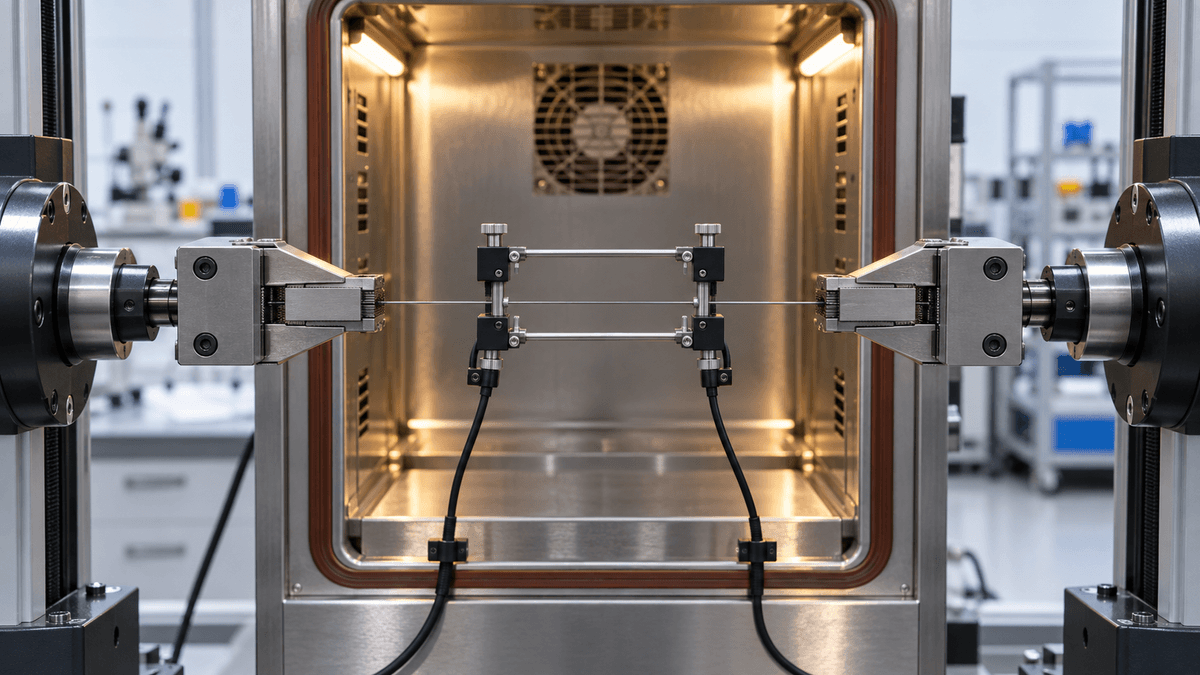
A leader system includes wire, knots or crimps, swivels, snaps, sleeves, coatings, and cut ends. Peak strain often occurs beside a crimp, at a tight knot radius, or where hardware creates fretting. A pristine straight specimen can pass a tensile test while the assembled leader fails much earlier.
Map each transition in the system and inspect where curvature concentrates. Test the exact connection method with production tooling. If the wire is crimped, control sleeve material, crimp profile, force, spacing, and edge condition. If it is knotted, control knot geometry and tightening method.
Choose Between Recovery and Softer Handling
Superelastic response depends on alloy, cold work, heat treatment, diameter, and temperature. A higher-recovery grade can resist permanent set after a large bend, but it may also feel stiffer in the hand or load a small terminal differently. A softer grade may improve presentation while accepting a different recovery limit.
Compare candidate materials at the same diameter and temperature. GEE SMA's recovery and supplier controls are relevant because grade names alone do not establish plateau force, residual strain, or lot-to-lot behavior.
Kink Testing Needs a Repeatable Geometry
A hand bend is useful for demonstration but poor for acceptance. Define a mandrel diameter, wrap angle, dwell time, unloading time, test temperature, and residual-curvature measurement. Add a sharp-fold test only if it represents foreseeable abuse, since extremely small radii can damage any metallic wire.
Run repeated bend-and-recovery cycles before final tensile testing. Record the first visible surface damage, residual set, and connection movement. GEE SMA's strain-budget approach helps distinguish recoverable transformation strain from local strain that consumes fatigue life.
Saltwater Exposure Makes Surface Condition Visible
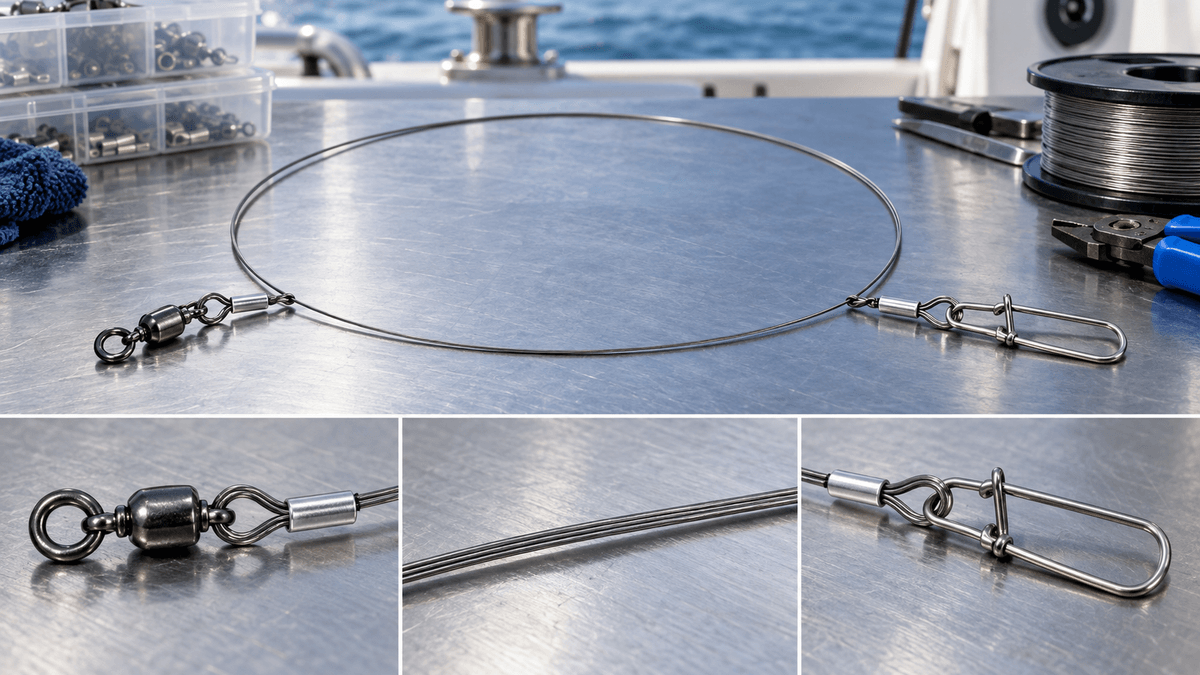
Nitinol forms a protective oxide, but chloride exposure, scratches, crevices, and dissimilar-metal contacts still deserve engineering attention. Published corrosion research shows that environment and surface condition can materially affect localized corrosion behavior. It is more accurate to qualify saltwater performance than to describe any wire as universally corrosion proof.
Use an exposure protocol that reflects salt concentration, temperature, wet-dry cycling, cleaning, storage, and contact with terminal hardware. Inspect for discoloration, pits, residue, and roughness, then repeat bend and pull testing. The most severe location may be beneath a sleeve where water is trapped.
Black Oxide and Polished Wire Need Different Inspection
GEE SMA product notes list black oxide and mechanically polished surfaces. They also state that black wire should be free of loose graphite residue that contaminates handling. A polished wire offers a bright surface that can make some defects easier to see, but appearance alone does not establish corrosion or fatigue performance.
Set acceptance criteria for cleanliness, scratches, seams, pits, oxide consistency, spool set, and cut-end quality. GEE SMA's surface evidence and lot traceability can be adapted to nonmedical products without importing medical claims into a fishing application.
Diameter and Packaging Shape Real-World Usability
Diameter changes breaking load, flexibility, knot behavior, crimp selection, and visibility. It also changes how tightly the wire can be spooled without taking a temporary curvature. A buyer should specify diameter tolerance and spool core rather than relying on a nominal leader class.
Packaging should prevent crushing, abrasion, contamination, and uncontrolled small-radius bends. State spool diameter, traverse quality, unit length, end restraint, labeling, and whether cut lengths are acceptable. GEE SMA's lot-acceptance framework supports incoming checks that preserve traceability without repeating the supplier's entire process.
Prototype users should also record how easily wire pays off the spool and whether springback creates a handling hazard during cutting. The production process may need controlled straightening, guarded cut stations, and end capture. These practical observations often determine the preferred spool size and wire temper before formal strength limits do.
Build the Qualification Around the Finished Leader
- Confirm alloy family, delivery condition, diameter, tolerance, and surface.
- Measure straight-wire tensile behavior at the relevant temperature.
- Run controlled kink recovery and repeated bend tests.
- Test production knots, crimps, sleeves, swivels, snaps, and cut ends.
- Repeat system tests after representative saltwater and storage exposure.
- Define visual limits, sampling, packaging, and lot-change notification.
Nitinol fishing wire earns its value through the assembled leader's ability to recover, hold its connections, and resist environmental damage over repeated use. Supplier data selects the starting material. Product-level testing establishes whether the complete system is ready for the water.