

Copper NiTi wire in orthodontics is commonly discussed by a single activation temperature, yet an archwire program is controlled by a larger thermal-mechanical map. The raw material must transform in the intended range, deliver a suitable unloading response at use temperature, tolerate forming and heat treatment, and arrive with a surface and cross-section that support the downstream device process.
GEE SMA product notes distinguish ternary Copper NiTi from quaternary Copper NiTiCr. They identify Copper NiTiCr as the more frequent starting family for thermally activated archwire programs and list Active Af options around 27, 35, and 40 degrees C. Those values are useful selection points, but they are not finished-device claims. Buyers should connect the selected copper-containing NiTi wire to their own forming, finishing, and verification route.
Activation Temperature Is a Design Input, Not a Product Name
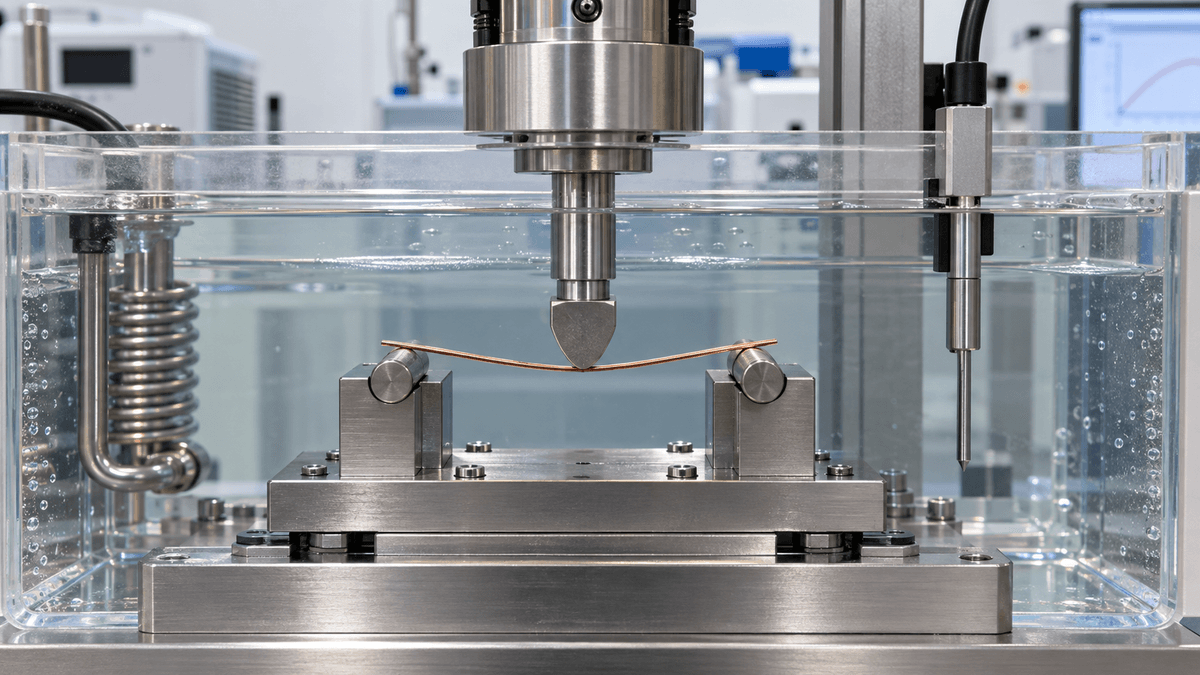
Active Af describes the temperature at which a constrained or deformed specimen completes functional recovery under a defined method. A nominal 27, 35, or 40 degrees C designation does not by itself state the loading plateau, hysteresis, recovery strain, or behavior after arch forming. It also does not replace the test temperature.
Published orthodontic studies show that wire force changes with temperature and that different nominal activation grades can produce materially different unloading forces. The purchase specification should therefore pair Active Af with an application-relevant force or bending test. GEE SMA's hysteresis and cycling controls keep heating and cooling behavior visible instead of reducing the alloy to one transition number.
Map Temperature Against Deflection and Unloading Force
The useful engineering picture is a matrix: wire geometry on one axis, test temperature on another, and force at selected deflections as the response. For round or rectangular wire, record the fixture span, orientation, loading rate, maximum deflection, hold time, and unloading measurement points. A force value without this geometry cannot be transferred safely between programs.
Testing at room temperature alone can misrepresent a thermally activated wire. Include the temperature used for incoming inspection and one or more temperatures justified by downstream use. If storage or handling temperatures are important, evaluate them separately rather than assuming that the wire instantly returns to the same state.
Copper NiTi and Copper NiTiCr Are Separate Material Decisions
Copper additions can narrow stress hysteresis and improve cyclic stability relative to a comparable binary NiTi route. Chromium additions are used to adjust transformation behavior, allowing lower activation windows that are often relevant to orthodontic raw material. Similar Af targets do not make the two alloy families interchangeable.
Specify the supplier alloy designation, composition control, transformation-temperature target, delivery condition, and expected downstream heat treatment. GEE SMA's Copper NiTiCr alloy and surface controls are most useful when those fields remain traceable from melt or input stock through the shipped wire lot.
Cross-Section Controls More Than Slot Fit
Diameter, width, thickness, corner radius, and torsional orientation affect stiffness and force delivery. For rectangular wire, the width-to-thickness relationship also changes forming behavior and how the wire sits in downstream tooling. Dimensional acceptance should include sampling frequency and measurement method, not only nominal size.
A supplier may deliver round wire for later flattening, near-net rectangular wire, or finished-size feedstock depending on the program. Each route leaves a different cold-work and surface history. The customer's final arch-forming and thermal process must be considered when selecting the incoming condition.
Surface Condition Travels Into Friction and Fatigue
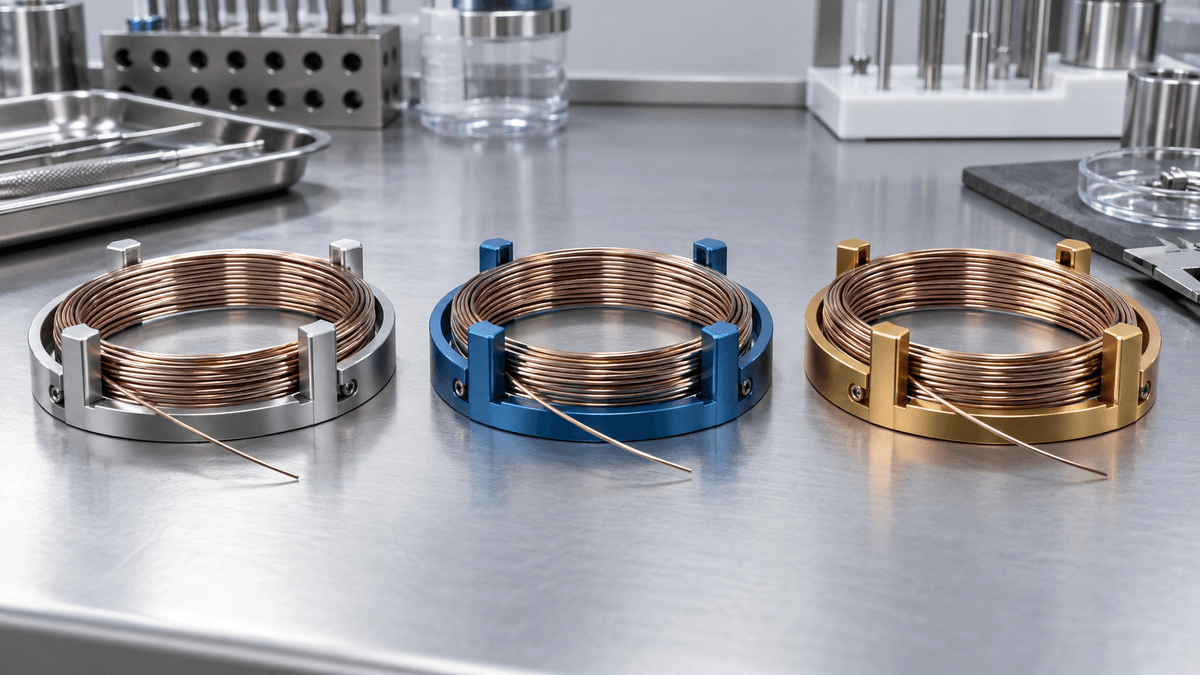
GEE SMA product notes list black oxide and mechanically polished finishes for Copper NiTi and Copper NiTiCr wire. The selected surface affects handling, visual inspection, friction, cleaning, marking, coating adhesion, and fatigue initiation. A bright appearance is not a complete surface requirement.
Define allowable scratches, seams, oxide variation, residue, pits, and handling marks with reference samples or inspection criteria. GEE SMA's forming and surface-control sequence reinforces why inspection belongs after every operation that can create or reveal a defect.
Requalify After the Customer's Thermal Process
Arch forming, fixture contact, furnace exposure, quenching, cleaning, polishing, and coating can change transformation response and residual stress. Incoming wire data is therefore the starting baseline. The downstream manufacturer should repeat relevant thermal and mechanical tests after the process that establishes the final geometry.
Use witness coupons when they truly represent the wire's strain, thermal exposure, and surface route. Otherwise, sample the formed product. GEE SMA's post-shape-set qualification controls provide a practical bridge between raw-material evidence and finished archwire verification.
A Purchase Specification That Can Be Tested
- Copper NiTi or Copper NiTiCr alloy designation and agreed lot definition.
- Active Af target, tolerance, specimen condition, and named test method.
- Round or rectangular dimensions, tolerances, corner condition, and sampling plan.
- Loading and unloading force requirements at stated temperatures and deflections.
- Delivery condition, surface finish, permitted defects, cleanliness, and packaging.
- Customer forming, heat treatment, final testing, and change-control responsibilities.
The strongest copper NiTi wire in orthodontics specification does not promise a clinical result from raw material alone. It defines a reproducible starting condition and a verification path. GEE SMA can support that path as a material partner through transformation-temperature and wire-process capability, while the finished-device manufacturer retains design and clinical responsibility.