

Nitinol super elastic wire is not a single mechanical condition. It is a family of alloy and process states that can undergo stress-induced transformation and recover substantial deformation when unloaded at a suitable temperature. The practical questions are how much strain the wire sees, at what temperature, for how many cycles, and how much residual set is acceptable.
GEE SMA product notes list several superelastic alloy families, including SE510, SE508, SE508 ELI, LSE5065, LSE507 ELI, and a low-temperature NiTiCr option. They also list black oxide, light oxide, and mechanically polished surfaces. Selecting from these superelastic nitinol wire options requires a test window that resembles the product, not a generic claim of flexibility.
Start With the Operating Temperature
Superelasticity is strongest when the wire is sufficiently above its transformation range for the intended loading condition. If the temperature moves toward or below that range, plateau stress, apparent stiffness, recovery, and residual strain can change. Room-temperature data may not predict a cold environment or a warm assembled device.
Define minimum, nominal, and maximum operating temperatures. Add manufacturing and storage temperatures when they can alter behavior. GEE SMA's test-temperature controls make the test result portable by stating the condition under which the plateau and recovery were measured.
Set a Strain Budget Before Selecting Diameter
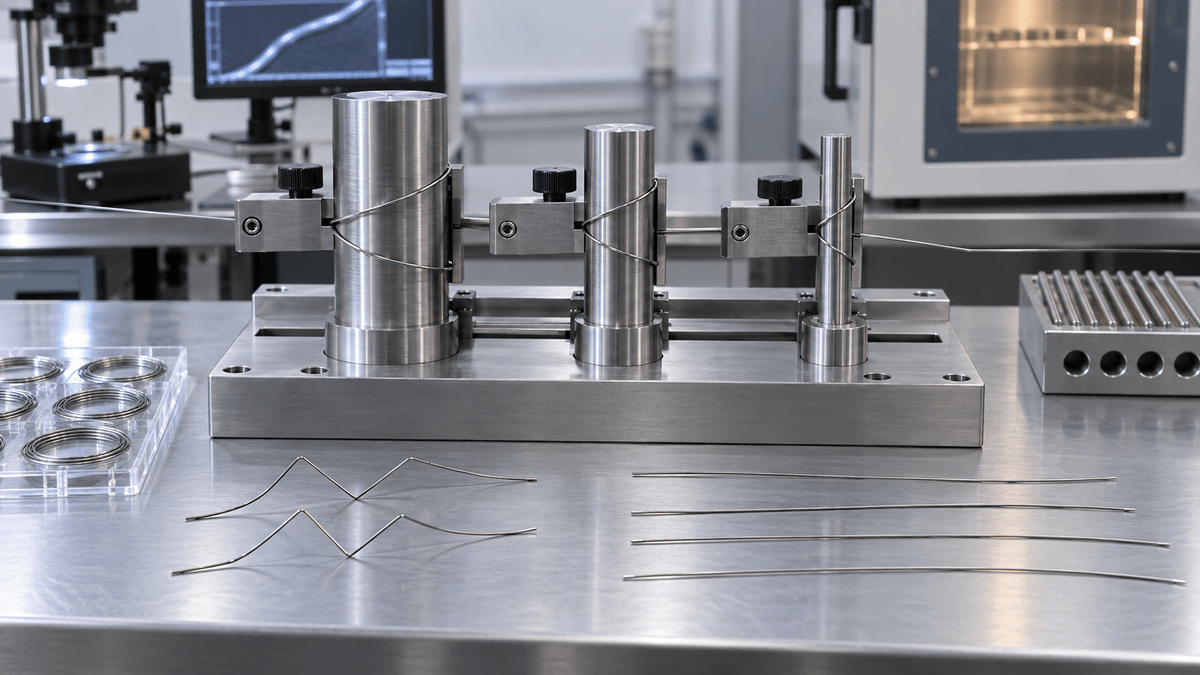
Wire diameter changes force and bending strain in opposite ways. A larger diameter can increase load capacity but may raise surface strain at the same bend radius. The design should calculate expected tensile or bending strain at the tightest geometry and include assembly, tolerance, and abuse margins.
Keep normal cycling below the level used for a one-time demonstration. ASTM F2516 tension testing can report upper and lower plateau strengths, tensile strength, elongation, and residual elongation, but the product may need bending, torsion, or combined-load tests. GEE SMA's strain-budget and fatigue controls connect material data to the local geometry where failure begins.
Recovery Must Include a Residual-Set Limit
A wire can appear to spring back while retaining enough curvature to disturb alignment, force, or fit. Specify maximum residual elongation or curvature after a stated strain, hold time, unloading rate, and recovery time. For bent wire, define the gauge length and measurement method.
Early cycles may stabilize the response. If the application repeatedly loads the wire, record cycle one, a stabilized cycle, and a later checkpoint. The acceptance rule should state whether precycling is allowed and whether measurements apply before or after stabilization.
Alloy Codes Represent Different Force and Purity Choices
SE508 is a common starting point for room- and body-temperature superelastic applications. GEE SMA product notes position SE510 as stiffer, LSE5065 as softer, and ELI variants for programs that value lower inclusion content and enhanced fatigue potential. Those descriptions guide sampling; they do not replace lot-specific evidence.
Ask the supplier to identify the alloy code, lot, input material, transformation-temperature range, cold-work condition, and final heat treatment. GEE SMA's SE508 form and Af controls show why the same alloy name can behave differently as straight-annealed wire, cold-drawn feedstock, or shape-set component material.
Delivery Condition Determines Who Owns Final Behavior
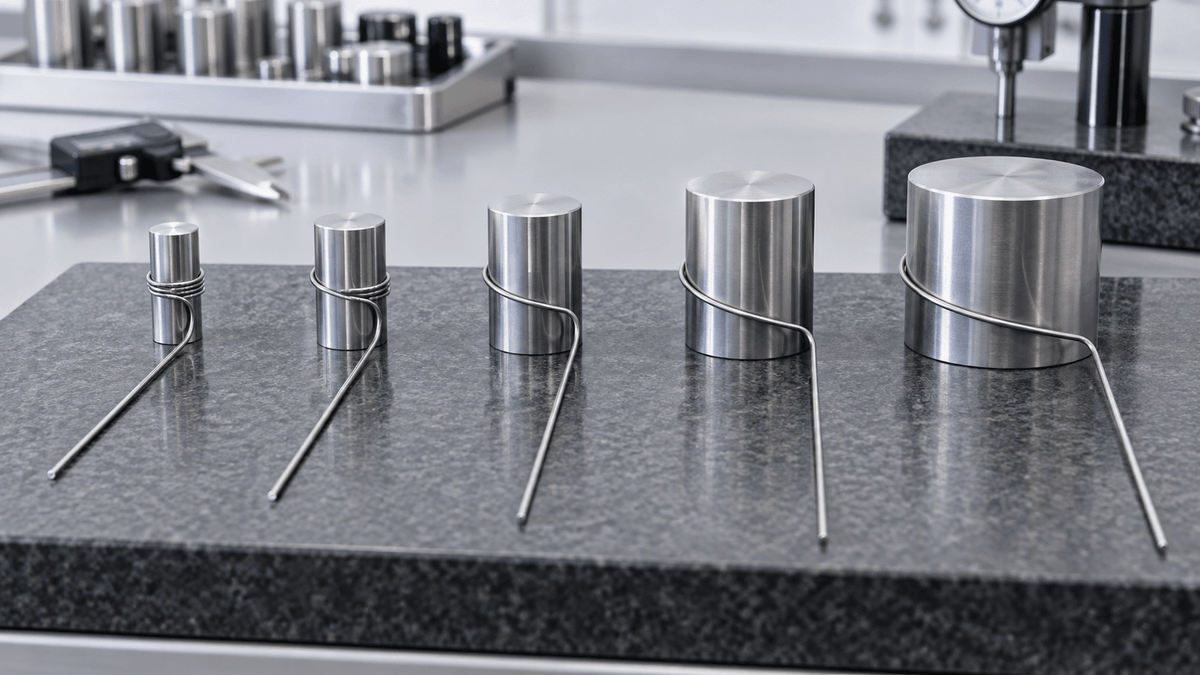
Cold-drawn wire preserves process freedom for downstream forming and shape setting. Straight-annealed wire arrives with more established geometry and functional response. Additional customer heat treatment may shift transformation temperatures, relax residual stress, change strength, and grow oxide.
The drawing and purchase order should state whether the supplier or customer owns final superelastic heat treatment. If the customer processes the wire, qualify after that operation. GEE SMA's shape-setting and surface sequence helps place each inspection after the process that can change the result.
Surface Evidence Belongs Beside Mechanical Data
Fatigue cracks and local corrosion often begin at the surface. Define finish, cleanliness, permissible scratches, seams, pits, oxide variation, and handling marks. A mechanically polished finish and an oxide finish should not share one visual standard.
Use microscopy or calibrated visual inspection at a magnification justified by wire diameter and application risk. Record representative images by lot. If the product is medical, ASTM F2063 material conformity is only one part of the finished-device evidence; it does not approve the device or its surface process.
Surface and mechanical records should use the same lot identity. Otherwise, a clean micrograph from one coil can be mistakenly paired with tensile data from another condition. For long coils, define where samples are taken so the release package can reveal variation from the beginning, middle, and end of the production length.
Incoming Lot Evidence Should Be Short and Decisive
- Supplier alloy code, heat or lot identity, and delivery condition.
- Diameter, tolerance, straightness, spool condition, and unit length.
- Transformation-temperature result with specimen and method identified.
- Superelastic tensile or bend response at the specified temperature.
- Maximum residual set after the specified strain and cycling sequence.
- Surface finish, defect limits, cleanliness, packaging, and change notification.
A strong nitinol super elastic wire specification defines where recovery must occur and how it will be measured. That approach lets sourcing teams compare suppliers on repeatable evidence while giving design engineers control over force, flexibility, and durability in the actual geometry.