

Introduction
Nitinol-60 is one of the more interesting names in the nickel-titanium alloy family because it sits close to two different engineering conversations. On one side, engineers associate nitinol with superelastic guidewires, stents, orthodontic wires, actuator wires, and shape memory components. On the other side, Nitinol-60 is often discussed for hardness, corrosion resistance, wear behavior, bearing concepts, space mechanisms, and demanding industrial parts. The keyword looks simple, but the material question behind it is not simple at all.
The first point to clarify is composition. Conventional medical nitinol is often near-equiatomic nickel titanium, selected and processed for superelasticity or shape memory behavior at useful temperatures. Nitinol-60, by contrast, is commonly described as a nickel-rich alloy near 60 weight percent nickel and 40 weight percent titanium. That change in chemistry shifts the engineering conversation. It can be heat treated for high hardness and wear resistance, but it should not be automatically treated as the same material as superelastic medical wire.
For OEM engineers, the practical question is not whether Nitinol-60 is a good material in the abstract. The question is whether its process route, finished properties, surface condition, and application risks fit the component being designed. GEE SMA works with nitinol materials, nitinol wire, shape memory alloy products, and related component support. That experience is useful when teams need to compare nitinol families, but each project still needs a defined material specification and verification plan.
What Makes Nitinol-60 Different?

Nitinol-60 is often discussed as a hard, corrosion-resistant nickel-titanium alloy for mechanical components. NASA technical work has drawn attention to its corrosion behavior in demanding environments, while bearing and ball manufacturers highlight wear resistance and non-magnetic performance. Those descriptions make the alloy attractive for engineers who want a material that can survive contact, rolling, sliding, or corrosive service better than some conventional metals.
That does not mean Nitinol-60 should be dropped into every nitinol application. Superelasticity, transformation temperature, recoverable strain, cold work, heat treatment, surface finish, and fatigue behavior all depend on composition and processing history. A wire used in a guidewire or stent-like concept has a different performance envelope than a hardened ball, bearing race, valve part, or precision mechanism component.
GEE SMA's shape memory alloy product information explains the phase transformation behind shape memory alloys and lists multiple alloy families for industrial and medical use. That range matters because "nitinol" is not one generic material. Even within nickel titanium, small changes in chemistry and processing can change whether the material is optimized for superelastic wire, actuator response, high-temperature behavior, narrow hysteresis, or mechanical wear.
Where Nitinol-60 Attracts Engineering Interest
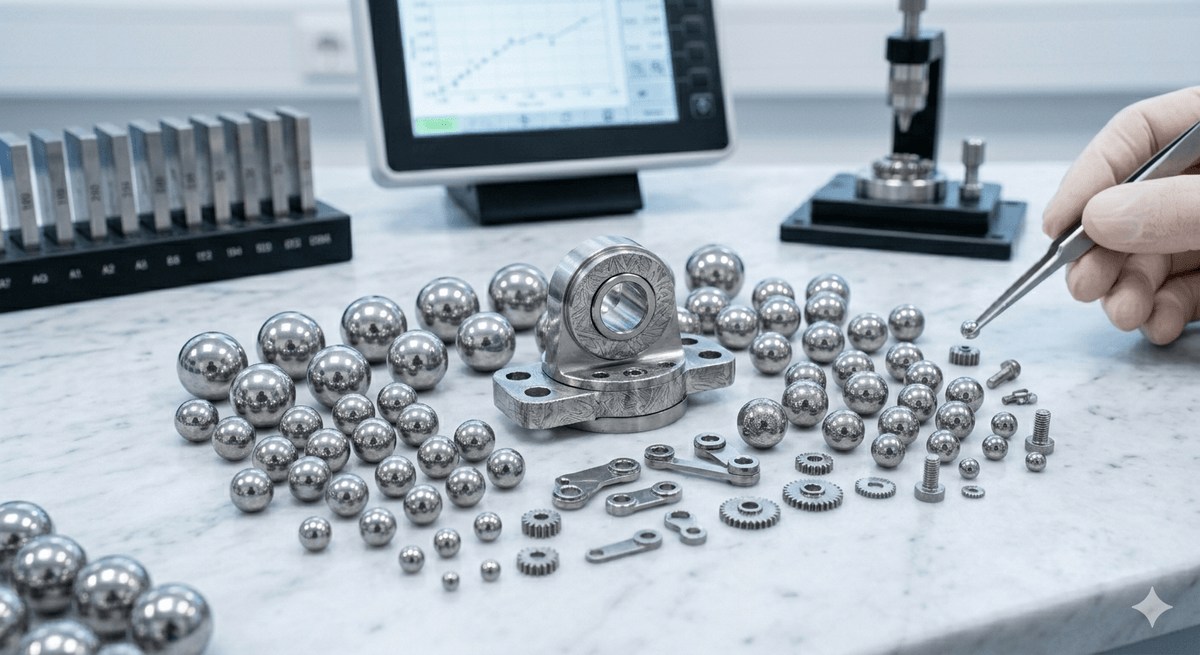
Nitinol-60 attracts attention in applications where corrosion resistance and wear resistance matter at the same time. Bearings, valve parts, mechanical linkages, aerospace components, and precision mechanisms are common examples in public literature. In those uses, designers may be trying to avoid galling, corrosion, magnetic response, or weight penalties associated with traditional materials.
Another reason the alloy is discussed is its unusual balance. Many materials can be hard. Many materials can resist corrosion. Many materials can be made into precision components. It is less common to find a material that combines high hardness potential, nickel-titanium corrosion behavior, and relatively low density compared with some steel-based options. This is why Nitinol-60 has been studied in aerospace and mechanical environments where long service life and low maintenance are valuable.
For medical device engineers, the attraction is more cautious. Nitinol has a long history in cardiovascular and minimally invasive devices, but medical nitinol is typically selected for flexibility, kink resistance, superelastic recovery, and biocompatibility after proper processing and surface treatment. Nitinol-60 may be interesting for non-implant tooling, test fixtures, or special components, but it should not be assumed to replace established medical nitinol grades without careful testing.
How It Compares With Superelastic Nitinol Wire
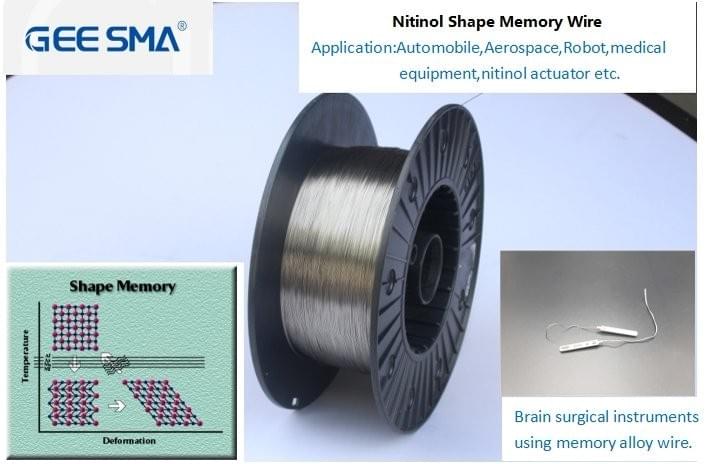
The comparison between Nitinol-60 and superelastic nitinol wire is useful because it prevents specification mistakes. GEE SMA's wire product page describes nitinol wire supplied in fine diameters, straight lengths, spools, custom profiles, black oxide surfaces, and mechanically polished finishes. It also lists superelastic, low-superelastic, shape memory, NiTiNb, NiTiFe, and NiTiHf options. These are the kinds of material choices engineers consider when they need controlled flexibility, transformation behavior, and fatigue response.
A superelastic nitinol guidewire core needs to bend through complex anatomy and recover without permanent kinking. A shape memory actuator wire may need to contract when heated or electrically activated. A spring may need a controlled transformation temperature. A Nitinol-60 bearing component may instead be judged by hardness, wear, corrosion, dimensional stability, and machinability after heat treatment. Those are different design targets.
This is why keyword-based sourcing can be risky. A buyer who searches for nitinol-60 may really need a hard nickel-titanium component. Another buyer may be using the term loosely while looking for high-performance nitinol wire. Before selecting material, engineering and sourcing teams should define the function: superelastic recovery, thermal actuation, wear resistance, corrosion resistance, or dimensional precision.
Processing and Heat Treatment Matter
Nitinol-60 is highly process-sensitive. Public technical references repeatedly connect its final performance with heat treatment and processing route. For any nickel-titanium alloy, the finished behavior is not determined by chemistry alone. Melting method, hot work, cold work, annealing, aging, surface finishing, and final inspection can all influence the result.
GEE SMA's technical information page describes a process flow that includes raw materials, melting, forging, drawing or rolling, straight annealing or cold condition, testing, and shipping. That process mindset is relevant even when the exact alloy family differs. Nitinol performance is built through controlled manufacturing steps, not purchased by name alone.
Engineers should also consider downstream processing. If a part will be ground, polished, coated, welded, heat set, or passivated, those steps may change the surface and functional behavior. A hardened component may need a different finishing route from a fine medical wire. If the application involves repeated contact, tribocorrosion testing may be more informative than a simple corrosion coupon. If the application involves fatigue, geometry and surface finish become central risk areas.
Medical and Industrial Design Considerations
The phrase "medical nitinol" should be used carefully when discussing Nitinol-60. Near-equiatomic nitinol alloys have a strong record in devices such as stents, guidewires, snares, baskets, orthodontic wires, and orthopedic fixation concepts. GEE SMA's nitinol guidewire technology article explains why flexibility, kink resistance, and recovery are important in guidewire applications. That does not automatically qualify every nickel-rich alloy for implant use.
For regulated medical devices, material selection must be tied to biocompatibility, corrosion, nickel release, fatigue, sterilization compatibility, cleaning, surface finish, and the device's intended use. A public report or industrial data sheet cannot replace the OEM's design controls. If Nitinol-60 is considered for a medical-adjacent component, the team should define whether it is patient-contacting, blood-contacting, reusable, disposable, implantable, or used only in manufacturing equipment.
Industrial teams may have a different risk profile, but the same discipline applies. Bearing, valve, tooling, and mechanism applications should define load, speed, lubrication, environment, temperature, dimensional tolerance, and expected life. Nitinol-60 may be promising in a demanding mechanism, but it still needs application-specific validation.
How to Discuss Nitinol-60 With a Supplier
A useful supplier conversation begins with the actual function of the part. Is the project looking for a wire, tube, sheet, spring, machined component, or special profile? Does the part need shape memory, superelasticity, hardness, corrosion resistance, or wear resistance? Will it be used in a medical device, industrial system, aerospace mechanism, or laboratory prototype?
For projects that really need conventional nitinol wire, GEE SMA can support discussion around actuator wires, superelastic wire, transformation temperature, surface condition, and custom profiles. For projects that mention Nitinol-60 specifically, engineers should ask whether the requirement is a true Nitinol-60 requirement or a shorthand for high-performance nickel titanium. That one clarification can prevent expensive sampling mistakes.
Strong specifications should include nominal chemistry, mechanical condition, hardness target if relevant, dimensional tolerances, surface finish, heat treatment expectations, inspection methods, packaging, and traceability. When the component is part of a regulated product, the specification should also define documentation needs and change-control expectations.
Practical Questions Before Sampling
Before ordering samples, engineers should decide which property will make or break the project. If the design needs high hardness, the sampling plan should include hardness testing and wear evaluation. If corrosion resistance is the main reason for considering Nitinol-60, the test environment should match the actual fluid, temperature, crevice condition, and cleaning cycle. If the part must run in contact with another material, tribology testing should include the mating surface rather than evaluating the alloy alone.
The second question is manufacturability. A material may perform well as a ball or simple component but become difficult in a thin wall, sharp corner, fine slot, or miniature feature. Nitinol alloys are also sensitive to thermal history, so the team should understand whether downstream grinding, polishing, joining, or heat exposure could change the final behavior. This is especially important when a prototype supplier and production supplier are different.
The third question is replacement risk. If the original design used stainless steel, titanium, cobalt alloy, or ceramic, the reason for switching should be measurable. Better corrosion resistance, lower magnetic response, improved wear behavior, or weight reduction can be valid reasons, but each must be confirmed against the final application. Nitinol-60 should be selected because it solves a defined engineering problem, not because the material name is unusual.
Conclusion
Nitinol-60 is an important nickel-titanium alloy conversation, but it is not interchangeable with every nitinol material. Its reputation for hardness, wear resistance, and corrosion behavior makes it attractive for demanding mechanical components, while conventional superelastic and shape memory nitinol remain central to many medical and actuator applications. The right choice depends on function, processing, surface finish, and verification.
For engineers comparing Nitinol-60 with other nitinol options, GEE SMA can be a useful material and component discussion partner. Start with the application, define the required behavior, and then match the alloy family to the real performance target.