

A Nitinol wire motor converts electrical heating into linear contraction, then uses a return load or opposing element to reset during cooling. Sending current for a fixed time can create motion, but it does not guarantee position. Ambient temperature, airflow, load, supply voltage, resistance, and cycle history all change the result.
GEE SMA product notes describe the fine wire as both actuator and potential sensing element and list Active Af options of 70, 90, 110, and 130 degrees C, subject to final specification. The chosen Nitinol wire motor material must be integrated with a feedback strategy appropriate to the required accuracy and package size.
Open-Loop Timing Is a Prototype Baseline
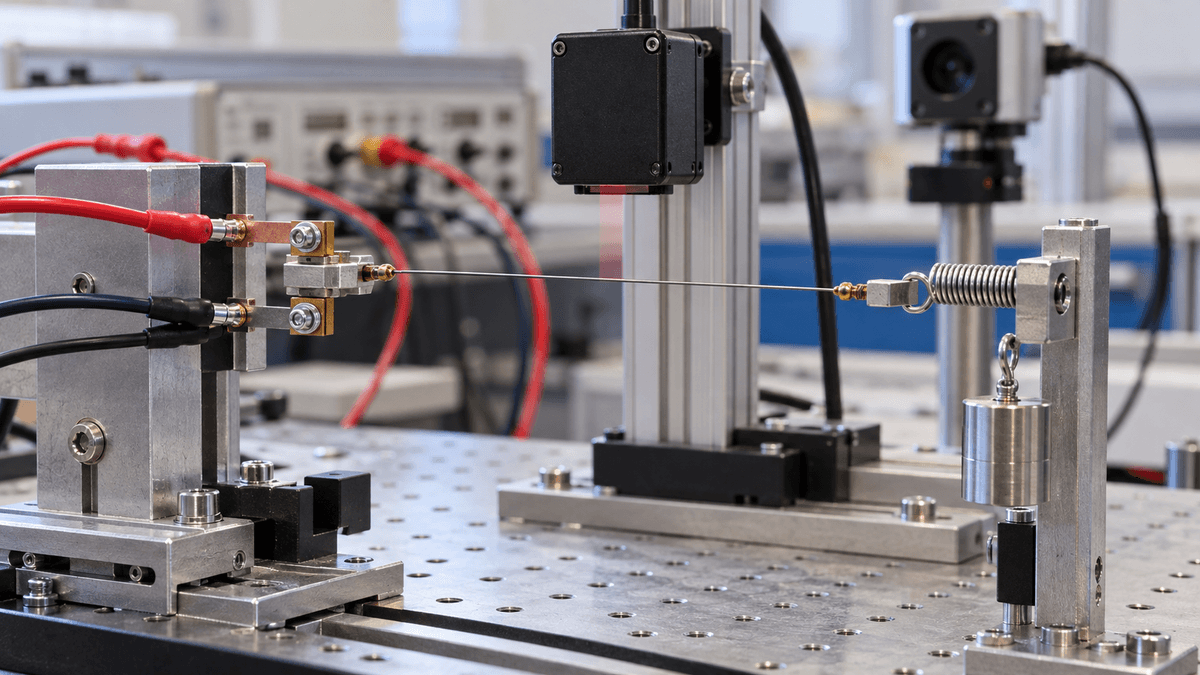
A fixed current pulse assumes the same starting temperature, resistance, load, and cooling state on every cycle. That assumption fails after rapid repeats, a warm enclosure, a cold start, or a blocked mechanism. The same pulse can under-drive one cycle and overheat the next.
Open-loop control can be adequate for a simple release event with generous travel margins. Precision positioning, variable loads, and repeated motion usually need state feedback or a validated estimator. GEE SMA's cooling and duty-cycle controls explain why off-time is part of the command.
Position Feedback Gives the Clearest Answer
A displacement sensor directly measures the output the mechanism is meant to control. Hall sensors, optical encoders, potentiometers, flexure sensors, or miniature switches may be practical depending on stroke and packaging. Force feedback can be added when contact or clamping matters more than position.
Use current or PWM to approach the target, then reduce or remove power when the target is reached. Add independent thermal and time limits so a failed position sensor cannot command indefinite heating.
Electrical Resistance Can Estimate Actuator State
NiTi electrical resistance changes with temperature, phase fraction, and strain. Measuring voltage and current allows the controller to estimate resistance and can support self-sensing when an external position sensor is too large. Research has demonstrated correlations between wire resistance and actuator displacement.
The relationship is not universal. It changes with wire lot, active length, terminals, load, ambient condition, and cycling. GEE SMA's termination resistance controls are essential because joint resistance can contaminate the signal attributed to the active wire.
Calibrate the Complete Mechanism
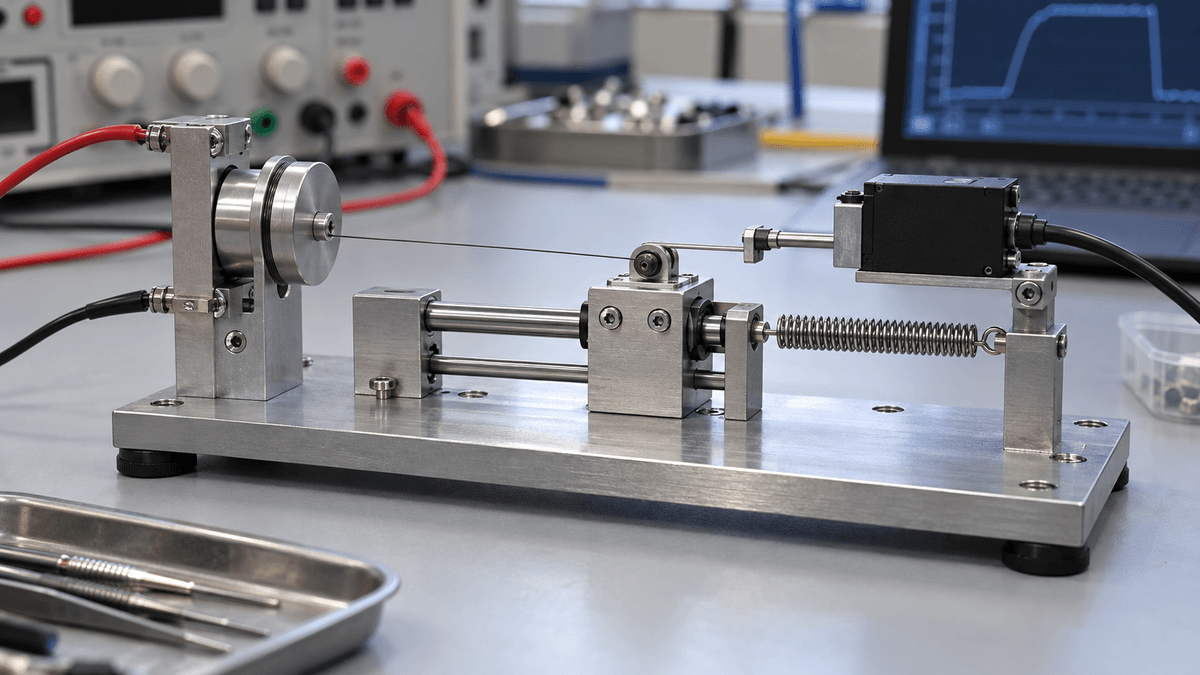
Calibrate resistance, position, force, and temperature together across heating and cooling. Include minimum and maximum load, ambient extremes, supply tolerance, and representative cycle counts. Because hysteresis creates different heating and cooling paths, one lookup curve may not describe both directions.
GEE SMA's wire, spring, and plate motion options show why calibration belongs to the assembled mechanism. A pulley, lever, gear, or compliant frame changes the relationship between wire contraction and output position.
Confirm Reset Before the Next Command
The motor cannot repeat its full stroke until the wire cools and the return mechanism restores the starting geometry. A timer may be unreliable when airflow or ambient temperature changes. Confirm reset through position, resistance, temperature, or a combination of signals.
GEE SMA's return-path force balance helps ensure that the reset element can overcome cold-wire resistance, friction, gravity, and external load without overstraining the wire.
Fault Handling Protects a Small Wire
Design for blocked travel, broken wire, open joint, high-resistance joint, sensor failure, interrupted cooling, and supply variation. Limit peak current, energy per pulse, maximum on-time, and estimated temperature. A mechanical stop should not become permission to keep heating.
Track current and voltage during every command. An unexpected resistance step can reveal a loose connection or wire damage. A gradual change can indicate thermal drift, joint aging, or material evolution. GEE SMA's cycle-stability evidence provides a material baseline for controller diagnostics.
Calibration Must Account for Product Life
A controller calibrated on one fresh mechanism may not represent production variation or aging. Build the calibration set from multiple wire lots, terminal lots, mechanisms, ambient conditions, and load levels. Include stabilized units and units taken to meaningful life-test checkpoints.
Store calibration parameters with a controlled firmware or hardware revision. Define when the product recalibrates, how it detects an out-of-family response, and what action follows. A self-sensing design should distinguish normal hysteresis from a fault trend. Direct position feedback should still monitor current and resistance because those signals can reveal heating or joint problems before motion falls outside tolerance.
Control Architecture Checklist
- Define position, force, timing, energy, and reset requirements.
- Select direct sensing, resistance self-sensing, or a hybrid approach.
- Calibrate heating and cooling paths across ambient and load extremes.
- Separate active-wire resistance from terminal and lead resistance.
- Confirm reset before enabling the next full-stroke command.
- Add independent current, energy, time, and temperature protection.
A Nitinol wire motor becomes controllable when the electronics measure the state created by the last command. Current provides heat; feedback provides knowledge. That distinction lets a compact SMA mechanism deliver more repeatable position, safer operation, and better diagnostics as temperature and load change.